The Reservation Checklist for Horseback Riding Trail Rides Near Me
Equestrian trail riding represents one of the most profound ways to connect with nature, offering a unique blend of physical engagement, scenic beauty, and psychological rejuvenation. However, the difference between a lifetime memory and a highly uncomfortable or unsafe outing often hinges on the preparation that occurs before ever setting foot in a stirrup. When prospective riders search for horseback riding trail rides near me, they are frequently met with a bewildering array of options, varying safety standards, and unclear policy guidelines. This article serves as a comprehensive, vendor-neutral, and highly practical guide to navigating the pre-booking process. By establishing a rigorous checklist, families, first-time riders, and casual adventurers can ensure their chosen excursion matches their expectations, physical capabilities, and safety requirements.
This guide is written from the perspective of Second Chance Ranch, a premier equestrian trail provider accessible via horsebackridingtrails.com. Operating across three spectacular Southern California locations—the rugged Mountains of Santa Clarita, the otherworldly sandstone formations of Vasquez Rocks, and the pristine shores of Rincon Beach near Los Angeles—Second Chance Ranch exemplifies the highest standards of horse welfare, safety, and rider education. Throughout this article, we will examine the critical questions every rider must ask before booking, using industry standards and veterinary science to explain why these parameters exist. By the conclusion of this guide, readers will possess a complete mental framework and a practical checklist to transition from a simple online search to a confidently booked adventure.
How Can I Quick-Check My Eligibility for Horseback Riding Trail Rides Near Me in Los Angeles?
Before dedicating significant time to researching specific trail routes or booking calendars, it is essential to perform a rapid assessment of eligibility. Stables must enforce strict boundaries regarding rider age, weight, and health to protect both the participants and the horses. A first-pass filter prevents booking errors, non-refundable deposit losses, and on-site disappointment. The following table provides a quick, scannable overview of typical industry ranges alongside the specific, safety-first policies enforced by Second Chance Ranch across its diverse trail systems.
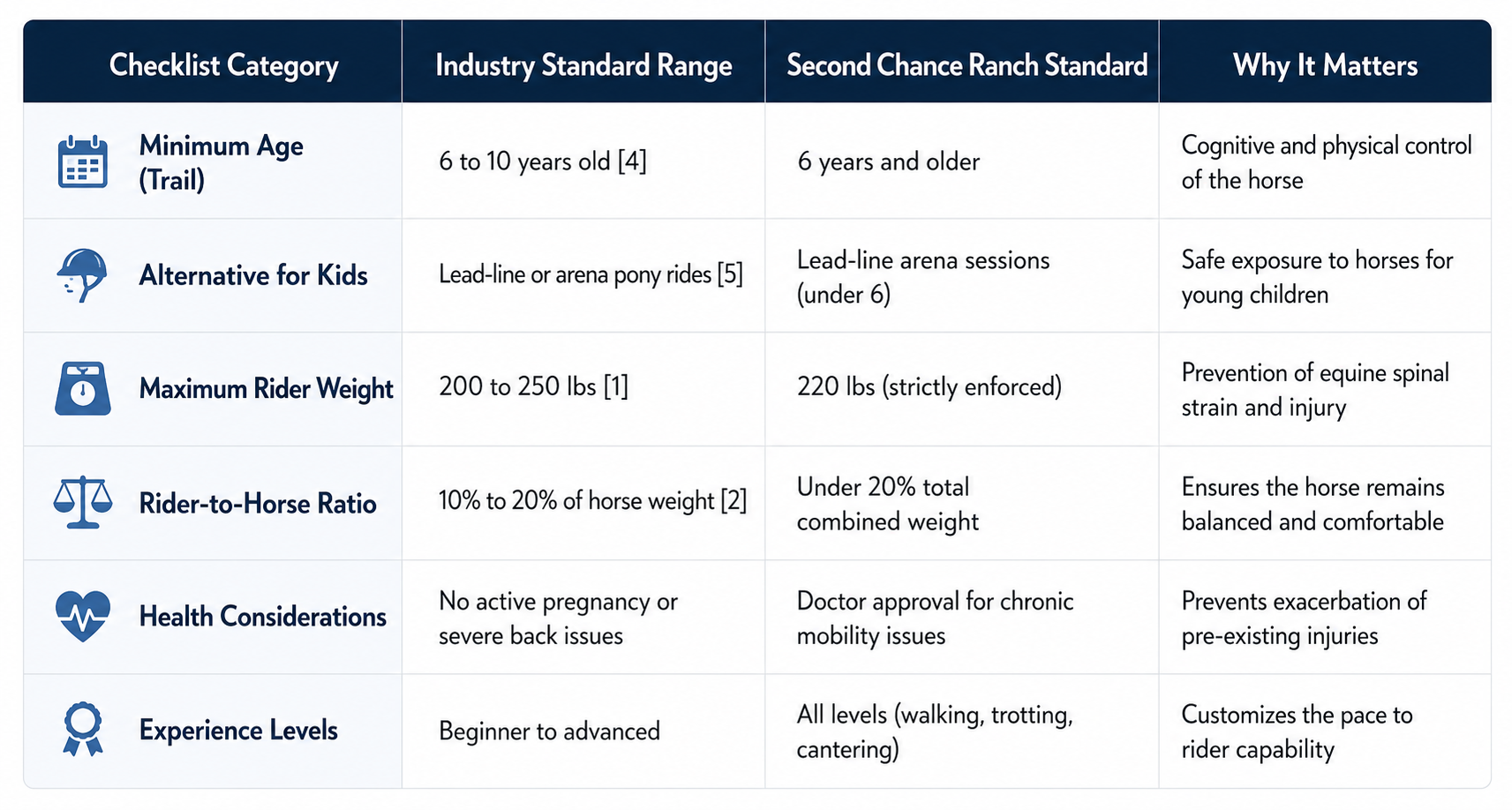
As this checklist indicates, eligibility is not a matter of arbitrary exclusion but rather a reflection of biological and physical realities. A horse is a living, breathing partner, and ensuring a proper match between rider and mount is the first step in ethical trail riding. Each of these checklist items is explored in greater detail in the subsequent sections of this guide, helping readers understand the science and operational logic behind these standard policies.
What Are the Age, Weight, and Health Requirements for Guided Horseback Rides in Santa Clarita?
Understanding the biological and mechanical limits of horseback riding is essential for any responsible adventurer. Stables must operate within strict safety envelopes dictated by equine anatomy, veterinary medicine, and insurance underwriters. When evaluating eligibility, three core areas require meticulous scrutiny: minimum age policies, rider weight thresholds, and pre-existing health conditions.
Minimum Age Policies and Child Safety
The minimum age for guided trail rides is primarily determined by a child's physical strength, cognitive development, and ability to follow multi-step safety instructions under pressure. Veterinary and safety studies indicate that children under the age of six generally lack the core strength and motor coordination required to maintain balance on a moving horse over uneven terrain. For trail rides, most professional stables, including Second Chance Ranch, set the minimum age at six years old.
For younger children, alternative options must be utilized to ensure safety while still fostering a love for horses. Lead-line arena sessions, where an experienced handler physically leads the horse or pony by a halter shank, are the standard recommendation for children under six. This format allows the child to experience the motion of the horse in a highly controlled, flat environment, completely eliminating the risks associated with trail hazards, sudden wildlife encounters, or steep elevation changes.
The Physics and Ethics of Rider Weight Limits
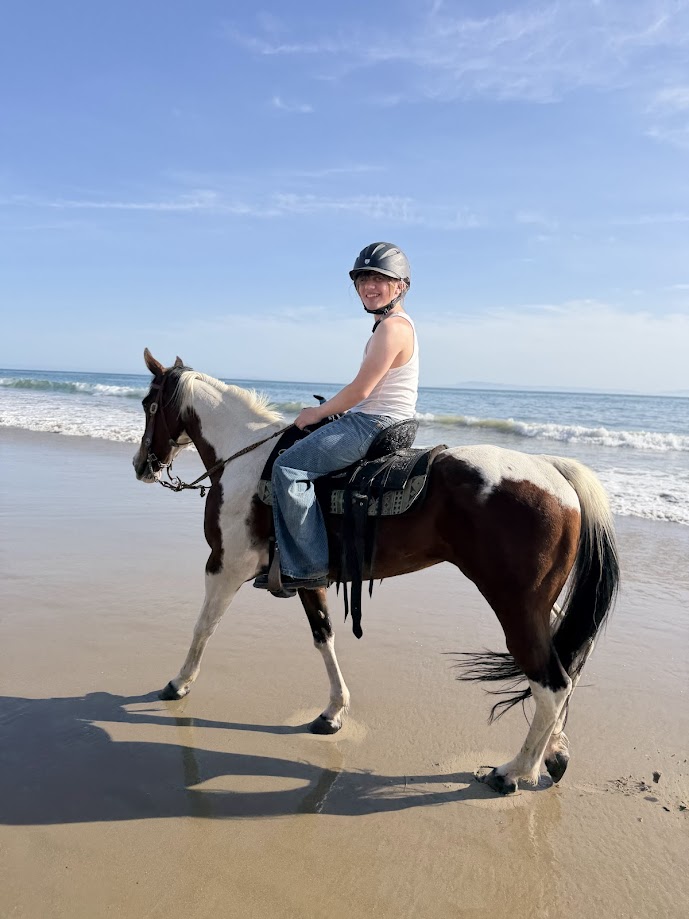
Weight limits in horseback riding are often a sensitive topic, but they are rooted entirely in horse welfare and mechanical physics. A landmark study published in the Equine Veterinary Education journal demonstrated that horses carrying more than 20% of their body weight show significant signs of physical stress, including elevated heart rates, rapid respiration, and muscle soreness. Conversely, when the rider's weight remains under 15% of the horse's weight, the animal displays minimal physiological strain and maintains optimal movement patterns.
Rider Weight Limit Formula:
Maximum Combined Weight (Rider + Tack) = Horse Body Weight x 0.20
For a typical trail horse weighing approximately 1,100 pounds, the absolute maximum carrying capacity—including the heavy western saddle, blankets, and bridle (which easily add 30 to 40 pounds)—is 220 pounds. Stables that strictly enforce a 200 to 220-pound rider weight limit are demonstrating a commitment to animal welfare and rider safety. Exceeding these limits causes the horse's center of gravity to shift dangerously, increasing the likelihood of trips, slips, and falls on steep or rocky trails. Responsible operators will always have a scale on-site to verify weights discreetly, and exceeding the limit typically results in a canceled ride without a refund to protect the animal from harm.
Health Factors and Adaptive Riding
Horseback riding is a active, three-dimensional sport that subjects the rider's spine, pelvis, and core muscles to continuous, rhythmic movement. While this movement can be highly therapeutic, it can also exacerbate certain pre-existing medical conditions. Pregnant women are universally restricted from trail riding due to the inherent risk of falls and the physical jarring associated with trail terrain.
Additionally, individuals with severe chronic back pain, recent spinal surgeries, or acute joint instability should consult a physician before booking. For riders with mild mobility impairments, it is crucial to ask whether the stable utilizes a mounting block—a sturdy raised platform that allows riders to step directly over the saddle rather than hoisting their entire body weight from the ground. This simple piece of equipment drastically reduces strain on both the rider's joints and the horse's back during the mounting process.
Example Prompt for Stables: "What are your exact age and weight requirements, what is your policy for verifying rider weight on-site, and do you provide mounting blocks or adaptive assistance for riders with mild mobility limitations?"
How Do I Choose the Right Ride Length and Start Time for Trail Rides in Vasquez Rocks?
Once eligibility is confirmed, the next logical step in the reservation checklist is matching the ride's timing and duration to the specific needs of your party. The duration of a trail ride directly influences physical fatigue, mental attention spans, and overall comfort, while the start time dictates the environmental conditions you will encounter on the trail.
Selecting the Ideal Ride Duration
For first-time riders, young families, or individuals who do not ride regularly, a 30 to 60-minute trail ride is highly recommended. The physical demands of holding reins, maintaining an upright posture, and gripping with the inner thighs can quickly lead to muscle fatigue and saddle soreness. A shorter ride provides a delightful introduction without causing debilitating physical discomfort the following day.
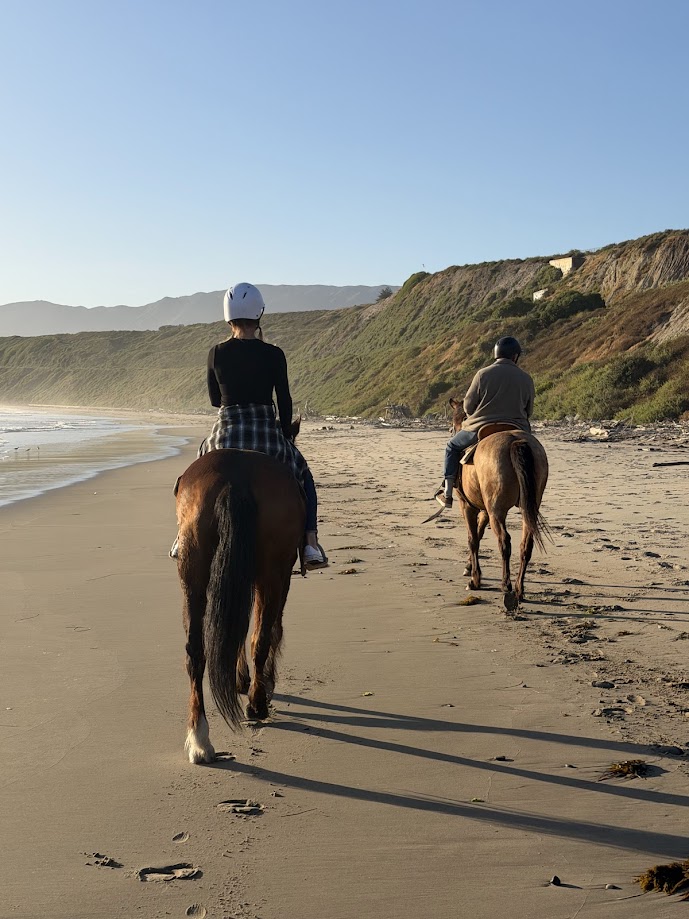
For intermediate and advanced riders, or those seeking a more immersive nature experience, a 90-minute to half-day ride is ideal. These longer durations allow the group to venture deeper into remote wilderness areas, such as the spectacular sandstone canyons of Vasquez Rocks or the sweeping coastal vistas of Rincon Beach. However, when booking these extended rides, it is critical to confirm whether the itinerary includes scheduled breaks to dismount, stretch, and consume water.
Ride DurationRecommended Target AudiencePhysical IntensityExpected Terrain Complexity30–60 MinutesBeginners, families with young children, casual touristsLow to ModerateFlat, well-groomed paths, minimal elevation changes90 MinutesConfident beginners, active adults, returning ridersModerateGentle hills, sandy washes, minor rocky stepsHalf-Day (3+ Hours)Experienced riders, physically active individualsHighSteep climbs, water crossings, varied terrain
Timing, Seasonality, and Check-In Protocols
The time of day you schedule your ride can dramatically alter your experience, particularly in regions like Southern California where temperatures fluctuate widely. During the summer months, morning rides are vastly superior, as they avoid the intense afternoon heat, protect the horses from heat exhaustion, and increase the likelihood of spotting local wildlife. Conversely, winter trail rides are often best scheduled during the late morning or early afternoon to take advantage of peak daylight and warmer temperatures.
Regardless of the scheduled departure time, arriving early is a non-negotiable requirement. Most professional stables require guests to check in 30 to 45 minutes prior to their scheduled ride. This buffer time is essential for completing liability waivers, fitting safety helmets, adjusting stirrup lengths, and conducting the mandatory pre-ride safety briefing. Arriving late not only disrupts the stable's schedule but often results in your ride being shortened or canceled entirely without a refund.
Understanding Weather and Cancellation Policies
Equestrian activities are highly dependent on weather conditions. Heavy rain, high winds, extreme heat, and active wildfire smoke can make trails unsafe for both humans and horses. When booking, always review the stable's weather policy. Reputable operators will monitor local forecasts closely and reserve the right to cancel rides if conditions pose a risk. In these instances, riders should expect to receive either a full refund or the option to reschedule to a later date.
What Experience Level Is Needed for Guided Trail Riding at Rincon Beach?
A common misconception among public trail riders is that all guided trail rides are identical. In reality, a professional stable will carefully curate its rides based on the experience levels of the participants, the composition of the group, and the specific terrain being traversed. Aligning your actual riding ability with the stable's offerings is paramount for safety and satisfaction.
Defining Rider Experience Levels
To ensure safety on the trail, stables categorize riders into distinct experience levels. It is vital to be completely honest about your abilities during the booking process, as overestimating your skill can lead to dangerous situations on the trail.
- Beginner: Individuals who have never ridden a horse, have ridden only a few times on guided trail rides, or have not ridden in several years. Beginners require continuous guidance, gentle horses, and a walking pace.
- Intermediate: Riders who have taken formal lessons, can confidently mount and dismount unassisted, understand basic riding aids (steering, stopping, yielding), and can comfortably ride at a rising trot and gentle canter in an English or Western saddle.
- Advanced: Confident, active riders who ride regularly, possess excellent balance, can control a spirited horse in open terrain, and are comfortable riding at all paces (walk, trot, canter, and gallop) over challenging obstacles.
At Second Chance Ranch, all skill levels are warmly accommodated, but the riding style is strictly adapted to match the lowest common denominator of the group to guarantee safety. Beginners are kept at a gentle, relaxing walking pace, allowing them to focus on basic control and enjoy the scenery. Intermediate riders are introduced to controlled trotting where the terrain permits, while advanced riders can arrange specialized rides that include cantering along designated stretches of Rincon Beach or through the Santa Clarita valley.
Group Composition and Horse Matching
When booking, you will typically choose between a group trail ride and a private trail ride. Group rides are highly social and cost-effective, but they feature a fixed itinerary and pace set to accommodate the least experienced rider in the group. Private rides, while carrying a higher price point, offer a customized experience tailored specifically to your family or group's skill level, making them excellent for romantic outings, special celebrations, or riders who desire individual attention from the guide.
Public Group Ride: Fixed Pace (Slowest Rider) → Lower Cost → Social Environment
Private Guided Ride: Customized Pace → Higher Cost → Personalized Instruction
Regardless of the group format, a well-run stable utilizes a sophisticated horse-matching process. Guides do not assign horses randomly; they evaluate each rider's height, weight, age, and self-reported experience level to select a horse whose temperament, size, and stride match the rider's physical profile. A calm, highly experienced "trail master" horse is assigned to beginners, while more responsive, forward-moving horses are reserved for experienced riders who understand subtle rein and leg aids.
Example Prompt for Stables: "How do you assess and group riders of different experience levels, and will our group be kept strictly at a walk, or are there opportunities for trotting and cantering based on our individual skills?"
What Should I Wear and Bring for a Safe Horseback Riding Trail Ride Near Me?
The gear you wear and the items you bring onto the trail directly affect your safety, physical comfort, and protection from the elements. Wearing improper attire can lead to painful chafing, blisters, or even serious safety hazards if clothing becomes tangled in the saddle tack.
Essential Riding Attire: The Foundation of Comfort
The golden rule of horseback riding attire is to prioritize utility and protection over fashion. Long pants are an absolute requirement, regardless of the temperature. Jeans, heavy leggings, or specialized riding breeches protect the inner thighs and calves from friction against the leather saddle fenders and prevent scratching from trailside brush and branches.
Footwear is the second most critical component. Sandals, flip-flops, high heels, and slip-on shoes are strictly prohibited. Riders must wear closed-toe shoes, preferably sturdy boots with a smooth sole and a distinct heel measuring between 1.0 and 1.5 centimeters. The heel is a vital safety feature that prevents the foot from sliding completely through the stirrup iron, which could cause a rider to be dragged in the event of an accidental fall.
Safe Riding Footwear: Closed-Toe + Smooth Sole + 1.0–1.5 cm Heel
Safety Helmets: Non-Negotiable Head Protection
Head injuries represent the most significant risk in equestrian sports. Because of this, wearing a properly fitted, ASTM/SEI-certified equestrian helmet is a non-negotiable safety standard for all reputable stables. Bicycle, skateboard, or motorcycle helmets are not designed to withstand the specific impact profiles of a fall from a horse and are not acceptable substitutes.
Equestrian Helmet Standard: ASTM F1163 / SEI Certified
Stables like Second Chance Ranch provide certified helmets to all guests as part of their booking fee, ensuring that each helmet is thoroughly sanitized between uses. While some experienced adult riders may prefer to bring their own helmets, they must verify that their gear carries the active ASTM F1163 certification stamp inside the liner.
CategoryRecommended Items (Wear/Bring)Prohibited Items (Leave in Car)Why It MattersPantsLong jeans, riding breeches, thick denimShorts, skirts, thin athletic leggingsPrevents severe saddle chafing and brush scratchesFootwearRiding boots, cowboy boots, hiking boots with heelSandals, flip-flops, sneakers, high heelsPrevents the foot from slipping through the stirrupHeadwearASTM/SEI-certified riding helmetBaseball caps, sun hats, bike helmetsProtects against traumatic brain injuries during fallsUpper BodyFitted layers, long-sleeve shirts, windbreakersLoose scarves, dangling jewelry, crop topsPrevents snagging on saddle horn or tree branchesAccessoriesSunglasses with strap, sunscreen, lip balmLarge backpacks, unsecured cameras, selfie sticksMinimizes distractions and prevents spooking horses
What to Bring and What to Leave Behind
When preparing for a trail ride, the general rule is "less is more." Large backpacks, bulky shoulder bags, and loose purses are highly dangerous because they can shift unexpectedly, throwing off your balance or snagging on the saddle horn. Additionally, dangling straps can flap in the wind, potentially spooking a sensitive horse.
Instead, riders should utilize small, secure waist packs or the saddlebags provided by the stable to carry essentials such as keys, lip balm, and small water bottles. Cell phones and cameras should be kept in zippered pockets or secure pouches. While capturing photos of your adventure is highly encouraged, you should only operate cameras when the horse is completely stopped and under the direct supervision of your trail guide.
What Safety Standards and Guide Ratios Should I Look for in Southern California Trail Rides?
A premier trail riding operation is defined by its commitment to safety, the professionalism of its staff, and its proactive approach to risk management. Because horseback riding involves inherent risks, understanding the safety standards of a stable is the most critical step in your pre-booking checklist.
Guide Qualifications and Staff-to-Rider Ratios
The safety of a trail ride is directly linked to the expertise of the trail guides leading the group. Professional guides should possess extensive training in equine behavior, trail safety, and emergency first aid. When researching stables, inquire about their guide-to-rider ratios.
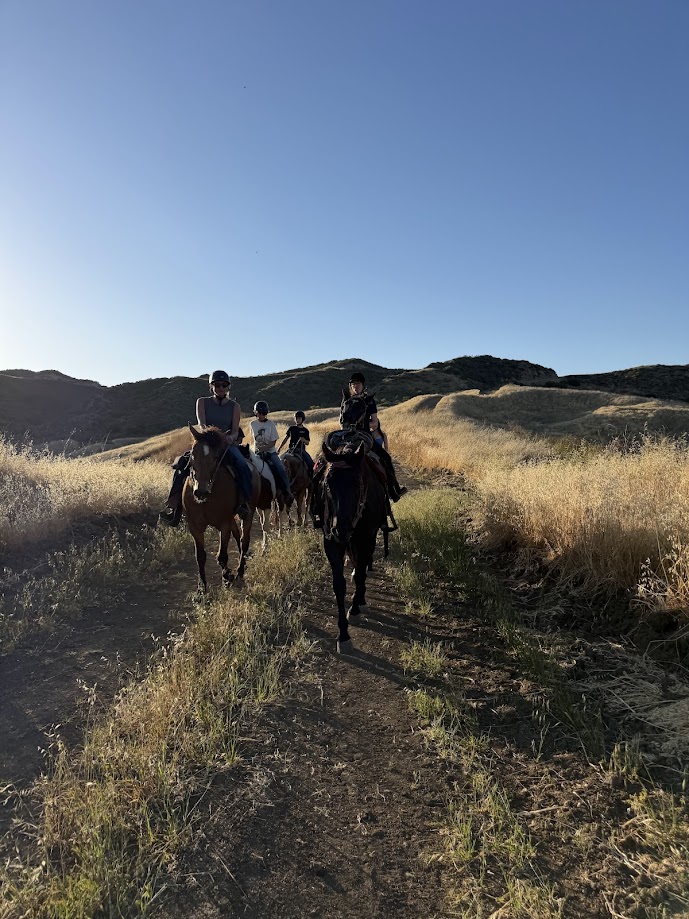
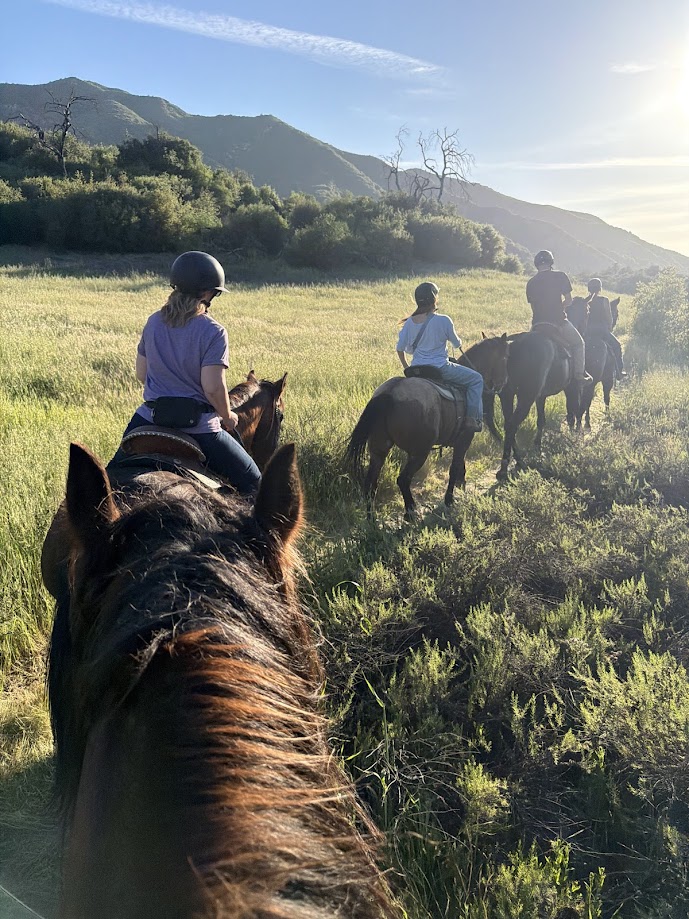
According to commercial trail riding standards, a safe ratio for short, guided public rides is a minimum of one qualified guide for every six riders. For larger groups, a "lead" guide should always head the line to navigate and set the pace, while a "sweep" guide rides at the rear of the line to monitor rider posture, assist with saddle adjustments, and ensure no one falls behind.
Safe Trail Guide Ratio: 1 Guide per 6 Riders (Minimum)
Double-Guide System: Lead Guide (Front) + Sweep Guide (Rear)
The Pre-Ride Safety Briefing and Mounting Protocol
A reputable stable will never transition riders directly from the check-in desk to the open trail. A comprehensive pre-ride briefing is a hallmark of a professional operation. During this briefing, guides should demonstrate:
- Correct Posture: Sitting deep in the saddle, keeping heels down, and maintaining a straight line from shoulder to hip.
- Rein Controls: How to hold the reins with gentle contact, turn the horse left and right, and pull back smoothly to request a stop.
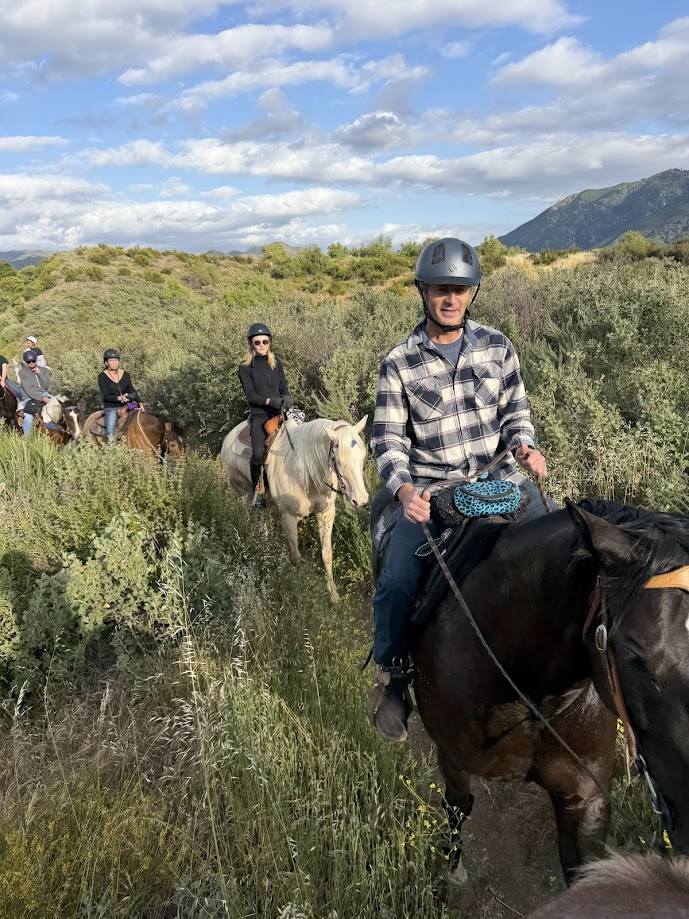
- Spacing Etiquette: Maintaining a safe distance of at least one full horse-length between your horse and the horse in front of you to prevent kicking.
- Emergency Stops: What to do if a horse spooks or moves faster than intended.
Following the briefing, riders should be assisted onto their horses using a mounting block. Once mounted, the guides must conduct a thorough check of all equipment, ensuring that the saddle girths are tight, stirrups are adjusted to the correct length for each rider's leg span, and helmets are securely buckled.
Trail Management and Emergency Readiness
A well-managed stable conducts regular maintenance on its designated trail routes, clearing fallen branches, monitoring soil erosion, and identifying seasonal hazards such as active beehives or nesting wildlife. Furthermore, guides must carry reliable communication devices—such as two-way radios or satellite messengers—especially when operating in rugged areas like Vasquez Rocks or remote canyons where cellular service is spotty. Stables should have clear, documented protocols for handling rider injuries, runaway horses, or sudden medical emergencies, including rapid access routes for emergency medical services.
How Much Do Guided Horseback Riding Trail Rides Near Me Cost and What Are the Cancellation Policies?
A transparent pricing structure and clear financial policies are essential markers of an ethical, customer-focused business. Understanding the full cost of your ride before booking prevents unexpected charges on the day of your excursion and ensures you can budget accurately for your adventure.
Demystifying the Total Cost of a Trail Ride
The cost of a guided trail ride varies based on several factors, including the location, the duration of the ride, and whether you select a public or private format. At Second Chance Ranch, pricing typically ranges from $80 to $250+ per person. This variation is directly tied to the operational costs of maintaining horses, leasing pristine land, and employing highly trained professional guides across different premium locations.
When comparing prices between stables, always look for a complete breakdown of fees. Some discount operators advertise a low base rate but charge additional fees on-site for mandatory helmet rentals, trail access permits, or booking administrative fees. A professional stable will offer all-inclusive pricing where the base rate covers the horse, the guide, the safety helmet, and all necessary riding tack.
Gratuity Norms in the Equestrian Industry
A common question among first-time trail riders is whether to tip their trail guides. In the equestrian industry, trail guides are service professionals who work tirelessly to ensure your safety, comfort, and entertainment. While tipping is entirely voluntary, it is highly customary to show appreciation for excellent service.
The industry standard for gratuity is 15% to 20% of the total booking price, similar to the hospitality and restaurant industries. Tipping can be done in cash directly to your guides at the conclusion of the ride, or added to your credit card payment during the checkout process.
Equestrian Gratuity Standard: 15% to 20% of Total Booking Cost
Cancellation, Rescheduling, and Weather Policies
Because stables must reserve horses and schedule staff specifically for your booking, they enforce strict cancellation policies. A standard industry policy requires cancellations or rescheduling requests to be made at least 24 to 48 hours in advance to receive a full refund or credit.
Cancellations made within the 24-hour window typically forfeit the deposit, as the stable cannot easily rebook the horses or adjust staff schedules on short notice. However, if the stable must cancel your ride due to severe weather, safety hazards, or horse health issues, you should always be offered a full refund or a seamless rescheduling option.
Example Prompt for Stables: "Are there any additional fees on top of your advertised rate, such as helmet rentals or booking fees, and what is your exact refund policy if I need to cancel my reservation 48 hours in advance?"
What Is the Day-of Flow and Trail Etiquette for a Guided Horseback Ride?
To maximize your enjoyment and ensure a harmonious experience for everyone in your group, it is helpful to visualize the chronological flow of your ride day, from the moment you arrive at the stable to the final dismount. Practicing proper trail etiquette is not only polite but is a fundamental component of equestrian safety.
Chronological Flow of Your Ride Day
Understanding what happens at each stage of your visit helps alleviate anxiety, especially for first-time riders or families with children.
- Arrival and Check-In (30–45 Mins Prior): Park in designated areas, check in at the front office, sign physical or digital liability waivers, and use the restroom (there are no restrooms on the wilderness trails).
- Safety Gear Fitting (15 Mins Prior): Guides will assist you in selecting and fitting a sanitized safety helmet. Ensure the chin strap is snug—you should only be able to fit two fingers between the strap and your throat.
- The Safety Briefing (10 Mins Prior): Gather as a group to listen to the guide's instructions regarding rein control, horse behavior, and trail safety rules.
- Mounting and Stirrup Adjustment (Departure Time): Step onto the mounting block. Guides will hold your horse securely while you mount, adjust your stirrups so your knees have a slight bend, and double-check your saddle girth.
- Arena Warm-Up (First 5 Mins of Ride): Take a few laps around the practice arena to practice stopping, steering, and getting accustomed to the horse's motion before heading out.
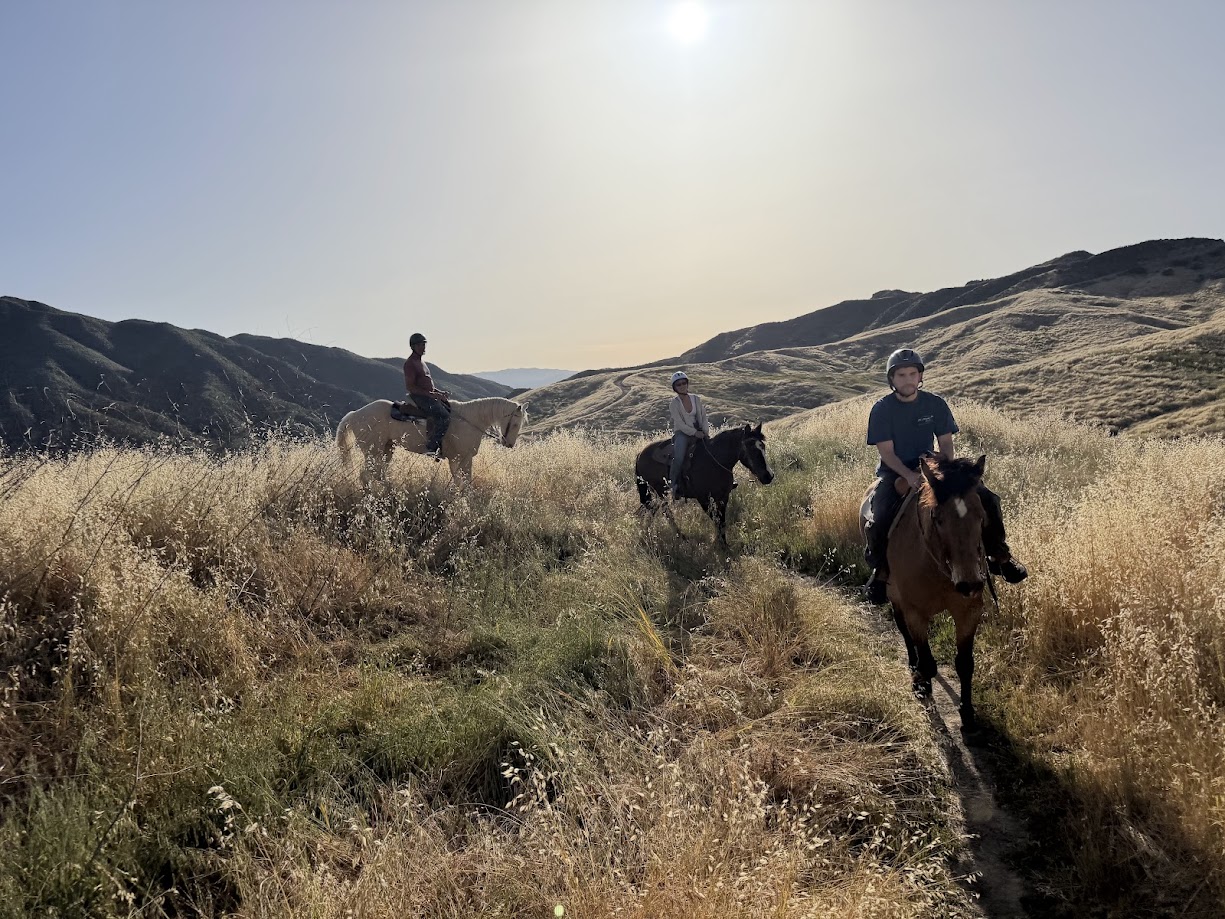
- The Trail Ride: Enjoy the spectacular scenery of Santa Clarita, Vasquez Rocks, or Rincon Beach, maintaining a safe distance between horses and following your guide's instructions.
- Dismount and Wrap-Up: Upon returning, remain on your horse until a guide assists you to dismount safely. Return your helmet, offer a treat or pat to your horse, and tip your guides for their excellent service.
Essential Rules of Trail Etiquette
Once on the trail, you are part of a traveling herd. Horses are prey animals that rely on herd dynamics for security, meaning they are highly sensitive to the actions of the horses and riders around them. Adhering to the following etiquette guidelines ensures a smooth, stress-free ride:
- Maintain Safe Spacing: Always keep at least one full horse-length (approximately 8 to 10 feet) between your horse and the horse in front of you. Crowding can cause the lead horse to feel threatened and kick backward.
- Stay in Single File: Never attempt to pass the horse in front of you or ride side-by-side unless explicitly instructed to do so by your guide. Trails are designed for single-file traffic, and passing can cause horses to jostle or spook.
- No Feeding on the Trail: Do not allow your horse to graze on grass, leaves, or bushes along the trail. Allowing grazing teaches the horse to ignore your steering cues and can lead to sudden, jerky movements that throw you off balance.
- Keep Your Hands on the Reins: Never let go of your reins to take photos, adjust your hat, or apply sunscreen while the horse is moving. If you need to use your hands, ask the guide to hold your horse or wait until the group has come to a complete, coordinated stop.
- Leave No Trace: Respect the beautiful natural environments of Southern California. Never litter, stay strictly on the designated trail paths to prevent soil erosion, and do not disturb local wildlife or plant life.
How Do I Take the Next Step to Book My Horseback Riding Adventure Today?
Embarking on a horseback riding trail ride is an extraordinary way to escape the hustle of daily life, breathe in the fresh air of Southern California's wilderness, and experience the profound bond between human and horse. However, a safe, comfortable, and deeply satisfying ride is never an accident—it is the direct result of asking the right questions, preparing your gear, and selecting a highly professional stable that prioritizes safety and animal welfare above all else.
By utilizing the comprehensive reservation checklist outlined in this guide, you can eliminate the guesswork and anxiety often associated with booking an equestrian adventure. Whether you are looking to traverse the rugged canyon trails of Santa Clarita, explore the dramatic, cinematic landscapes of Vasquez Rocks, or feel the cool ocean breeze on your face along the shores of Rincon Beach, Second Chance Ranch is ready to deliver an unforgettable, world-class experience.
To take the next step, we encourage you to visit our official website at horsebackridingtrails.com. There, you can explore our real-time online calendar, view detailed descriptions of our various trail routes, check up-to-date pricing, and secure your reservation with ease. Gather your long pants, dust off your boots, and prepare to create memories that will last a lifetime on the beautiful trails of Southern California.
Frequently Asked Questions About Guided Trail Rides
What Is the Typical Minimum Age for a Guided Trail Ride in Southern California?
For safety reasons, the standard minimum age for guided wilderness trail rides is six years old. Children under six do not have the physical core strength or attention span required to safely steer and balance on a horse over uneven terrain. For children under six, stables like Second Chance Ranch offer lead-line arena sessions, which provide a safe, highly supervised introduction to horses in a flat, enclosed environment.
What Are Common Rider Weight Limits and Why Do They Vary?
The standard rider weight limit for commercial trail rides is typically set between 200 and 220 pounds. This limit is rooted in veterinary science and animal welfare. Studies show that carrying more than 20% of their total body weight causes horses severe physical strain, muscle soreness, and joint stress. To protect the health of our horses and ensure they can safely navigate steep or uneven trails, Second Chance Ranch strictly enforces a 220-pound weight limit, which includes the rider's clothing and boots.
Do I Need Prior Riding Experience for a Beginner Trail Ride?
No, prior riding experience is not required. The vast majority of guided trail rides are specifically designed for beginners, families, and casual tourists. Stables will match you with a calm, gentle trail horse and provide a comprehensive pre-ride safety briefing covering steering, stopping, and basic horse behavior before you head out. At Second Chance Ranch, beginners are kept at a relaxing walking pace to ensure a safe and comfortable experience.
What Should I Wear for a Summer or Winter Trail Ride?
Regardless of the season, you must wear long pants (such as jeans or thick leggings) to prevent saddle chafing and protect your legs from trailside brush. You must also wear closed-toe shoes with a smooth sole and a low heel (1.0 to 1.5 cm) to prevent your foot from sliding through the stirrup. In the summer, wear lightweight, breathable long-sleeve shirts and apply sunscreen. In the winter, dress in snug layers, such as a windbreaker or fleece jacket, and avoid loose, flowing scarves that could catch on equipment.
Are Helmets Required, and Can I Bring My Own?
Yes, safety helmets are highly recommended for all riders and are legally required for minors in many jurisdictions. Because head injuries are the most common serious injury associated with horseback riding, professional stables require all participants to wear them. Stables provide sanitized, ASTM/SEI-certified helmets free of charge. You may bring your own helmet, provided it is specifically designed for equestrian sports and carries an active ASTM F1163 certification stamp. Bicycle or skateboard helmets are not acceptable.
How Early Should I Arrive Before My Scheduled Ride?
You should arrive 30 to 45 minutes prior to your scheduled departure time. This buffer is essential for parking, completing liability waivers, fitting safety helmets, adjusting stirrup lengths, and participating in the mandatory pre-ride safety briefing. Arriving late can result in your ride being shortened or canceled without a refund, as stables must maintain strict schedules to respect other guests and the feeding routines of the horses.
What Happens if It Rains or Gets Too Hot on the Day of Our Ride?
Equestrian trail rides are highly weather-dependent. In the event of heavy rain, high winds, extreme heat, or active wildfire smoke, stables will cancel rides to ensure the safety of both riders and horses. If a ride is canceled by the stable due to weather, you will be contacted as early as possible and offered the choice of a full refund or a seamless reschedule to a future date.
How Are Horses Matched to Riders?
Horses are matched based on a careful evaluation of each rider's height, weight, age, and self-reported experience level. Professional guides analyze this information to select a horse whose temperament, size, and physical capabilities align with the rider. Gentle, slow-moving horses are assigned to beginners, while more responsive, forward-moving mounts are reserved for intermediate and advanced riders who understand subtle riding cues.
Can Two People Ride the Same Horse?
No, double riding (two people on one horse) is strictly prohibited under all circumstances. Carrying two riders puts excessive, concentrated weight on the horse's spine, leading to severe discomfort and potential injury. Furthermore, double riding is highly unsafe, as it prevents the adult rider from maintaining proper balance and control of the reins. Each participant must ride their own designated horse, with lead-line arena options available for young children who cannot ride independently on the trail.
Are Private Trail Rides Available for Beginners or Families?
Yes, private trail rides are highly recommended for beginners, families, or groups celebrating special occasions. While public group rides must move at the pace of the least experienced rider, a private ride allows your group to enjoy a customized experience with a dedicated guide. This format provides personalized instruction, a flexible pace tailored to your comfort level, and the opportunity to request specific trail routes or photo stops along the way.
References
- Horse Illustrated. "How Heavy is Too Heavy to Ride?" Available online at: https://www.horseillustrated.com/horse-news-2014-10-01-too-heavy-to-ride/
- Equine Veterinary Education. "The influence of rider:horse bodyweight ratio and rider-horse coordination on equine horse movement." Available online at: https://beva.onlinelibrary.wiley.com/doi/10.1111/eve.13085
- Pony Club Blog. "Understanding Equestrian Helmet Safety Standards." Available online at: https://blog.ponyclub.org/2024/09/13/equestrian-helmet-safety-standards/
- ASTM International. "ASTM F1163 Standard Specification for Protective Headgear Used in Horse Sports and Horseback Riding." Available online at: https://www.astm.org/f1163-15.html
- PubMed / National Institutes of Health. "Horseback riding injuries among children and young adults." Available online at: https://pubmed.ncbi.nlm.nih.gov/8057065/
- Horse Safety Australia. "Commercial Trail Riding (short rides) Staff qualifications and ratios." Available online at: https://www.horsesafetyaustralia.com.au/documents/standards/trail%20riding%20principles%20short%20rides.pdf