How Can Western Horseback Riding Lessons Help Beginners Start With Confidence?
Western horseback riding lessons often feel approachable because the equipment, teaching pace, and lesson structure are designed to help new riders build balance and confit
Western horseback riding lessons are often the style people picture when they imagine learning to ride in a calm, practical, and confidence-building environment. That does not mean Western is easy or effortless. It means the style is commonly taught in a way that helps new riders feel secure sooner, especially when the program uses steady school horses, clear instruction, and a skills-first progression. For many first-timers, that combination removes just enough uncertainty to make the first lesson feel exciting instead of overwhelming.
A beginner’s first impression matters. If the barn introduces safety rules clearly, fits a proper helmet, explains how to approach and handle the horse, and matches the rider with a calm lesson horse, the entire learning curve becomes more manageable. USEF’s first-lesson guidance emphasizes practical preparation, including a helmet, closed-toe footwear with a heel, and comfortable pants, while also reminding riders to learn basic barn rules before they ever focus on speed or style [1]. That approach aligns closely with what strong Western lesson programs already do.
Before getting into the details, it helps to understand why this discipline is so often recommended as a starting point.
How Do Western Horseback Riding Lessons Feel More Approachable For Beginners?
Many riders say Western feels beginner-friendly because the style combines practical equipment, a measured teaching rhythm, and early emphasis on control rather than intensity. In good programs, the first milestones are not flashy. They are dependable. You learn how to sit quietly, stop cleanly, steer accurately, and understand the horse’s responses before you move on to more advanced skills.
Western often feels welcoming for six main reasons:
- Secure saddle design with a deeper seat, fenders, and wider stirrups.
- Steady school horses chosen for forgiving temperaments.
- Comfortable starter clothing such as jeans and boots with a heel.
- Gradual gait progression from walk to jog before the lope.
- Groundwork and horsemanship built into many beginner lessons.
- Clear cue systems that help riders learn one aid at a time.
The equipment is only part of the story. The teaching culture matters just as much because beginners do not just need a talented rider. They need a teacher who can communicate calmly, structure lessons logically, and manage safety for less experienced people around horses.
In practical terms, Western also offers a broad definition of success. Some riders want relaxed trail competence. Others want ranch riding, pattern classes, obstacles, or a stronger horsemanship foundation before trying another discipline later. Western supports all of those goals, which makes the learning path feel useful even if the rider is not yet sure where they want to end up.
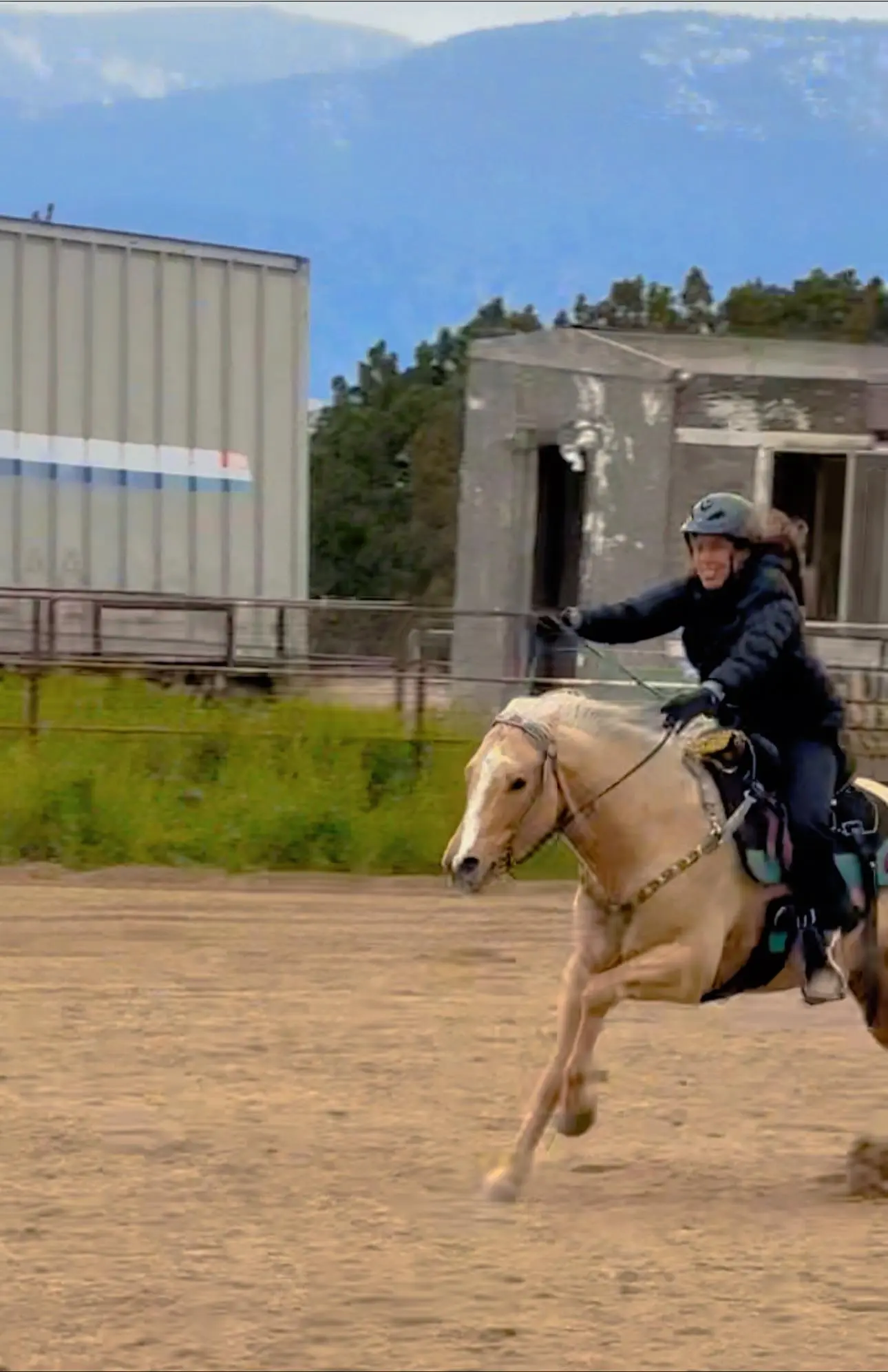
What Should You Expect In Your First Western Horseback Riding Lesson?
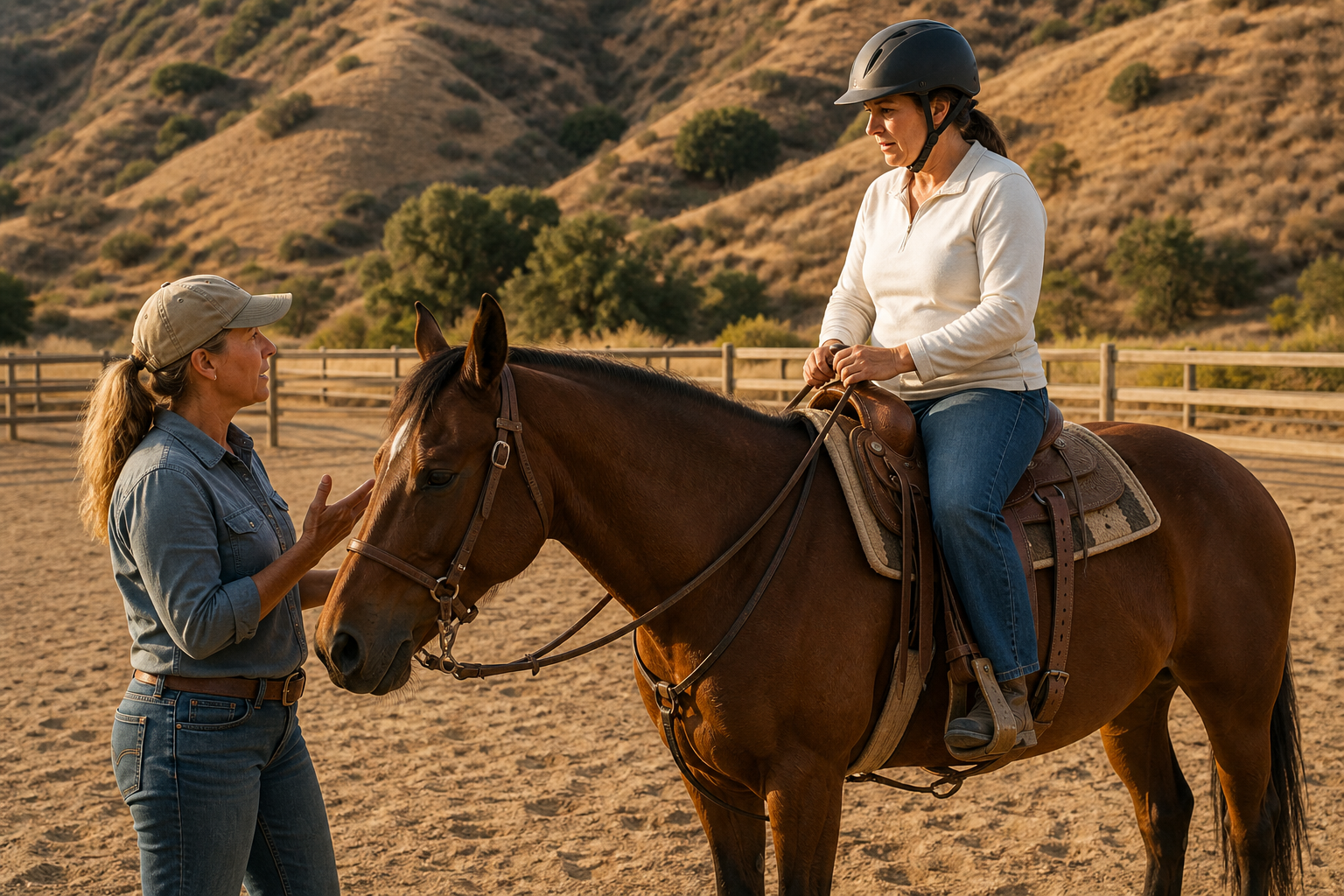
A first lesson is usually less about how fast you can go and more about how safely you can begin. Most well-run barns start by walking the rider through the property, explaining where to stand, where not to stand, how to move around horses, and what behavior is expected in the barn aisle or arena. USEF’s first-lesson sheet advises beginners not to run or shout around horses, not to walk directly behind a horse, and to maintain safe space while riding [1]. That framing is important because it teaches that horsemanship starts on the ground.
From there, many lessons move into grooming and basic tack orientation. Riders may brush the horse, learn what the cinch does, identify the saddle pad and bridle, and see how the horse is prepared for work. 4-H safety guidance reinforces the idea that beginners should learn how to catch, halter, and release a horse safely and how to recognize the horse’s mood and behavior before assuming that riding is the only skill that matters [3]. This is one of the strongest reasons Western lessons often feel grounded and practical from day one.
Once mounted, the focus usually narrows to posture and communication. The rider learns a neutral position, where the shoulders stay balanced over the hips, the hands stay soft, the legs stay quiet, and the eyes look ahead instead of down. Early riding exercises normally include starting, stopping, turning both directions, following the rail, and riding simple circles at the walk. If balance and confidence allow, the rider may also try the jog, which is the slower Western trot. The point is not to prove bravery. The point is to leave the arena having understood a few basics well.
Beginner Western Horseback Riding Lessons: What Skills Do You Build First?
Beginner western horseback riding lessons work best when the progression is predictable. Riders usually start with safety, horse handling, mounting, and basic body position. Then they move into steering, stopping, and staying balanced at the walk. Only after those pieces feel repeatable do instructors ask for more refined jog work, better line accuracy, and eventually lope preparation. This sequence matters because confidence grows fastest when each step feels earned.
The strongest programs also build what instructors often call independent basics. That means the rider does not need to grip for balance, pull to stop, or stare at the horse’s neck to feel secure. Instead, the rider begins to sit deeper, follow the motion, and use light aids more consistently. CHA’s certification standards highlight that instructors themselves must demonstrate horse handling skills and the ability to ride through the walk, trot, and canter or lope with control [2]. For beginners, that standard matters because it supports a more thoughtful lesson design.
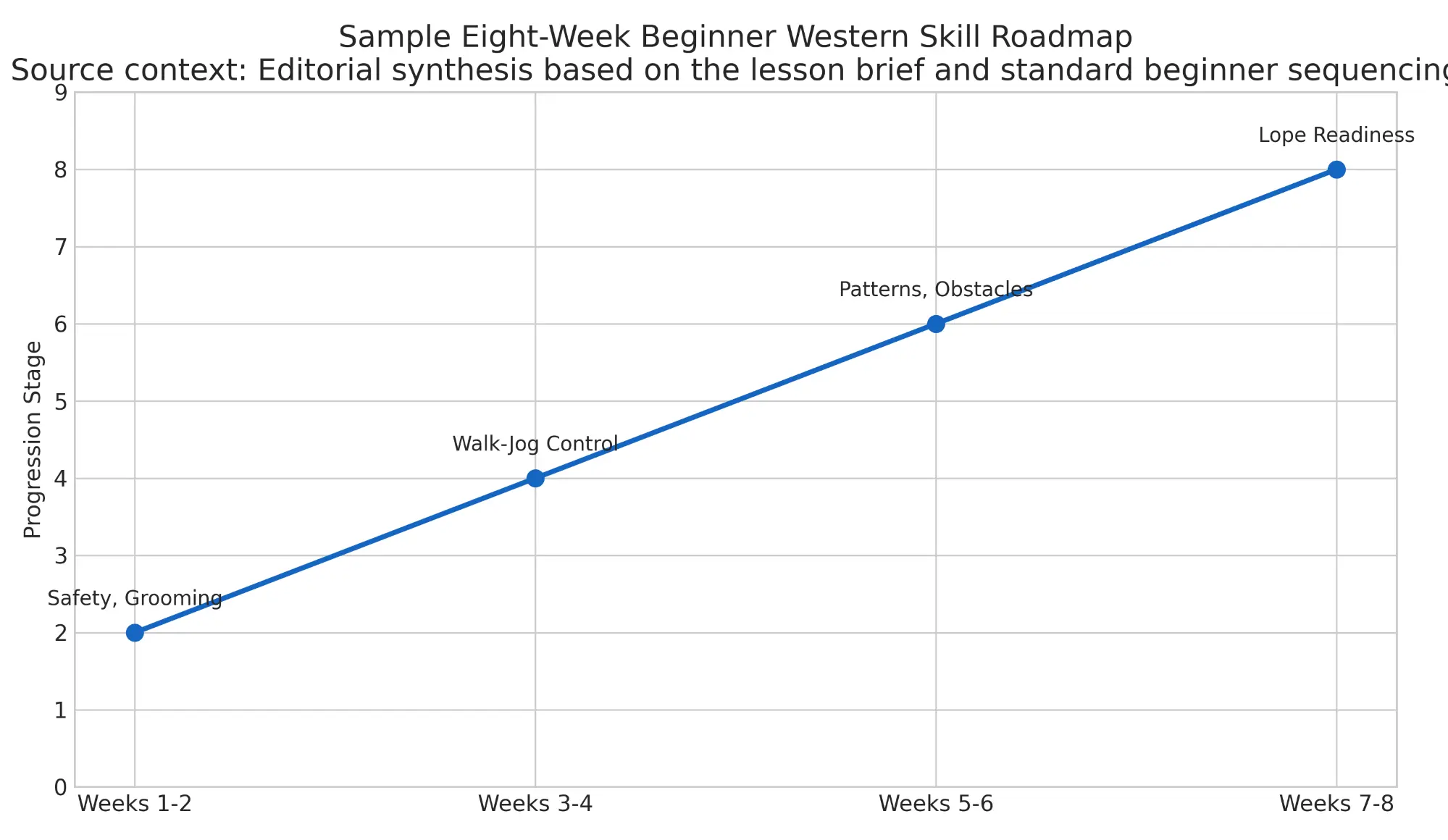
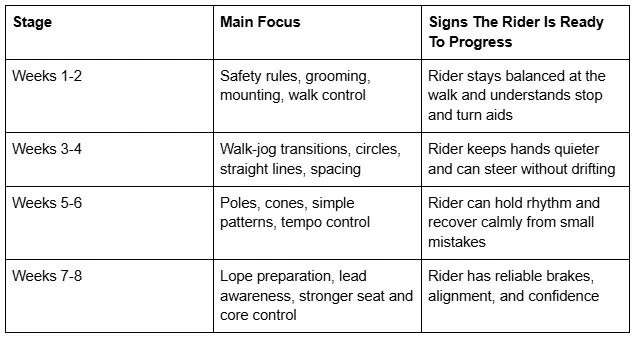
What matters most is not the calendar. It is the quality of the basics. A rider who learns to stop softly, breathe, and rebalance is on a better path than one who hurries into faster work without body control.
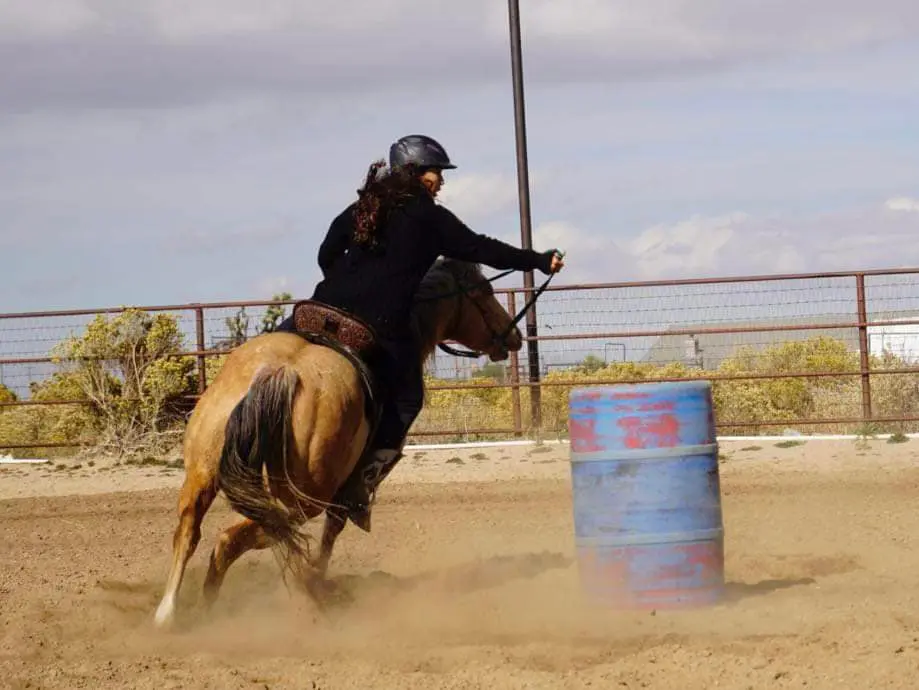
Western Horseback Riding Lessons Near Me: How Do You Find A Safe, Beginner-Friendly Barn?
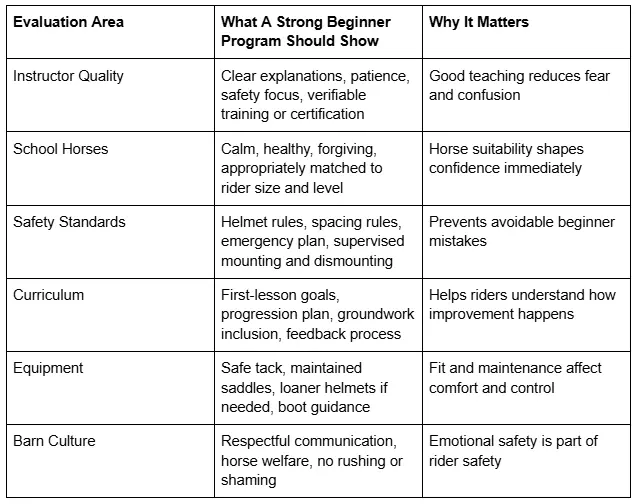
A search for western horseback riding near me should lead to a more careful comparison than distance alone. A barn twenty minutes farther away may still be the better beginner choice if it has better footing, more suitable school horses, stronger safety habits, or a calmer teaching environment. The lesson experience is shaped as much by the setting as by the saddle style.
A good program can describe the goals of the first few lessons, the difference between private and group formats, the gear a new rider needs, and how progress is measured. Transparency is a mark of professionalism.
Barns should also be willing to explain practical policies without hesitation. Ask whether helmets are mandatory, whether loaner equipment is available, how weather cancellations are handled, whether horses are assigned by rider size and confidence level, and whether nervous riders can start with extra support.
The comparison table below gives readers a simple way to organize what they learn from different facilities.
Horseback Riding Lessons Near Me: Should You Choose Western Or Another Style First?
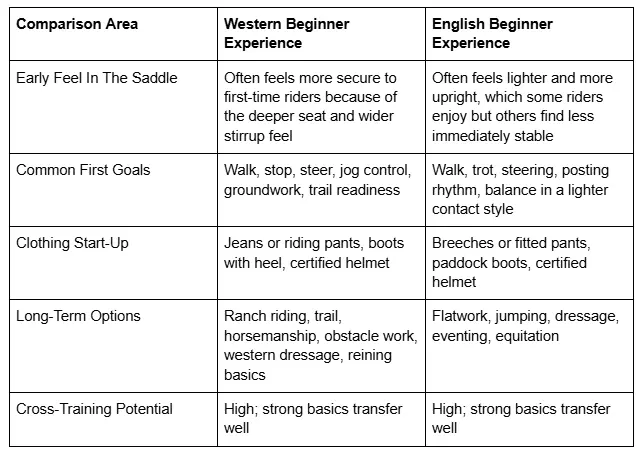
A search for horseback riding lessons near me often returns both Western and English programs, which is why many beginners pause at this point. If the goal is relaxed trail confidence, ranch-style skills, steady transitions, or a general introduction to horsemanship, Western is often a very strong starting choice. The saddle design, the teaching pace, and the practical emphasis can make the early sessions feel less intimidating for people who are new to horses.
That said, this is not a contest where one style is universally better. English programs can also be excellent, especially for riders already interested in jumping, dressage, or a more forward seat. The best choice depends on the rider’s goals, learning style, body comfort, and local instruction quality. In many cases, riders start in Western, build a balanced seat and better horse sense, and later cross-train without difficulty.
How Do Safety And Gear Choices Support New Western Riders?
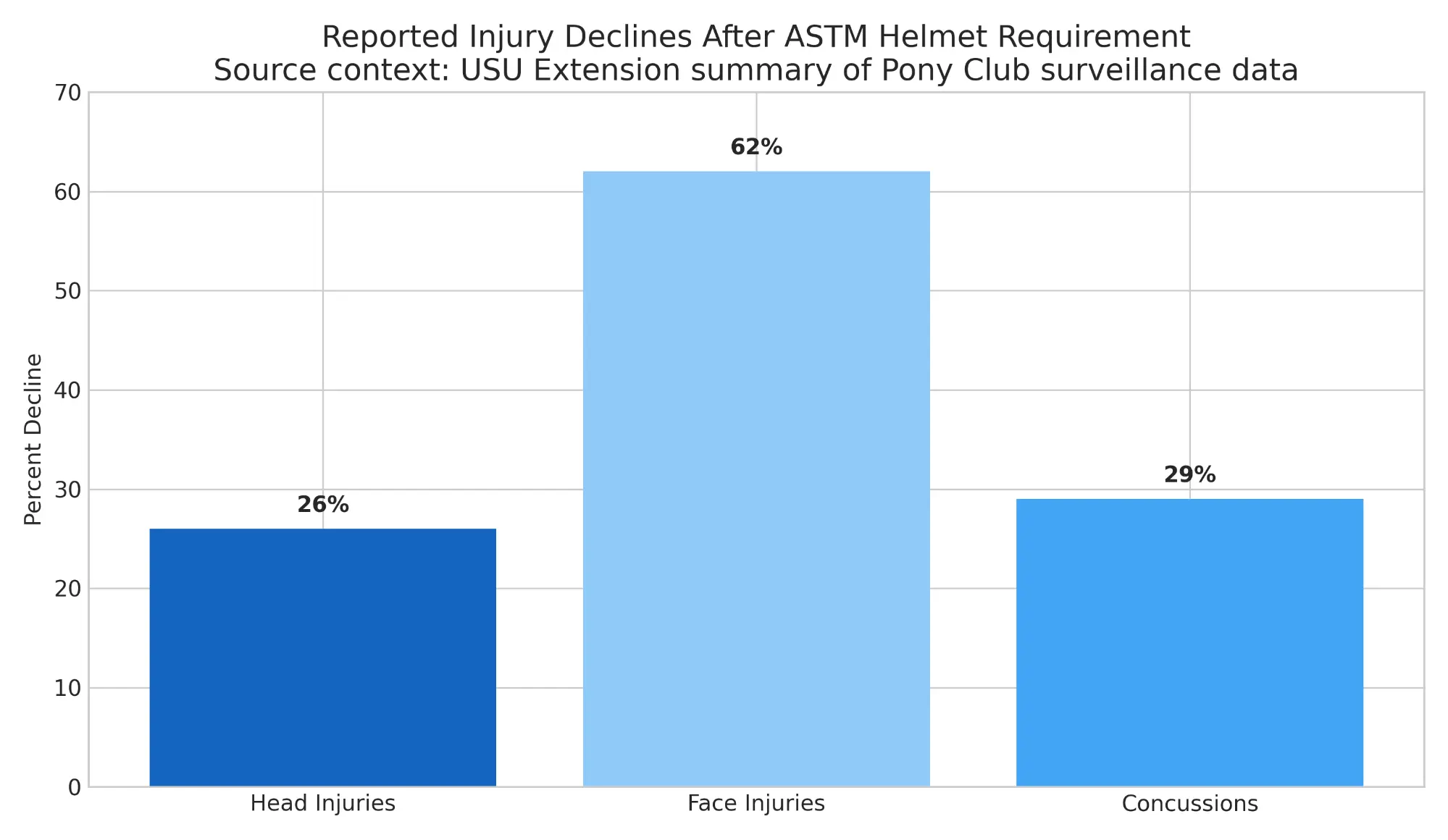
Safety gear is one of the clearest places where beginner confidence and real risk reduction overlap. USEF’s first-lesson materials recommend a helmet, a closed-toe shoe or boot with a heel, and comfortable pants or jeans [1]. Utah State University Extension goes further by summarizing surveillance and injury studies that show the impact of certified helmet requirements. According to that source, when the United States Pony Club required ASTM-certified helmets, reported head injuries declined by 26%, face injuries by 62%, and concussions by 29% over the next two years [4].
Those numbers are not abstract. They reinforce a practical beginner rule: wear the right helmet, and wear it every ride. USU Extension also notes that equestrian helmets are designed differently from bicycle and motorcycle helmets because they must protect a rider’s head without interfering with sight or balance and are built to reduce penetration and absorb impact in horse-related falls [4]. In other words, the right helmet is not just protective equipment. It is discipline-specific equipment.
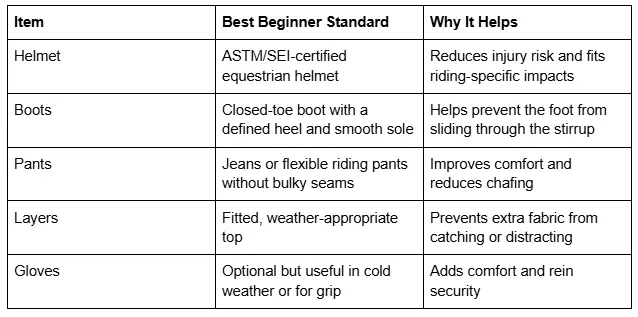
New riders sometimes assume safety gear makes them look inexperienced. In reality, it makes them look prepared. The best lesson barns normalize that from the start.
What Do Cost, Scheduling, And Lesson Format Tell You About Value?
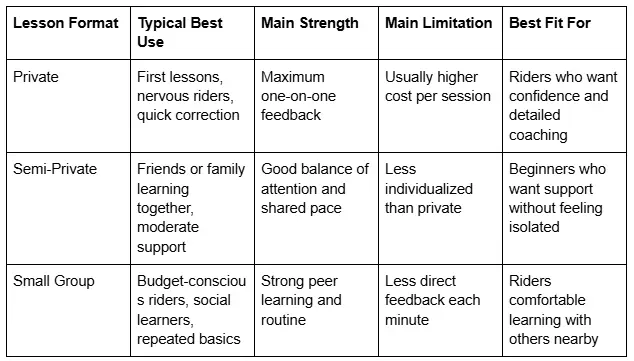
The most helpful way to think about lesson value is not “What is the cheapest session near me?” but “What kind of instruction will help me progress safely and consistently?” Western lesson pricing varies widely by region, facility type, horse quality, and whether the session is private, semi-private, or group-based. Because of that variation, exact price comparisons are often less useful than understanding what each format offers.
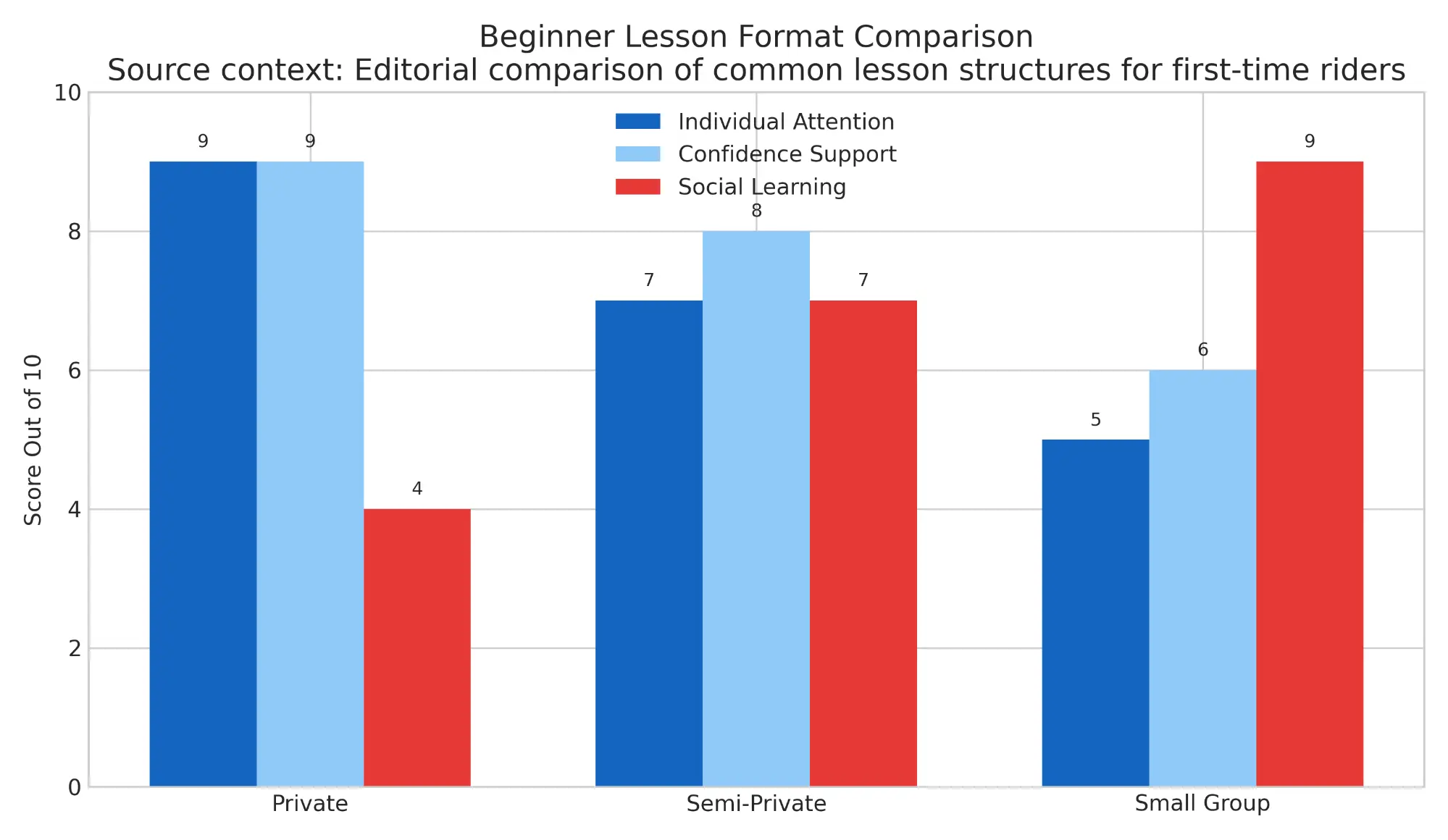
Private lessons usually provide the most individual attention, which can be especially helpful for anxious beginners or riders returning after a long break. Semi-private lessons can balance personalized feedback with a slightly more relaxed atmosphere. Small-group lessons often work well when riders enjoy peer energy and learn well by watching others, but they also require a program that manages spacing, matching, and supervision carefully.
The chart below is an editorial comparison designed to help readers think through fit rather than chase a single “best” option.
A useful rule of thumb is that value comes from structure. A shorter, well-taught lesson on a suitable horse can be more valuable than a longer session with unclear goals. Ask how often beginners typically ride, whether monthly packages exist, and whether the barn can explain what progress usually looks like over the first six to eight weeks.
Which Western Disciplines Can You Explore After The Basics?
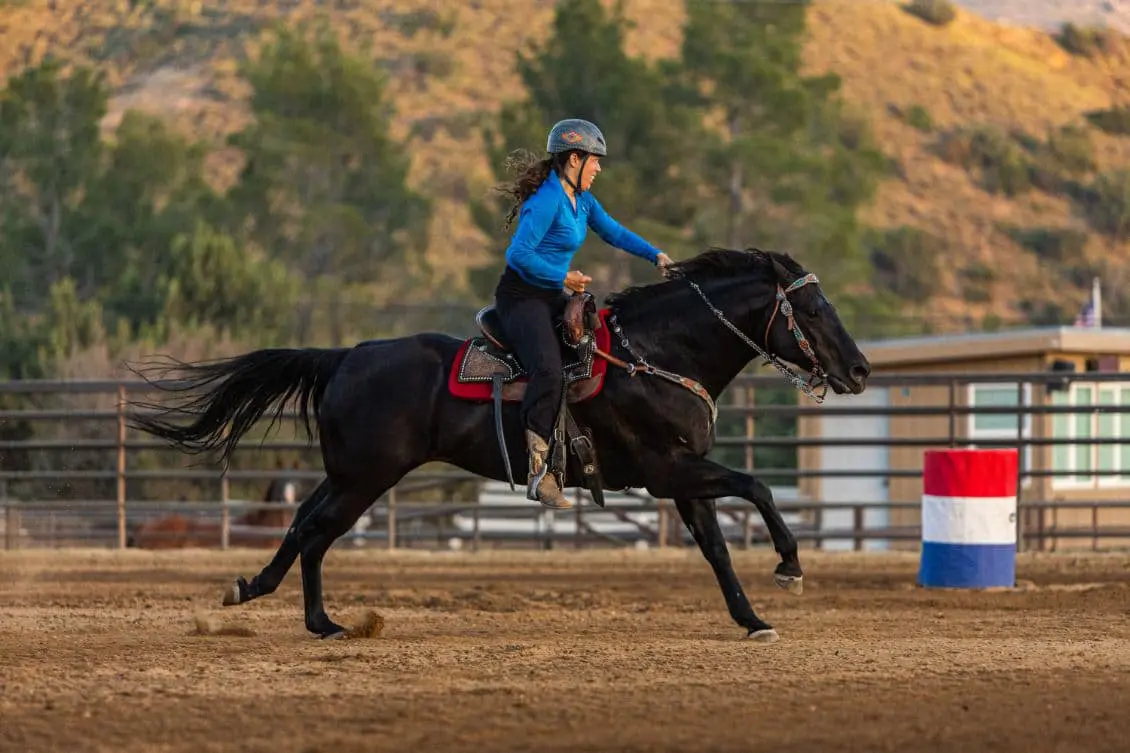
One reason Western works well for beginners is that it opens into several different paths without forcing an early specialization. After the basics are in place, riders can continue toward trail riding, ranch riding, horsemanship patterns, western dressage, obstacle work, or introductory reining-style exercises depending on the program. This is helpful because many beginners do not yet know what kind of rider they want to become. They simply want to feel capable and comfortable.
The transfer from early lesson skills to later discipline work is straightforward. A rider who can stop squarely, steer accurately, manage spacing, and keep a steady jog already has the foundation for trail obstacles or ranch-style patterns. A rider who understands grooming, tacking, and horse behavior is also better prepared for schooling shows or more independent riding. In that sense, Western beginner lessons are not a narrow experience. They are a platform.
USEF’s broader “Start Riding” guidance recognizes this reality by presenting entry into the equestrian world as a journey that can initially feel overwhelming, then offering resources on disciplines, first-lesson planning, and safety to simplify the process [5]. That is exactly how Western lessons often function at the local level: they simplify the first phase so the rider can grow into later interests with less anxiety.
What Myths About Western Riding Should Beginners Ignore?
The first myth is that Western is easy. It may feel more approachable, but good Western riding still requires balance, timing, body awareness, and steady practice. A calm jog or a soft stop is not accidental. It is the result of subtle communication developed over time.
The second myth is that beginners do not need fitness. They do. Riders benefit from core stability, hip mobility, and leg endurance because those qualities help them stay centered without gripping or collapsing. Even simple off-horse work such as walking, light strength training, or mobility exercises can improve early progress.
The third myth is that only certain breeds make good lesson horses. Temperament, training, soundness, and matching matter more than breed labels alone. Many breeds can serve beginners well when the horse is experienced, forgiving, and appropriately used. The program’s horse-selection process matters far more than barn marketing language.
The final myth is that tack alone creates security. A Western saddle can help many riders feel more stable, but true security comes from instruction, horse matching, and repetition. Equipment supports learning. It does not replace it.
What Western Riding Terms Should You Know Before Your First Lesson?
A small amount of vocabulary can make the first lesson feel much less intimidating. In Western riding, the jog is the slower, smoother trot commonly taught early in beginner lessons. The lope is the three-beat gait that corresponds to the canter in many English settings. Neck reining refers to guiding the horse by moving the rein against the horse’s neck, although many beginners first learn more direct steering before that refinement develops. The saddle horn is the front projection on a Western saddle, but it should not be used as a permanent handhold for balance. The cinch is the strap that secures the saddle around the horse’s barrel.
Learning these terms is useful not because beginners need to sound advanced, but because language reduces uncertainty. When an instructor says “check the cinch” or “prepare for the jog,” the rider can stay focused on the task instead of translating vocabulary under pressure.
How Should You Take The Next Step With Western Horseback Riding Lessons?
The strongest reason to choose western horseback riding lessons is not that they promise instant success. It is that they often provide a secure, skills-first route into a sport that can feel intimidating from the outside. When a barn combines calm lesson horses, clear safety standards, realistic progression, and patient instruction, beginners gain more than a first ride. They gain a framework for learning well.
If you are ready to move from research to action, take the next step methodically. Tour a local barn. Watch a true beginner lesson. Ask about helmets, horse matching, and how the first month is structured. Confirm that the program treats groundwork and safety as part of instruction rather than as afterthoughts. Then schedule an introductory session with a teacher who can explain what success looks like at your pace. That is the best way to make western horseback riding lessons not only discoverable in search, but genuinely valuable in real life.
Frequently Asked Questions About Western Horseback Riding Lessons
Are Western Horseback Riding Lessons Good For Complete Beginners?
Yes. Western horseback riding lessons are often a strong fit for complete beginners because the style is commonly taught with a secure-feeling saddle, steady lesson horses, and gradual progression from groundwork to walk, jog, and later lope work. The best programs still prioritize safety and horse matching over speed of progress.
What Should I Wear To My First Western Horseback Riding Lesson?
Start with a properly fitted ASTM/SEI-certified equestrian helmet, a closed-toe boot with a heel, and comfortable jeans or riding pants. USEF specifically advises beginners to wear a helmet, heeled footwear, and pants that do not restrict movement [1].
Is Western Easier Than English For New Riders?
Western is not inherently easier, but many beginners find it more approachable at first. The secure feel of the tack and the typical teaching pace can make the early learning curve feel less intimidating, especially for riders focused on trail confidence or general horsemanship.
How Much Progress Can I Expect In The First Two Months?
Most beginners can expect to build safety habits, mounting confidence, walk control, and early jog work in the first six to eight weeks, assuming consistent lessons and a suitable horse match. Lope work may begin during that period for some riders, but solid basics matter more than speed.
Do Western Lessons Usually Include Grooming And Tacking?
Many good beginner programs do. That matters because horse care and safe handling are part of horsemanship, not extras. 4-H beginner safety guidance also supports teaching handling and behavior awareness alongside riding skills [3].
How Do I Find Reputable Western Horseback Riding Lessons Near Me?
Tour the barn, watch a beginner lesson, ask how horses are matched to riders, confirm helmet rules, and look for calm instruction rather than rushed promises. Programs that can explain their safety systems and beginner curriculum clearly are usually easier to trust.
Are Private Or Group Lessons Better For First-Timers?
Private lessons usually offer the most individual support, which helps many first-time riders. Group lessons can still work well if the barn is organized, uses suitable horses, and keeps class sizes small enough for real supervision.
Can I Switch From Western To English Later?
Absolutely. Riders who begin in Western often build balance, confidence, and horse sense that transfer well to English disciplines later. Starting in one style does not lock you into that style forever.
References
[1] US Equestrian. Your First Lesson Reference Sheet. Available at https://files.usef.org/assets/TZsjrbR98Jo/first-lesson-reference-sheet.pdf
[2] Certified Horsemanship Association. CHA Certifications. Available at https://cha.horse/cha-certifications/
[3] National 4-H Council. Stay Safe Working with Horses. Available at https://4-h.org/clover/activities/stay-safe-working-with-horses/
[4] Utah State University Extension. Helmets, Heads, and Health for Horse Enthusiasts. Available at https://extension.usu.edu/equine/research/helmets-heads-and-health-for-horse-enthusiasts
[5] US Equestrian. Start Riding. Available at https://www.usef.org/learning-center/start-riding