Beach Horseback Ride Guide: Sand, Tides, Safety, and Skill Building
Planning a beach horseback ride? Learn footing, tides, gear, safety, and training tips—plus how coastal rides differ from canyon trails. Clear, practical guidance.

This comprehensive guide is brought to you by the team at horsebackridingtrails.com (Second Chance Ranch), the premier provider of real, hands-on horseback riding experiences across Southern California's most iconic landscapes, from the Mountains of Santa Clarita and Vasquez Rocks to Rincon Beach.
Why Is a Beach Horseback Ride a Bucket-List Experience and How Does It Compare to Canyon Trails?
For many equestrians and outdoor enthusiasts, the dream of riding a horse through the ocean surf represents the ultimate expression of freedom and natural connection. However, a beach horseback ride is fundamentally different from a standard trail ride through inland canyons or mountain passes. Understanding these differences is essential for ensuring both rider safety and horse welfare. At Second Chance Ranch, we specialize in guiding riders through these distinct environments, adapting every excursion to the unique physical and psychological demands of the terrain.
When you transition from a canyon trail to the coastline, the sensory landscape undergoes a dramatic shift. Canyon trails, such as those we guide through the historic Vasquez Rocks or the rugged Mountains of Santa Clarita, offer a structured, enclosed environment. The visual field is defined by rock formations, chaparral, and winding paths. Sound is often muffled by the topography, and the footing is generally firm, rocky, or clay-based. In contrast, the beach environment at Rincon Beach presents an open, high-exposure landscape. The visual horizon is vast and unstructured, which can energize or unsettle certain horses. The constant motion of the waves, the roar of the surf, the whipping coastal winds, and the presence of low-flying sea birds, kites, or windsurfers create a high-stimulus sensory environment that requires active mental management from the rider.
The physical demands of these environments are also highly distinct. Canyon trails require horses to navigate steep ascents, descents, and tight switchbacks, placing a premium on surefootedness over rocky terrain and lateral balance. Beach riding, on the other hand, involves navigating shifting sand and moving water. Shifting sand acts as a natural drag on a horse's limbs, requiring significantly more cardiovascular effort and muscular endurance. The motion of the water itself introduces a unique psychological and physical challenge; as waves wash under a horse's belly, the visual illusion of the ground moving backward can disorient the animal, requiring a calm, experienced mount and a centered, confident rider. To help you visualize these differences, we have compiled a comparison of the key environmental and physical parameters between these two iconic riding styles.
Comparison of Canyon Trails vs. Beach Horseback Rides

Whether you choose the rugged beauty of our canyon trails or the sweeping shoreline of our Rincon Beach horseback riding package, we structure our rides to match your skill level. For beginners, the pace is kept to a relaxed walk to build confidence. Intermediate riders can experience controlled trotting, while advanced riders may be permitted to canter where footing and safety conditions allow. Our pricing for these experiences varies between a lower and upper range, typically from $110 to $225+, depending on the specific location, duration, and level of customization you choose. You can view all our current offerings and check real-time availability on our scenic trail ride locations page.
What Are the Different Types of Sand Footing and How Do They Affect Your Horse's Stride?
To safely execute a beach horseback ride, a rider must learn to "read the beach" and understand the mechanics of riding horses in sand. Sand is not a uniform surface; its density, moisture content, and stability change continuously based on the tide, the slope of the beach, and local weather conditions. Riding on the wrong part of the beach can cause acute tendon strain, muscle fatigue, or slips, while selecting the correct line ensures a smooth, safe, and highly enjoyable ride.
The beach footing spectrum can be divided into four primary zones, each requiring a different riding strategy:
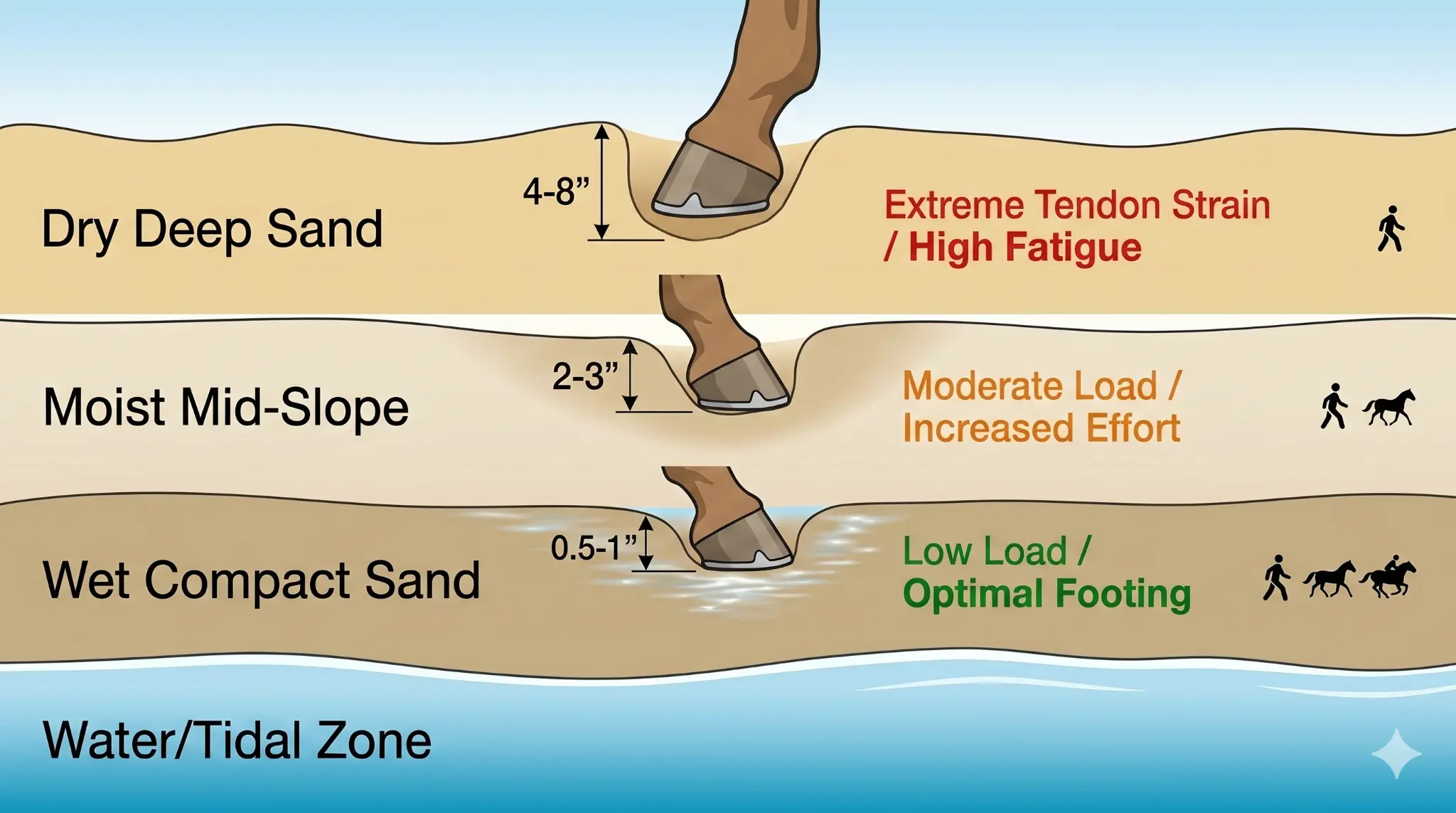
The Gold Standard: Firm, Wet Sand (The Intertidal Zone)
This is the area of the beach that is regularly washed over by the tide. As the water recedes, it leaves behind a highly compacted, damp surface. This footing provides excellent traction and support, acting much like a well-groomed arena. It is the safest and most stable zone for walking, trotting, and controlled cantering.
Moving landward from the intertidal zone, you will find the Moist Mid-Slope. This area is damp but does not receive constant wave action. It offers moderate support but is more yielding than the wet sand near the waterline. It is suitable for walking and light trotting, but riders should monitor their horse's hoof sink depth to prevent overexertion.
The most hazardous zone for sustained riding is the Deep, Dry Sand found high on the beach, near the dunes. Because this sand lacks moisture, the individual grains slide freely past one another. When a horse steps into dry sand, the hoof sinks deeply, requiring immense physical effort to lift and advance the limb. This deep footing creates a severe "drag" effect, placing extreme stress on the horse's deep digital flexor tendons and suspensory ligaments. Sustained trotting or cantering in deep, dry sand can lead to immediate soft-tissue injuries. Riding in this zone should be strictly limited to a slow, deliberate walk for short transitional periods.
Finally, riders must watch for Shelly or Uneven Patches. These are areas where the tide has deposited thick layers of broken seashells, pebbles, or kelp. This footing can be highly abrasive to barefoot horses and can hide submerged hazards like sharp rocks or glass. When navigating these patches, maintain a slow walk and allow your horse to carefully pick its way through. To help you plan your path, review the biomechanical impacts of each sand zone outlined in the infographic below.
At Second Chance Ranch, our guides are expertly trained to read these coastal conditions in real-time. During our beach rides, we always prioritize the safety of our horses and riders by selecting the optimal line along the shoreline. We advise all independent riders to keep their sessions on deep sand to an absolute minimum and focus their active riding on the firm, damp intertidal zone.

How Do You Condition and Desensitize a Horse for Coastal Riding Conditions?
A successful beach horseback ride is the result of systematic preparation, conditioning, and desensitization. You cannot take a horse straight from a quiet indoor arena or a predictable flat trail and expect them to handle the high-stimulus environment of the ocean without prior training. Doing so risks exposing the horse to physical injury from overexertion or behavioral panic from sensory overload.
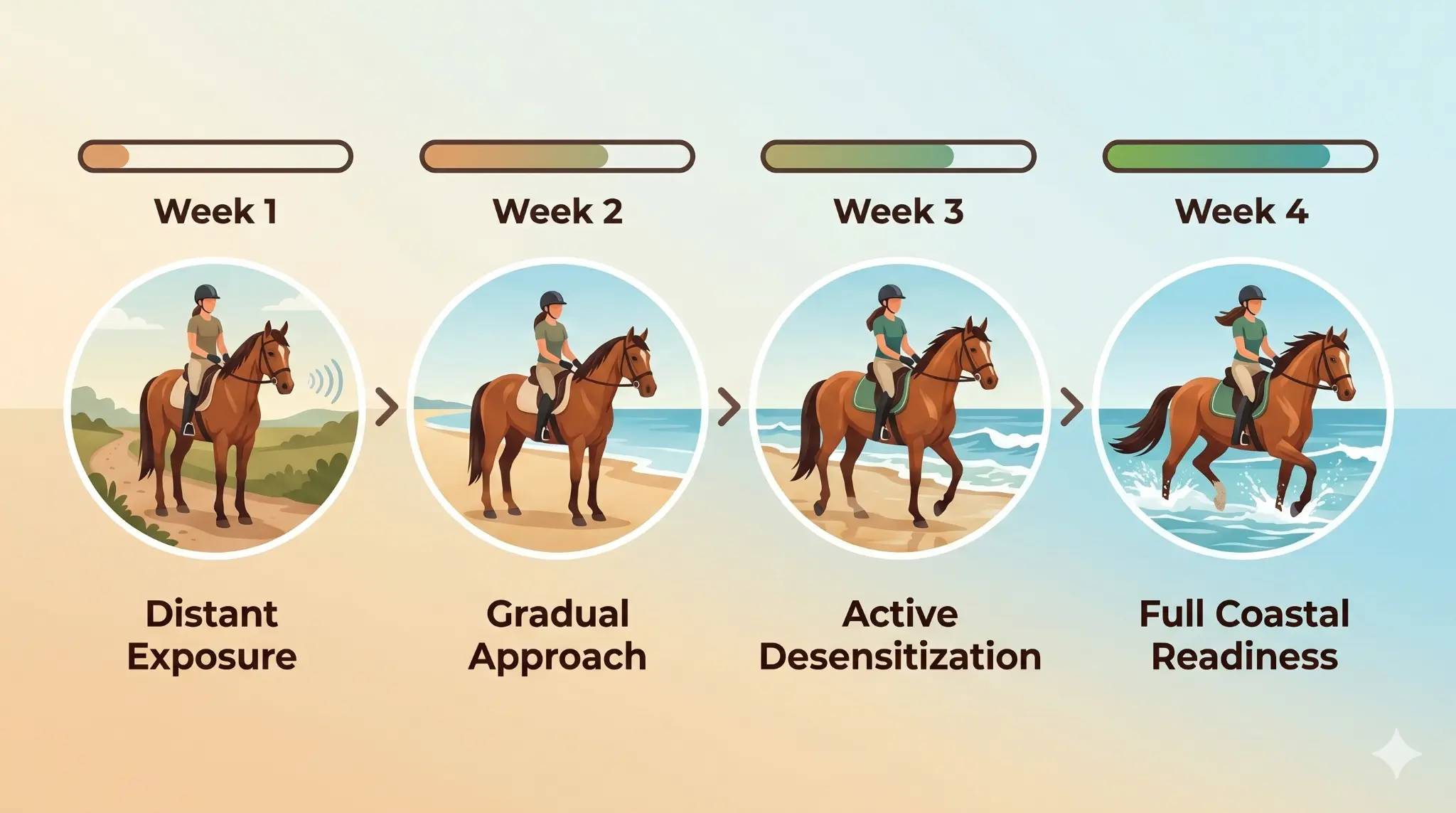
Conditioning a horse for sand work must be a gradual, progressive process. Because riding in sand increases the workload on a horse's cardiovascular system and musculoskeletal structure by up to 50% compared to firm ground, you must build their fitness incrementally. We recommend a structured 4-week conditioning template for any horse preparing for beach work:
- Week 1: Foundation Building. Limit beach sessions to 20 minutes of active walking on firm, wet sand. Focus on maintaining a straight line and a steady, relaxed rhythm. Spend the remaining time on nearby firm dirt trails to maintain overall fitness without overloading the tendons.
- Week 2: Introducing Gait Transitions. Increase beach time to 30 minutes. Introduce short intervals of trotting (1–2 minutes at a time) on the firmest wet sand. Always return to a walk before the horse shows signs of heavy breathing or fatigue.
- Week 3: Strength and Stamina. Extend the session to 40 minutes. Incorporate 5-minute trot sets and introduce very brief canter transitions (30 seconds to 1 minute) on straight, level stretches of wet sand. Monitor the horse's legs closely after the ride for any signs of heat or swelling.
- Week 4: Full Coastal Readiness. The horse should now be capable of a 45–60 minute beach session, consisting primarily of active walking, structured trotting, and controlled cantering on optimal footing.
In addition to physical conditioning, mental desensitization is critical for beach riding safety. The ocean presents a barrage of sensory stimuli that can trigger a horse's natural flight response. Waves making a crashing sound, sea foam blowing across the sand, and the visual illusion of moving water can all be highly terrifying to an unconditioned horse. To prepare your horse, start by introducing them to water hazards on inland trails. Our guides often practice these techniques during our horseback riding lessons for beginners, helping horses build confidence before they ever face the Pacific surf.
When you first arrive at the beach, do not rush straight to the water's edge. Start by walking your horse parallel to the shoreline at a safe distance where the sound of the waves is muffled and the water cannot reach their hooves. Allow the horse to look at the ocean, process the movement, and realize that the waves are not a threat. Reward calm, relaxed behavior with soft praise and a loose rein. Gradually decrease the distance to the water over several sessions, only moving closer when the horse is completely relaxed at the current distance. If you are riding a green or nervous horse, it is highly beneficial to ride alongside an experienced, calm "mentor" horse. Horses are herd animals and will draw immense confidence from a steady partner who treats the waves as nothing more than a puddle.
Rider preparation is equally important. When riding in high-stimulus coastal environments, the rider must maintain a neutral, centered posture. Avoid gripping tightly with your knees or pulling back on the reins, as this transmits tension directly to the horse and signals that there is something to fear. Keep your hands soft and low, allowing the horse enough freedom of their head and neck to balance themselves on the shifting sand. If you are a beginner or looking to refine your riding posture, we highly recommend taking a few Western horseback riding lessons to establish a secure, balanced seat before booking a beach ride.
Why Is Tide Timing and Water Depth Crucial for Beach Riding Safety?
When planning a beach horseback ride, the tide chart is your most important tool. Failing to consult the tide tables can result in a highly dangerous situation, such as being trapped against sea cliffs by a rising tide, or finding no firm sand available to ride on, forcing you into the hazardous deep dry sand or dangerous rocky zones.
The golden rule of coastal equestrian safety is to always plan your ride around a low or ebbing (falling) tide. Ideally, you should aim to mount up 1 to 1.5 hours before the exact time of low tide. This timing ensures that the tide is actively receding, exposing the maximum amount of firm, compacted wet sand and giving you a wide, safe corridor to ride on. It also guarantees that you will have a safe buffer of time before the water begins to rise again. Avoid riding during a high tide or a rapidly rising (flood) tide, as the water will quickly push you up into the soft, dry sand or trap you against natural obstacles.
Understanding wave safety and setting hard limits on water depth is equally critical. While it is incredibly photogenic to ride through the splashing surf, you must never take a horse into water that is too deep or fast-moving. The maximum safe depth for a horse in the ocean is hock-deep (or roughly knee-deep). At this depth, the water does not exert enough force to destabilize the horse's legs, and the horse can still clearly see the footing beneath them. Never attempt to take a horse into chest-deep water or force them to swim in the ocean. The ocean currents, undertows, and rip tides are incredibly powerful and can easily sweep a horse and rider out to sea.
Furthermore, breaking waves present a unique hazard. A wave breaking against a horse's legs can easily knock them off balance, especially as the wet sand washes out from beneath their hooves as the wave recedes. Always ride parallel to the waves rather than directly into them, and keep a close eye on the incoming swells. If a larger wave approaches, turn your horse's head slightly toward the wave to help them absorb the impact, and maintain a secure, forward-leaning seat.
Riders must also remain vigilant for submerged coastal hazards. The intertidal zone can hide a variety of dangers beneath the surface of the water, including:
- Submerged Holes and Troughs: Ocean currents can scour out deep, sudden depressions in the sand that are invisible from the surface. A horse stepping into one of these holes can easily stumble or fall.
- Driftwood and Marine Debris: Large logs, branches, and construction debris can wash up on the beach or float just below the surface, presenting a severe tripping or impalement hazard.
- Thick Seaweed Mats: Dense patches of kelp or seaweed can wrap around a horse's legs, causing them to panic or slip. Seaweed can also hide sharp rocks or broken shells beneath it.
- Rip Currents and Channels: Near river mouths or coastal lagoons, deep channels with fast-moving water can form. Never attempt to cross these channels on horseback unless you are 100% certain of the depth and current velocity.
To ensure a safe and stress-free experience, we recommend checking the local NOAA tide predictions and surf forecasts before every ride. If you are unfamiliar with reading coastal forecasts, our team at Second Chance Ranch handles all of this planning for you. When you book a sunset trail ride experience or a beach ride with us, we carefully schedule our departure times to align perfectly with the safest tidal windows of the day.
What Gear and Hoof Care Routine Protects Your Horse from Salt and Sand?
The coastal environment is incredibly harsh on both equestrian gear and horse physiology. Saltwater is highly corrosive to metals and drying to leather, while fine beach sand acts like sandpaper, trapping moisture and grinding against sensitive skin to cause painful rubs and sores. To protect your horse and preserve your equipment, you must adopt a specialized gear selection and aftercare routine.
Let's begin with hoof care, which is the foundation of any sound horse. A common question is whether horses need shoes for a beach horseback ride. The answer depends on your horse's individual hoof quality and the specific beach terrain. If you are riding on a clean, sandy beach like Rincon Beach, barefoot horses often do fantastic, as the wet sand provides natural support and mild abrasion that can actually help polish the hoof. However, if the beach has rocky stretches, shell beds, or if your horse has sensitive soles, hoof protection is highly recommended. If your horse wears traditional steel shoes, be aware that wet sand can pack tightly inside the shoe, creating a "snowball" effect that increases pressure on the sole. Always carry a hoof pick in your saddlebag to clear out packed sand during the ride.
For horses that require temporary protection, hoof boots are an excellent alternative. When choosing hoof boots for wet, sandy terrain, select a model with excellent drainage ports that allow water and fine sand to escape freely. Boots that trap water will quickly waterlog, increasing the weight on the horse's limb and causing severe rubbing around the coronet band and pastern. After every beach ride, remove the boots immediately and thoroughly flush out any trapped sand from both the boot and the horse's hoof using clean, fresh water.
Leg protection requires equal care. While it is tempting to wrap your horse's legs in protective boots or bandages to prevent knocks, doing so on the beach can actually cause more harm than good. Fine beach sand will inevitably find its way inside any boot, wrap, or bandage. Once trapped, the sand acts as a highly abrasive grit, grinding against the horse's skin with every stride and causing severe, painful "sand burns" or rubs. Therefore, the safest practice for beach riding is to leave the horse's legs bare, unless they have a specific veterinary requirement for support. If you must use boots, select breathable, open-front designs made of non-porous materials that do not absorb water, and check them frequently throughout the ride for sand accumulation.
Your choice of tack should also be adapted to coastal conditions. Saltwater will rapidly corrode standard steel or iron buckles and hardware, and it will strip the natural oils from high-quality leather, leaving it dry, brittle, and prone to cracking. For frequent beach riding, we recommend using synthetic tack made of Beta-Biothane or high-strength nylon. Synthetic tack is completely waterproof, does not absorb salt or sweat, and can be easily rinsed clean with a hose. If you prefer to use traditional leather tack, ensure that all hardware is made of high-quality stainless steel, brass, or bronze, which resist rust. Never use cheap nickel-plated hardware on the beach, as it will begin to rust after a single exposure to salt air.
Rider gear should focus on safety, comfort, and protection from the elements. Coastal weather can change rapidly, so dressing in layers is essential. We recommend a wind-resistant outer shell, sun-protective clothing (UPF 50+), and polarized sunglasses to reduce the intense glare off the water and sand. Always wear a properly fitted equestrian helmet and sturdy riding boots with a heel. Finally, protect your personal electronics by keeping your phone in a high-quality waterproof, floating case, and consider wearing a reflective safety vest if you are riding near dusk or in low-light conditions.
How Do You Navigate Beach Regulations, Permits, and Shared-Use Etiquette?
As equestrians, we share the beauty of the coastline with a wide variety of other beachgoers, including sunbathers, surfers, dog walkers, anglers, and wildlife. To preserve our right to ride on the beach and ensure a peaceful, low-conflict experience, we must strictly adhere to local regulations and practice impeccable trail etiquette.
Before you ever load your horse into the trailer, you must verify the local rules and regulations for your target beach. Many public beaches in California have strict restrictions on equestrian use. Some beaches ban horses entirely, while others permit them only during specific hours (such as early morning or late evening), during certain seasons (typically off-season from October to March), or require a pre-purchased permit. Additionally, many coastal areas contain protected ecological reserves, nesting grounds for endangered birds (such as the Western Snowy Plover), or marine mammal hauling-out zones that are strictly off-limits to horses. Violating these boundaries can result in heavy fines and damages the reputation of the equestrian community. At Second Chance Ranch, we maintain all necessary permits and strictly follow all local, state, and federal guidelines for our beach operations, ensuring that our rides are fully compliant and environmentally sustainable.
When riding on a shared-use beach, always practice the "yield" rule. Equestrians should yield to all pedestrians, sunbathers, and slow-moving beachgoers. When approaching other people, slow your horse to a walk and pass at a wide, respectful distance. Never canter or gallop past sunbathers or families; the sight of a large animal moving at speed can be highly intimidating to non-riders, and a sudden spook could lead to a dangerous collision. If you encounter dog walkers, be prepared for the dog to bark or approach your horse. Keep a calm, steady hand, communicate politely with the owner, and ask them to hold their dog while you pass. If you see anglers casting lines into the surf, give them a very wide berth to avoid getting tangled in invisible, high-strength fishing lines or stepping on discarded hooks.
If you are riding in a group, establishing clear communication and spacing is essential. Maintain at least one full horse-length of space between each mount to prevent kicking or biting. Appoint an experienced rider as the "lead" to scout for hazards and set the pace, and another experienced rider as the "sweep" to stay at the back and ensure no one is left behind. Use clear, loud verbal commands or standard equestrian hand signals to communicate stops, pace changes, or hazards to the riders behind you. If a rider in the group wants to canter, do so one at a time on a clear, straight stretch of firm sand, and always wait for the entire group to regroup at a walk before continuing.
Environmental stewardship is another critical component of beach riding etiquette. The coastal ecosystem is incredibly fragile. Dunes and beach vegetation play a vital role in preventing coastal erosion and providing habitat for wildlife; therefore, riding on dunes or through beach vegetation is strictly prohibited. Always access the beach via designated equestrian trailheads or ramps, and never cut across protected areas. Additionally, practice "pack-it-in, pack-it-out" principles. Do not leave manure or trash in the parking lot or staging areas; shovel any manure from your trailer area back into your trailer before departing, and leave the staging area cleaner than you found it.

What Are the Best On-the-Beach Tactics for Mounting, Pacing, and Managing Excitement?
Once you have completed your preparation, checked the tides, and arrived at the beach, it is time to mount up and enjoy your session. To keep the ride safe, controlled, and highly enjoyable, you should employ specific on-the-beach tactics that address the unique challenges of the terrain and the natural excitement of your horse.
Let's begin with mounting. Mounting a horse in soft, shifting sand can be highly challenging and places unnecessary torque on the horse's back and the saddle tree. Shifting sand does not provide a stable base for your mounting leg, increasing the risk of the saddle slipping or the horse losing their balance as you swing up. To prevent this, always mount and dismount on firm, level ground, such as the packed dirt of the staging area or a paved equestrian ramp. If you must mount on the beach, lead your horse to a flat stretch of firm, damp sand near the waterline, and use a portable mounting block or a natural log or rock if available. This reduces the strain on your horse's back and ensures a secure, balanced mount.
Once mounted, do not immediately set off at a trot or canter. Start your session with at least 10 to 15 minutes of active, purposeful walking. This initial walking period serves several critical purposes: it allows your horse's muscles and tendons to warm up gradually on the yielding sand, gives you an opportunity to assess the day's footing and tide line, and helps your horse settle mentally and focus on your cues. Use this time to practice basic steering, halts, and transitions, ensuring that your horse is responsive and listening to your aids before you increase the pace.
When you are ready to increase the speed, do so with extreme restraint and planning. If you wish to trot or canter, select a clear, straight stretch of firm, wet sand that is free of debris, rocks, or other beachgoers. Never canter on a curve or a steep slope, as the combination of shifting sand and centrifugal force can easily cause a horse to slip or lose their footing. Keep your speed work short and structured; a 1-to-2 minute canter is more than enough to give you that thrilling beach experience without overfatiguing your horse's tendons. If you are riding in a group, always canter one at a time, keeping a safe distance between horses, and never allow your horses to race head-to-head. Racing triggers a horse's natural herd instinct to run, which can quickly lead to a loss of control and a highly dangerous runaway situation.
Managing your horse's excitement is one of the most common challenges of beach riding. The open space, wind, and crashing waves can act as a powerful stimulant, causing even the calmest trail horse to feel energetic, jig, or pull on the bit. If your horse becomes overly excited or anxious, do not engage in a pulling contest, as this will only increase their panic and resistance. Instead, redirect their energy into focused, lateral work. Practice gentle leg yields, shoulder-ins, or large, smooth circles on the firm sand. These exercises force the horse to cross their legs, balance themselves, and focus their mind on your physical cues rather than the distracting environment. Keep your breathing deep and regular, relax your seat, and use soft, pulsing half-halts on the reins to re-establish a calm, steady rhythm.
If you are planning your first beach ride or want to experience the thrill of coastal riding under the guidance of expert professionals, we invite you to book your horseback trail ride with Second Chance Ranch. Our experienced guides, well-trained horses, and carefully planned routes ensure that you can enjoy the magic of Rincon Beach with complete peace of mind, regardless of your previous riding experience. For more information on what to expect, check out our guide on what to expect on your first guided trail ride.

What Is the Proper Post-Ride Recovery and Aftercare Routine for Coastal Horses?
The work of a beach horseback ride is not finished when you dismount. In fact, the post-ride recovery and aftercare routine is the most critical phase for protecting your horse's long-term health and soundness. Exposing a horse to salt, sand, and wind without proper aftercare can lead to severe skin infections, tendon issues, hoof damage, and ruined tack.
The immediate step after finishing your active ride is a proper cool-down. Dismount and loosen your horse's cinch or girth slightly, then lead them at a slow walk for 10 to 15 minutes until their breathing and heart rate return to normal. During this cool-down, be highly mindful of the coastal wind. A wet, sweaty horse exposed to cold ocean winds can quickly chill, leading to muscle tightness or colic. If the wind is strong and cold, throw a breathable cooler sheet over your horse's back during the cool-down walk.
Once the horse is cooled down, lead them to the wash rack or trailer staging area for a thorough fresh-water rinse. This rinse is non-negotiable; you must completely flush away all salt residue and trapped sand from the horse's body. Focus intensely on the following areas:
- The Legs and Hooves: Thoroughly hose down the lower limbs to remove all sand from the coronary band, pasterns, and fetlocks. Pick out the hooves and use a stiff brush to flush out any sand or tiny shells lodged in the collateral sulci of the frog or under the shoe.
- The Girth and Belly Line: The area where the saddle girth rests is highly prone to "girth itch" and sand rubs. Hose this area thoroughly, running your fingers through the hair to ensure no grit remains.
- The Tailhead and Dock: Sand often blows into the dock area under the tail, causing severe itching and irritation. Lift the tail and gently rinse the dock and tailhead with clean water.
- The Face and Eyes: If your horse was splashed with saltwater during the ride, use a damp, clean sponge to gently wipe their eyes, nostrils, and face to remove salt crusts and prevent irritation.

After rinsing, perform a meticulous physical inspection. Run your hands down your horse's legs, checking for any heat, swelling, or sensitivity in the tendons and ligaments. Inspect the skin closely for any minor cuts, scrapes, or early signs of sand rubs, especially in the pastern area and behind the fetlocks. Treat any minor abrasions with a soothing, water-resistant antiseptic ointment. Allow the horse to dry completely in a draft-free area before loading them into the trailer or putting them back in their stall.
Your gear requires equally diligent aftercare. To prevent your tack from deteriorating, establish a strict post-ride maintenance routine. For synthetic tack (such as Biothane), simply submerge the entire bridle, reins, and girth in a bucket of warm, soapy water, scrub away any sand, rinse with clean water, and hang to dry. For leather tack, wipe down all leather surfaces with a damp cloth to remove salt and sweat immediately after the ride. Once dry, apply a high-quality leather cleaner followed by a rich leather conditioner or oil to restore the moisture stripped by the salt air. Pay special attention to the metal buckles, bits, and stirrup irons; rinse them thoroughly in fresh water, dry them with a towel, and apply a light coat of WD-40 or mineral oil to prevent rust and corrosion.
By establishing this comprehensive care routine, you ensure that your horse remains sound, healthy, and eager for their next coastal adventure. If you want to learn more about preparing for your first trail ride, including what gear to bring and how to dress, check out our comprehensive first horseback riding checklist. We also recommend reading our guide on matching the right horse to the rider to understand how we select the perfect mount for your specific needs and skill level. For additional insights on beginner fitness, explore our article on beginner horseback trail riding fitness.
Frequently Asked Questions About Beach Horseback Riding
Is it safe to take a horse into the ocean, and how deep can they go?
Yes, taking a horse into the ocean is safe, provided the horse is properly desensitized, the rider is experienced, and the water conditions are favorable. However, safety must always come first. The maximum safe depth for a horse in the ocean is hock-deep (roughly knee-deep). Going any deeper exposes the horse to powerful waves, undertows, and rip currents that can easily knock them off balance or sweep them out to sea. Never attempt to take a horse into chest-deep water or force them to swim in open ocean conditions. For a safe, professionally guided experience, we recommend booking our Rincon Beach rides, where our expert guides carefully monitor water depths and wave patterns to keep you and your mount completely safe.
Do horses need shoes for a beach horseback ride?
Not necessarily. Barefoot horses often do exceptionally well on sandy beaches, as the wet sand provides excellent support and natural abrasion that helps polish the hoof. However, if the beach has rocky sections, gravel trails, or shell beds, or if your horse has sensitive soles, hoof protection is highly recommended. If your horse wears traditional steel shoes, be aware that wet sand can pack tightly inside the shoe, creating pressure on the sole; always carry a hoof pick to clear it out. Alternatively, hoof boots with excellent drainage ports are a fantastic option for temporary protection on wet, sandy terrain.
What is the best time of day to ride on the beach?
The best time of day to ride on the beach is determined entirely by the tide schedule, rather than the clock. You should always aim to ride during a low or ebbing (falling) tide, ideally starting 1 to 1.5 hours before the exact time of low tide. This timing ensures that you have access to the widest stretch of firm, compacted wet sand, which is the safest footing for your horse. Riding during high tide forces you into the deep, dry sand or against dangerous sea cliffs. If you are looking for the most picturesque experience, scheduling your low-tide ride to coincide with sunset is spectacular. You can explore our sunset trail ride experience to see how we align our departures with these optimal tidal and lighting windows.
Can you canter or gallop on the beach safely?
Yes, but only under highly controlled conditions and on the correct footing. Cantering should only be executed on straight, level stretches of firm, wet sand near the waterline. Never canter on deep, dry sand, curves, or steep slopes, as this can lead to severe tendon injuries or slips. If you are riding in a group, canter one at a time to prevent horses from racing, which can trigger their herd instinct and cause a dangerous loss of control. Beginners should always stick to a relaxed walk to build confidence and balance. At Second Chance Ranch, we adapt the pace of our rides to match the skill level of our guests, ensuring a thrilling yet safe experience for everyone. For more information on beginner techniques, see our horseback riding for beginners guide.
How long should a first beach horseback riding session last?
For a horse's first beach session, the ride should be kept short and conservative, typically lasting no more than 30 to 45 minutes. Because sand footing increases the physical workload on a horse's muscles and tendons by up to 50% compared to firm ground, longer sessions can quickly lead to overexertion and injury. Start with a slow, active walk on the firm wet sand to allow the horse to adjust to the footing and the high-stimulus environment. You can gradually increase the duration and intensity of your sessions over several weeks as your horse builds the necessary cardiovascular fitness and tendon strength.
How do you protect equestrian tack from saltwater corrosion?
To protect your tack from the corrosive effects of salt and sand, you must establish a strict post-ride maintenance routine. If you ride on the beach frequently, we highly recommend using synthetic tack made of Beta-Biothane, which is waterproof and can be easily rinsed clean with water. If you use leather tack, ensure all hardware is made of stainless steel, brass, or bronze. Immediately after your ride, wipe down all leather surfaces with a damp cloth to remove salt and sweat, and apply a rich leather conditioner to restore moisture. Rinse all metal buckles, bits, and stirrup irons in fresh water, dry them thoroughly, and apply a light coat of oil to prevent rust.
Are sand dunes off-limits for horseback riding?
Yes, sand dunes are strictly off-limits for horseback riding. Coastal dunes play a vital ecological role in preventing beach erosion and providing habitat for nesting birds and native vegetation. Riding horses on dunes destroys this fragile ecosystem, accelerates erosion, and violates local environmental regulations. Riding on dunes can result in heavy fines and damages the reputation of the equestrian community. Always access the beach via designated equestrian trailheads and ramps, and keep your horse on the active shoreline, well away from the dunes and protected vegetation zones.
What should you do immediately after a saltwater horseback ride?
Immediately after a saltwater ride, you must perform a thorough post-ride care routine. First, cool down your horse by walking them for 10 to 15 minutes until their breathing normalizes. Next, perform a complete fresh-water rinse of the horse's entire body, paying special attention to the legs, hooves, girth area, and belly line to remove all salt residue and trapped sand. Pick out the hooves and flush out any sand lodged under the shoes or frog. Finally, inspect the legs and skin for any heat, swelling, or sand rubs, and treat any minor abrasions with a water-resistant antiseptic ointment before letting the horse dry in a draft-free area.
Ready to experience the magic of coastal riding for yourself? At Second Chance Ranch, we make your dream a reality. Whether you want to explore the majestic mountains of Santa Clarita, ride through the historic Vasquez Rocks, or splash through the surf at Rincon Beach, we have the perfect experience waiting for you. All skill levels are welcome, and our well-trained horses and expert guides ensure a safe, memorable adventure. Visit horsebackridingtrails.com to view our ride calendar, check our latest seasonal and holiday specials, and reserve your ride online today!