Los Angeles Beach Horseback Riding in Southern California
Experience horseback riding on the beach in Los Angeles, Southern California—small groups, confident horses, and a bucket‑list ride built for connection.
.png)
Why Our Beach Rides Are a True Bucket-List Experience (Not a Tourist Pony Ride)
Most people arrive at the idea of beach horseback riding with a very specific picture in their mind.
A calm, powerful horse beneath you.
The sound of waves rolling in beside you.
Salt air, open space, and that rare feeling of freedom you don’t get in everyday life.
A moment where time slows down and everything feels simple again.
It feels like it should be one of those once-in-a-lifetime experiences — the kind you remember forever.
But for many riders, the reality doesn’t match the dream.
What they actually experience is a slow-moving line of horses, nose-to-tail, barely stepping out of a walk. A rushed guide calling out instructions from the front. Horses that feel disconnected, tired, or checked out. A ride that’s over almost as soon as it begins — leaving people thinking, “That was it?”
It’s not that beach rides themselves are overrated.
It’s that most of them are designed to move people through quickly, not to create a meaningful experience.
At Second Chance, we don’t believe a beach ride should feel like a tourist attraction.
We believe it should feel like something earned, intentional, and deeply memorable.
That’s why our beach rides are built differently — from the horses we choose, to the way we prepare riders, to how we move across the sand and shoreline. This isn’t about checking a box or grabbing a quick photo. It’s about presence, connection, and experiencing the coast from horseback the way it was meant to be felt.
And once you’ve ridden that way, it’s hard to settle for anything less.
What Most “Beach Horseback Rides” Actually Are
When people say they’ve “done a beach ride,” they’re often talking about a very specific type of experience — whether they realize it or not.
Most beach horseback rides are designed to move as many people as possible, as safely and quickly as possible, through a narrow window of time. The priority isn’t depth, connection, or riding quality — it’s efficiency.
That usually looks like this:
Horses lined up nose-to-tail, walking slowly in a straight line.
Large groups where riders are spaced just close enough to prevent movement.
Minimal instruction beyond “hold the reins” and “don’t get too close.”
A guide leading from the front, focused on keeping the line together rather than engaging with riders.
From the outside, it still looks magical. Ocean backdrop. Horses on the sand. Cameras out.
But from the saddle, it often feels flat.
There’s very little communication between horse and rider. Very little awareness of the environment. And very little opportunity to settle into the rhythm that makes riding feel grounding and alive. Horses in these setups are often doing the same route, the same pace, day after day — which can leave them mentally checked out and physically restricted.
To be clear: this model exists for a reason.
It allows first-time riders, large tour groups, and tight schedules to coexist with minimal risk.
But it also means the experience is intentionally limited.
You’re not really riding so much as sitting on a horse while being moved from point A to point B.
And if you’ve ever stepped off one of those rides feeling underwhelmed or strangely disconnected, it’s not because beach riding isn’t special. It’s because the structure of the experience never allowed it to be.
We believe the beach deserves more respect than that — and so do the horses and riders who step onto it.
Our Horses: Calm, Capable, and Confident in Open Spaces
Not every horse belongs on the beach.
Open coastline is one of the most stimulating environments a horse can experience — shifting sand, crashing waves, wind, seabirds, wide horizons, and constant movement in the periphery. For the wrong horse, it’s overwhelming. For the right horse, it’s grounding.
That’s why our beach rides start long before we ever load the trailer.
We choose horses who are mentally steady, emotionally curious, and comfortable thinking for themselves in open environments. These are horses who don’t panic at sudden movement, who can stay relaxed even when the world feels big, and who are confident enough to carry a rider through changing conditions without tension.
Just as important: we don’t force horses into beach work.
Some horses love the mountains. Some thrive on quiet trails. Others light up near the ocean. We pay attention to that — because a horse that wants to be there creates a completely different experience for the rider.
Our horses are not shut down.
They’re not rushed.
They’re not dulled by repetition.
They’re present.
You can feel it in the way they move across the sand. In how they adjust their footing without being micromanaged. In how they breathe when the waves roll in beside them. A calm, capable horse gives riders something invaluable: the ability to relax and trust the moment.
Horse welfare isn’t just an ethical decision — it directly shapes the experience.
A horse that feels respected, prepared, and mentally sound doesn’t need to be restricted to stay safe. And when horses are comfortable, riders naturally become more confident, more aware, and more connected.
That’s why we limit how often our horses do beach rides.
Why we rotate them carefully.
Why we walk away from conditions that don’t feel right.
Because the magic people feel on these rides isn’t accidental. It’s the result of horses who are allowed to be exactly who they are — strong, thoughtful, and completely at home in the environment they’re moving through.
The Ride Itself: Freedom, Flow, and Real Riding
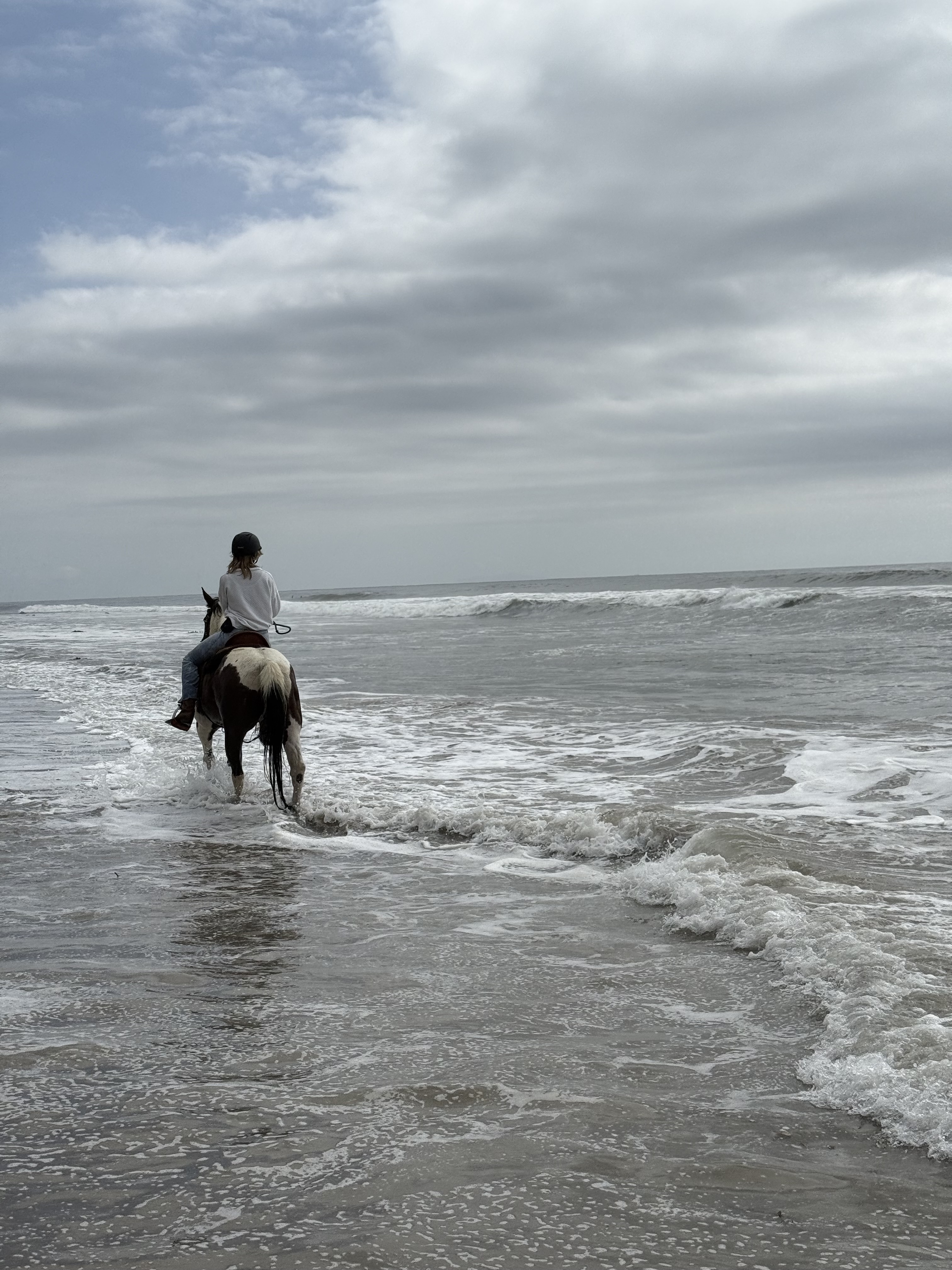
Once you step onto the sand, the difference becomes immediately clear.
There’s space.
Space between horses.
Space to breathe.
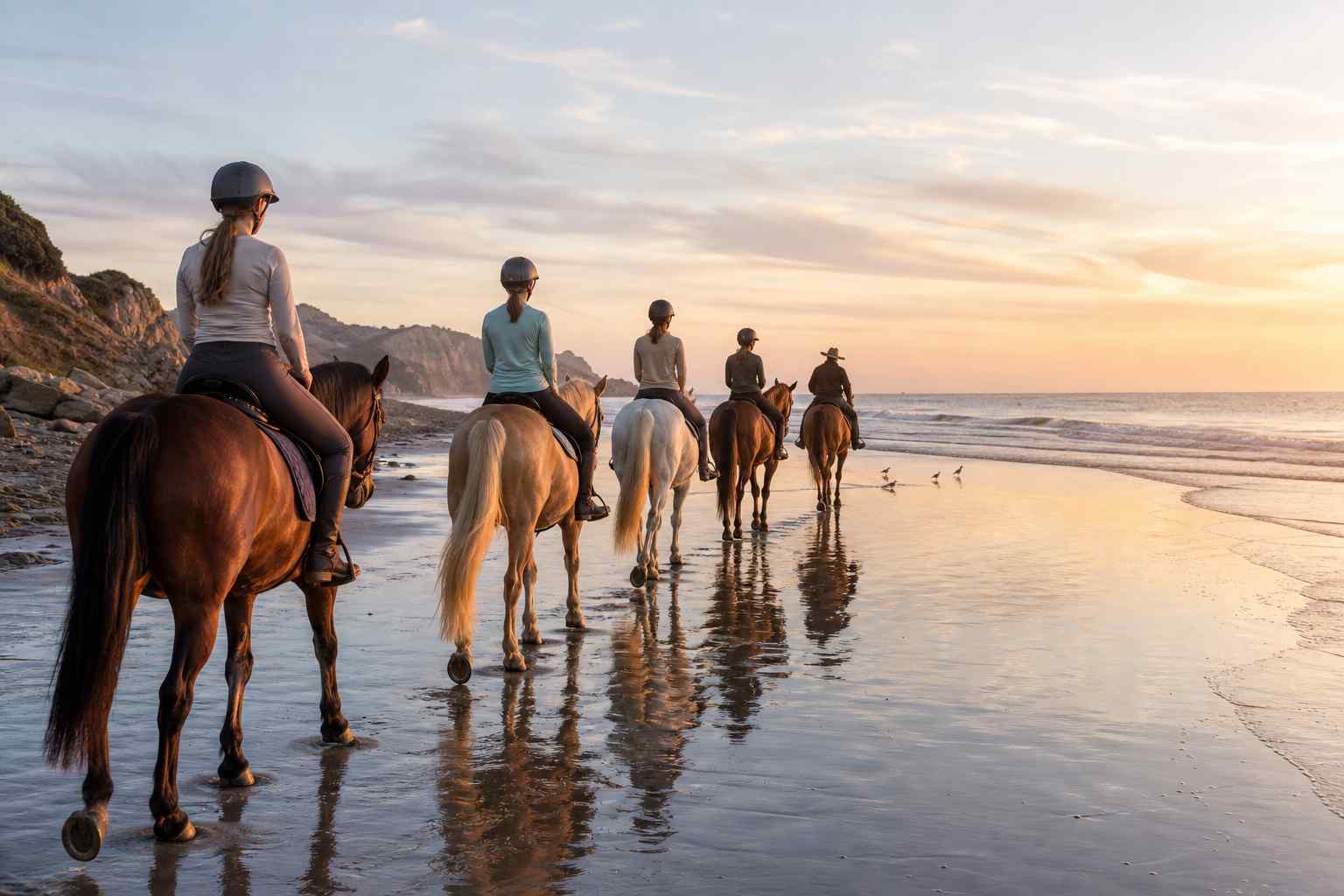
Space to let the rhythm of the ride unfold naturally instead of being forced into a line.
Our beach rides are built around flow, not control.
That doesn’t mean chaos or unpredictability — it means allowing horses and riders to move in a way that feels balanced, aware, and responsive to the environment. We maintain thoughtful spacing so horses can use their bodies naturally, adjust their stride to the sand, and stay mentally engaged without pressure from the horse in front of them.
You’re not being rushed.
You’re not being held back “just in case.”
And you’re never left guessing what to do.
We guide continuously — quietly, clearly, and with intention — helping riders tune into their horse, the footing, and the energy of the open space around them. You learn how to move with the beach rather than against it: how to stay relaxed as waves roll in, how to feel when your horse adjusts its balance, how to remain present instead of tense.
This is where the experience stops feeling like an activity and starts feeling like a conversation.
Between you and the horse.
Between the movement and the environment.
Between effort and ease.
There are moments of stillness. Moments of movement. Moments where you realize you’ve stopped thinking altogether — and you’re just there, riding beside the ocean with nothing else competing for your attention.
That sense of freedom isn’t accidental, and it isn’t about speed.
It comes from preparation, trust, and respect — for the horses, the riders, and the coastline itself.
And it’s the reason people step off these rides feeling grounded instead of overstimulated, fulfilled instead of rushed, and deeply aware that they just experienced something rare.
Safety Without Killing the Vibe
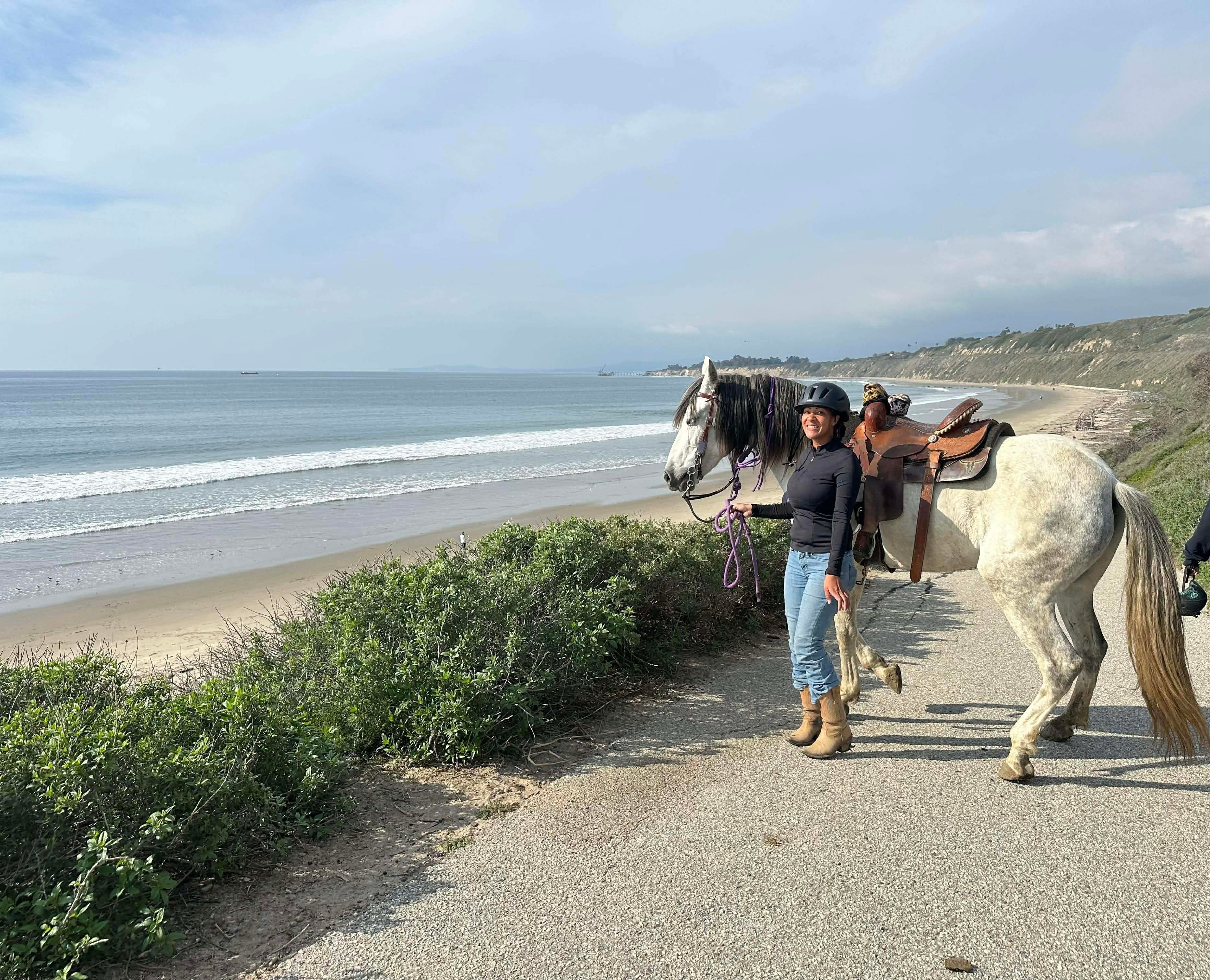
Safety is the reason our beach rides feel the way they do — not the thing that gets in the way of them.
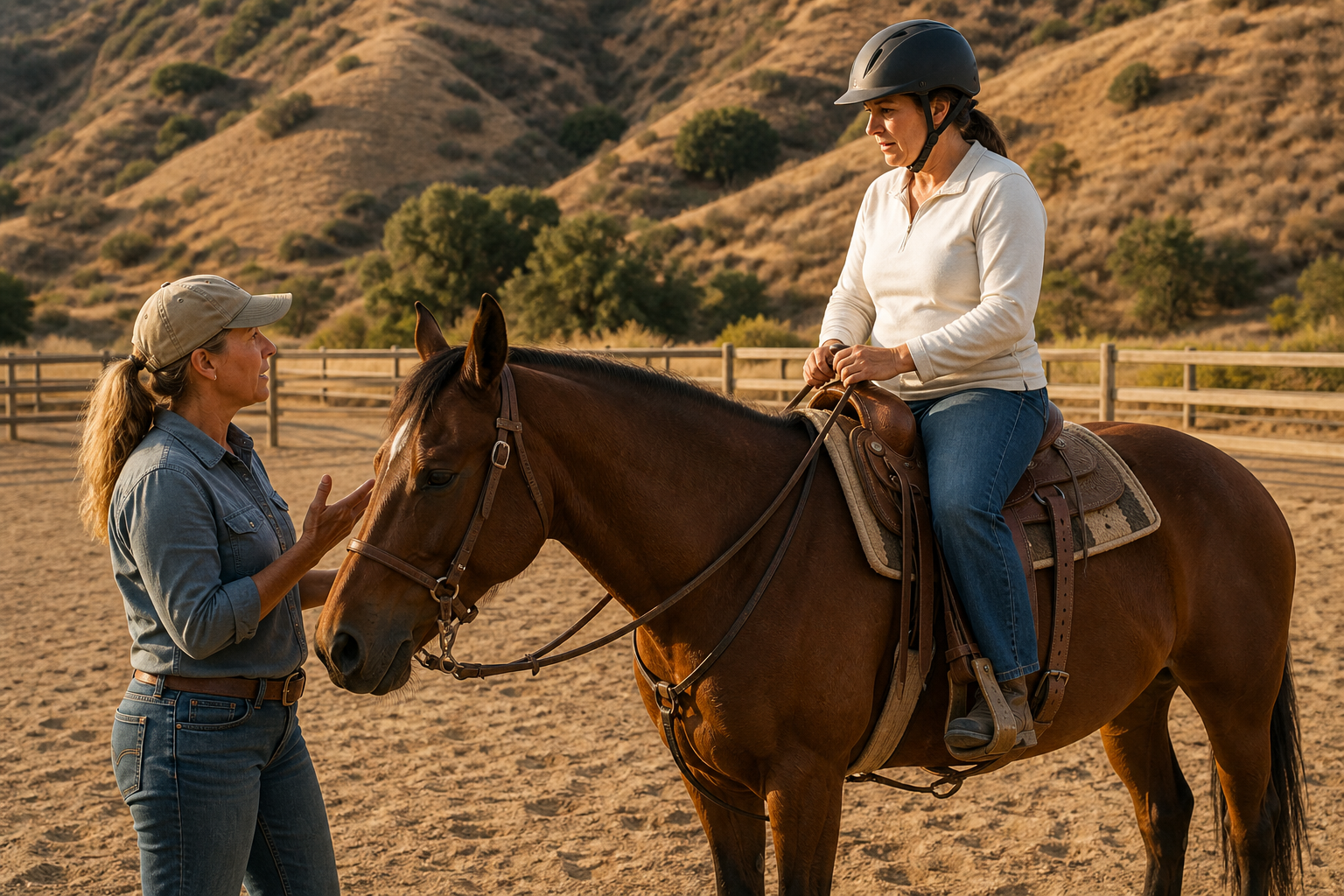
Before anyone ever rides along the shoreline, we take time to set the foundation. Not with long lectures or rigid rules, but with clear preparation that helps riders understand their horse, the environment, and what to expect once we’re moving.
Every rider is matched thoughtfully to a horse based on comfort level, experience, and energy — not randomly, and never rushed. That pairing matters more on the beach than almost anywhere else. Open spaces amplify emotions, both human and equine, and the right match creates calm instead of tension.
We also do a short ground-based check-in before the ride. This isn’t about “training” riders — it’s about helping people feel oriented and confident. How to hold the reins comfortably. How to read what your horse is telling you. What to do if something unexpected happens. Small things that quietly change how relaxed a rider feels once they’re in the saddle.
Out on the beach, safety comes from awareness rather than restriction.
We’re constantly reading conditions: tides, wind, footing, other beach activity, and how each horse and rider is responding in real time. Routes and pacing adjust accordingly. If something doesn’t feel right, we change it — without drama and without apology.
That’s the difference between controlling an experience and caring for it.
When riders feel supported instead of managed, they naturally become more present. They sit deeper. They breathe more fully. They trust their horse instead of bracing against the moment. And that trust is what allows the ride to feel expansive instead of tense.
True safety doesn’t shrink an experience.
It creates the space for it to unfold.
The Emotional Side People Don’t Expect
Most people come to a beach ride expecting something beautiful.
What they don’t expect is how it feels afterward.
There’s often a quiet moment when riders step off the horse and just stand there for a second — not rushing to grab a phone, not talking much, just letting the experience settle. Some people smile without realizing it. Some get unusually quiet. A few get emotional and can’t quite explain why.
It surprises them every time.
Riding along the ocean does something subtle. The rhythm of the horse, the sound of the waves, the openness of the space — it pulls you out of your head and into your body in a way that’s rare in everyday life. There’s no multitasking. No background noise competing for attention. Just movement, breath, and presence.
For many riders, it’s the first time in a long time they’ve felt fully there.
You start to notice small things: how your horse’s ears flick toward the water, how the sand feels different under each step, how your own breathing slows without you trying to control it. The ride becomes less about “doing” and more about experiencing.
That’s why people often say the same thing afterward:
“I didn’t expect it to affect me like that.”
It’s not adrenaline.
It’s not performance.
It’s not about being fearless or impressive.
It’s about reconnecting — to the horse, to the environment, and to a version of yourself that doesn’t live on a schedule.
That emotional imprint is what turns this from a nice activity into a true bucket-list experience. Not because it looks incredible in photos (though it does), but because it stays with you long after the sand is washed off your boots.
Who This Ride Is Perfect For (and Who It’s Not)
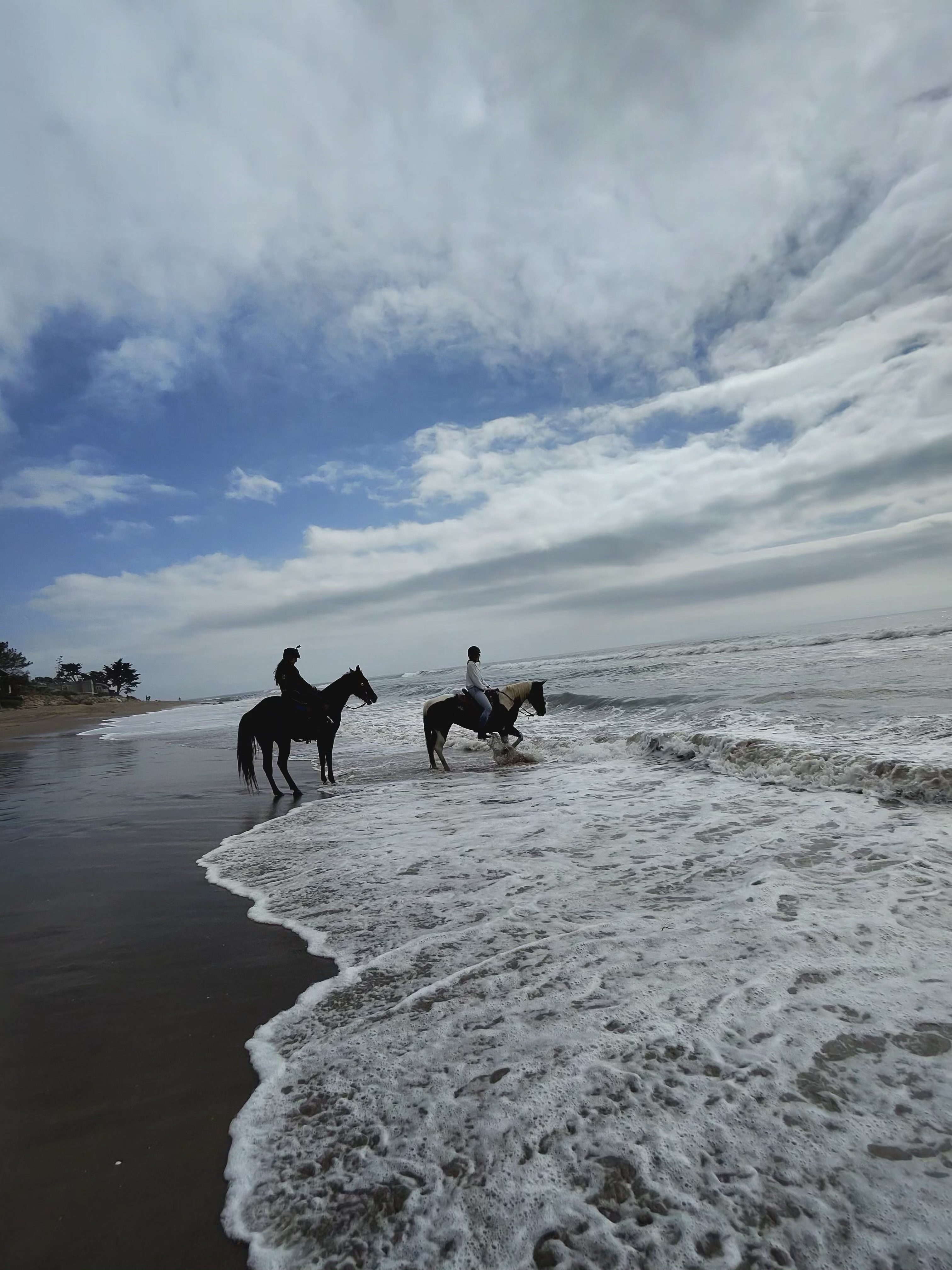
This beach ride isn’t designed to be everything for everyone — and that’s intentional.
It’s built for people who want to experience something, not just pass through it.
This ride is perfect for you if:
- You’re drawn to meaningful, immersive experiences over quick photo ops
- You want to feel present, grounded, and connected while riding
- You’re comfortable listening, engaging, and riding with awareness
- You appreciate horses as partners, not props
- You want a story you’ll still be telling years from now
You don’t need to be an expert rider. You do need to be open to the experience — to slowing down, paying attention, and trusting the process.
This ride may not be the right fit if:
- You’re looking for a fast, inexpensive activity to fill an hour
- You want a guaranteed “photo-only” moment with minimal riding involvement
- You’re uncomfortable following guidance or adjusting to conditions
- You’re part of a large group trying to stay tightly together
- You want something rushed, scripted, or purely transactional
There’s nothing wrong with those preferences — they’re just not what this experience is built around.
We’ve learned that the best beach rides happen when expectations are aligned. When riders arrive curious instead of rushed, open instead of distracted, the experience naturally deepens for everyone involved — horses included.
That alignment is what allows these rides to feel calm, expansive, and unforgettable.
This Isn’t a Ride You Check Off — It’s One You Remember
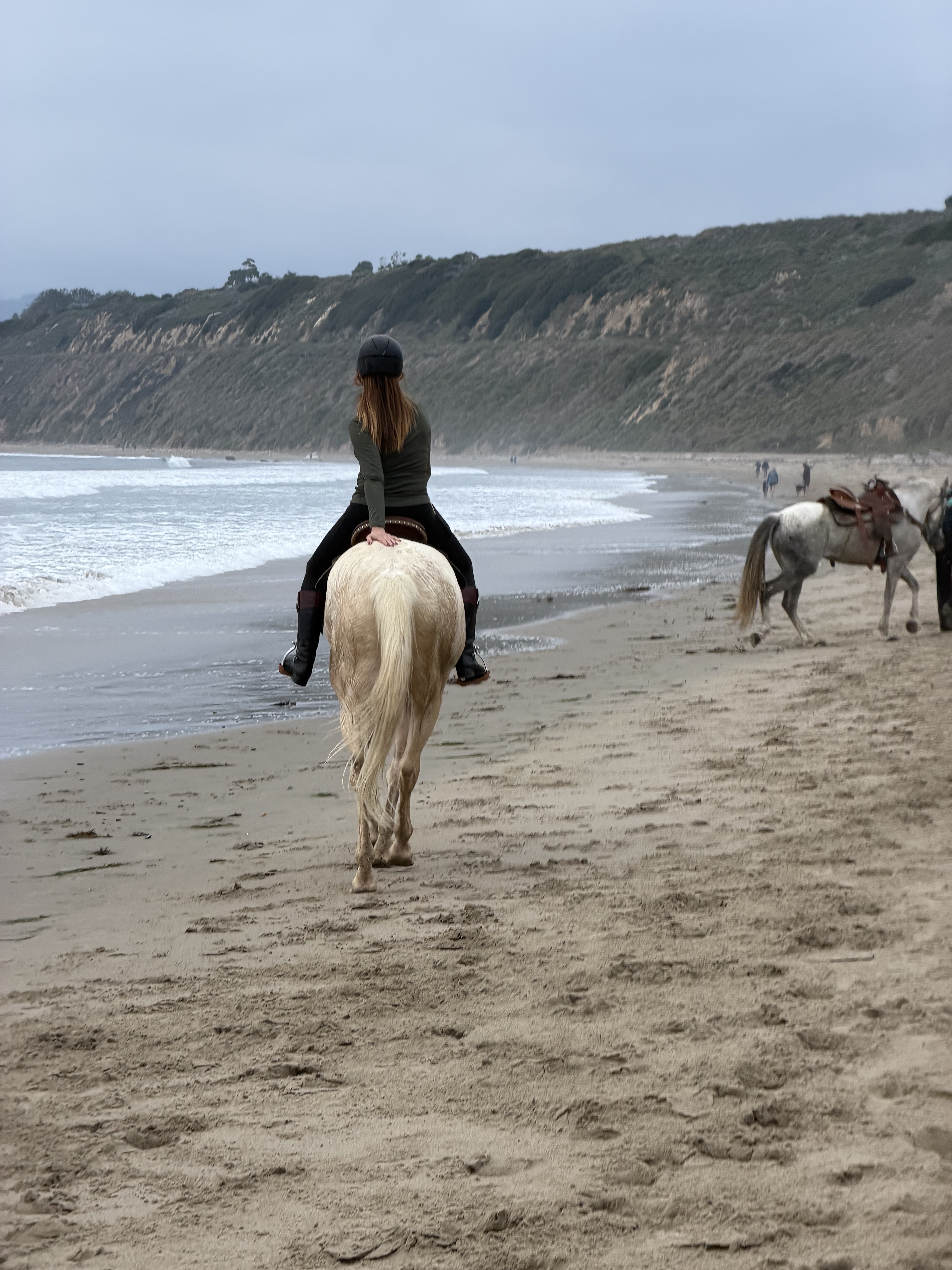
A true bucket-list experience isn’t about doing something once and moving on. It’s about the way it lingers — in your body, in your memory, in the quiet moments afterward when you realize you felt more present than you have in a long time.
That’s what riding a horse along the ocean can be when it’s done with care, intention, and respect for the horses and the landscape. Not a rushed attraction. Not a staged moment. But a shared experience between horse, rider, and coastline that asks you to slow down and really be there.
If you’re looking for a beach ride that feels meaningful rather than manufactured — one that stays with you long after the sand is gone from your boots — we’d love to ride with you.
Your horse is ready when you are.