What Are The Best Tips On Horseback Riding For Beginners Near Me?
Discover the best tips for horseback riding for beginners. Learn about posture, balance, steering, and how to stay comfortable during your first riding lessons.

Mounting a horse can be one of the most intimidating parts of horseback riding for beginners, but using the correct technique makes it smooth and safe. The safest and most common way to saddle up is by using a mounting block. This is not only easier for the rider but significantly reduces the strain on the horse's back compared to mounting from the ground.
When you are ready to mount, always approach the horse from the left side (the "near" side). Before you step up, gather your reins in your left hand. This is a critical safety step; if the horse decides to walk off while you are mounting, holding the reins ensures you maintain control.
Place your left foot into the stirrup, grasp the saddle (usually the pommel or the horse's mane, never the back of the saddle or cantle, as this can pull it off center), and push off with your right leg. Swing your right leg smoothly over the horse's back, being careful not to kick the horse's rump, and settle gently into the saddle. Once seated, place your right foot into the off-side stirrup.
What Is The Perfect Grip For Holding Reins In Beginner Horseback Riding?
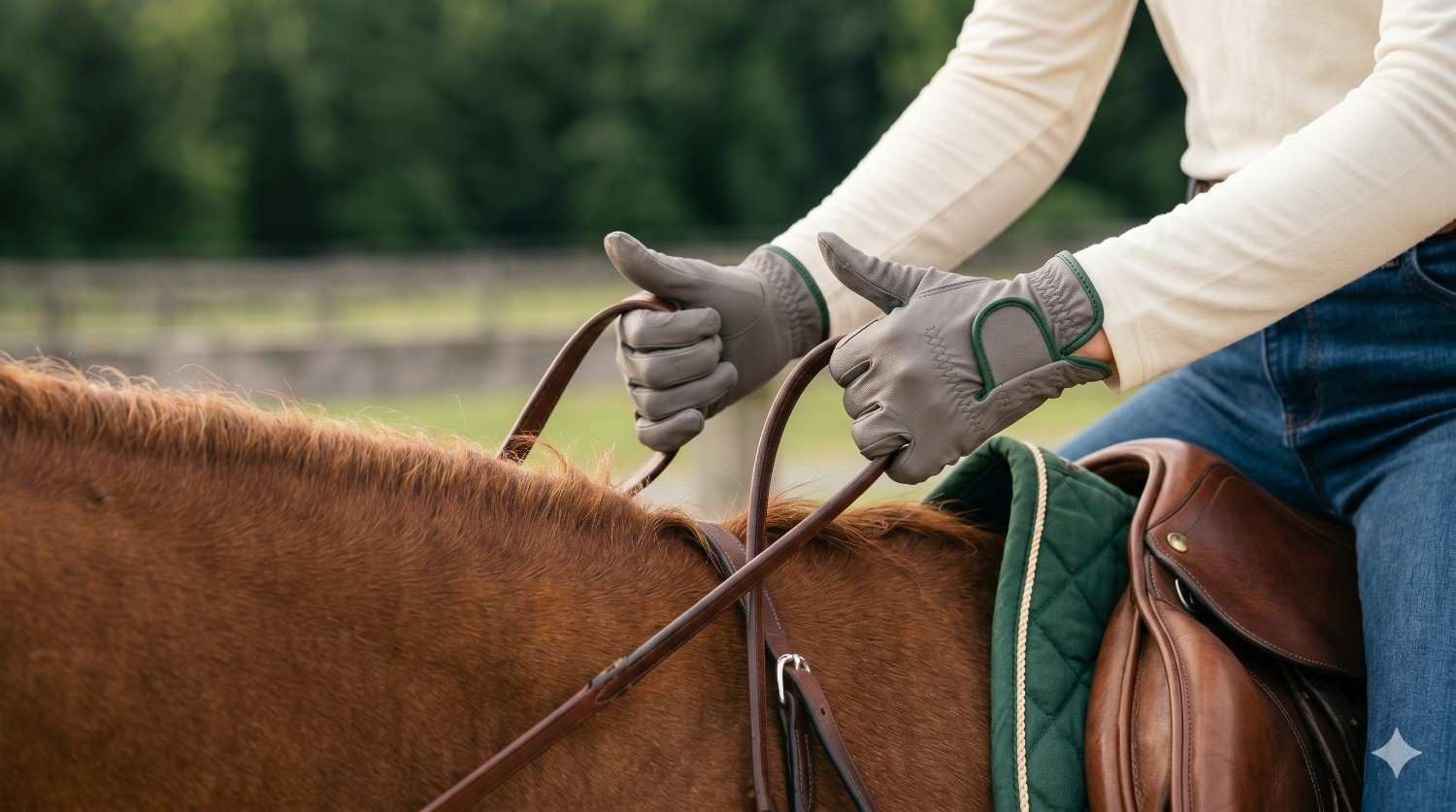
One of the first physical skills you will learn in beginner horseback riding is how to hold the reins correctly. The reins are your primary line of communication with the horse's mouth, so a proper grip is essential for both control and the horse's comfort.
To hold the reins without creating tension, thread the rein between your pinky and ring finger. Let the rein pass up through your palm, and close your fingers gently around it. Finally, place your thumb on top of the rein to secure it. Your thumbs should be pointing up towards the sky, like a little roof over your hands.
The key here is to maintain "soft" or forgiving hands. Beginners often make the mistake of gripping the reins too tightly or pulling back constantly out of nervousness. This creates constant pressure on the horse's mouth, which can confuse or agitate the animal. Your arms should be relaxed, with a slight bend in the elbow, allowing your hands to move naturally with the horse's head motion.
How Can I Find My Seat And Balance In Horseback Riding Lessons For Beginners?
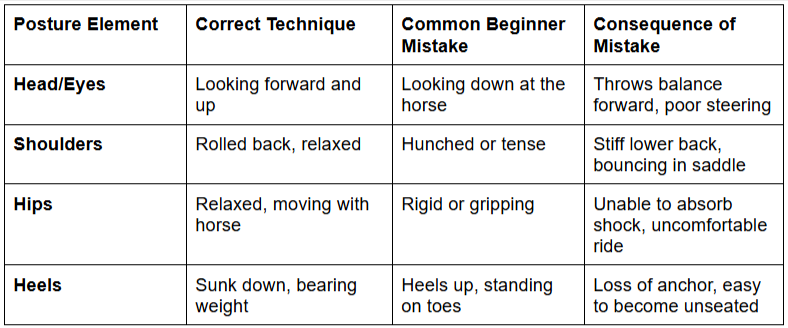
Finding your seat is the cornerstone of horseback riding lessons for beginners. Proper posture and balance prevent you from bouncing uncomfortably and help you communicate clearly with your horse. The golden rule of riding posture is the "straight line" concept.
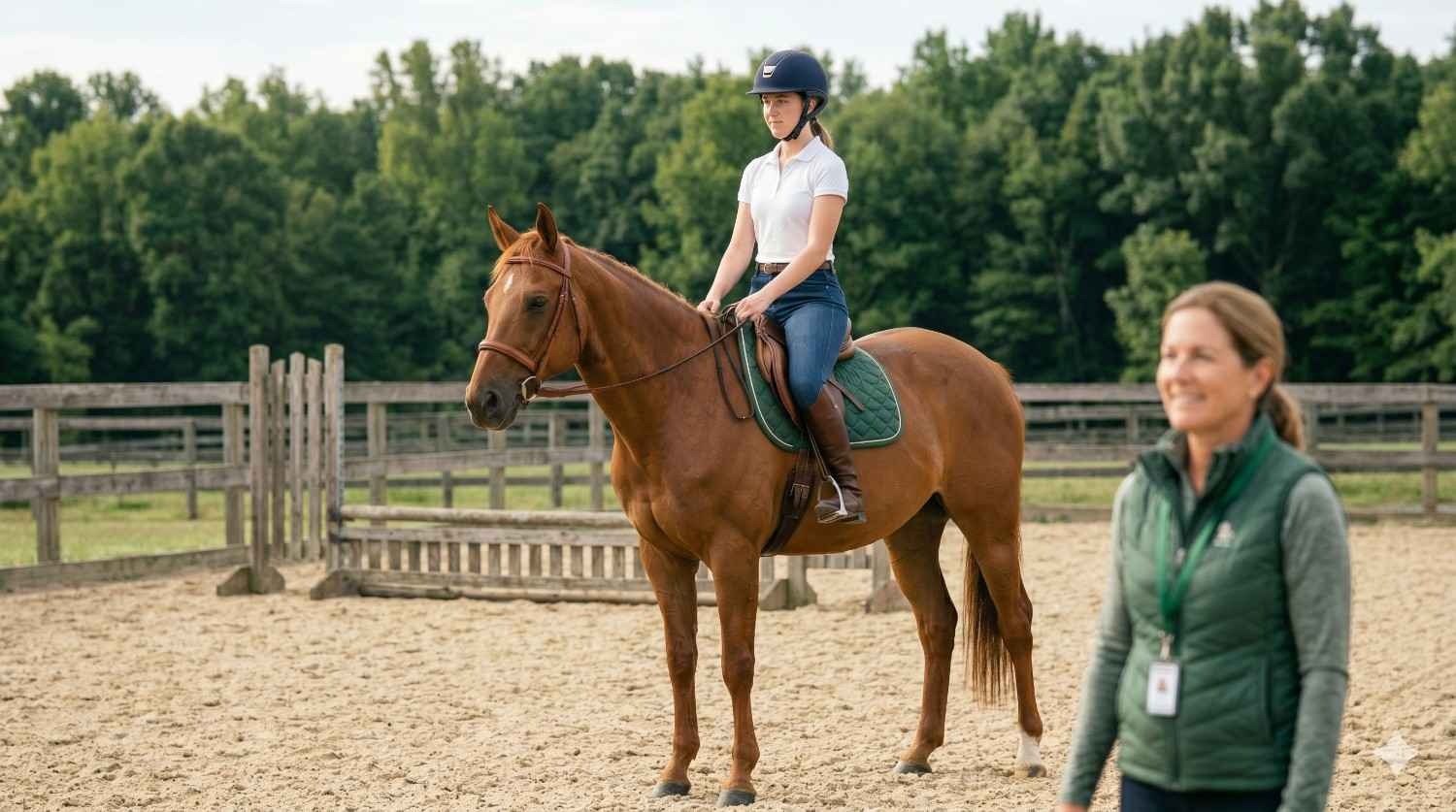
Imagine drawing a straight, invisible line from your ear, down through your shoulder, through your hip, and straight down to your heel. This alignment ensures your center of gravity is perfectly balanced over the horse's center of gravity.
To achieve this, sit up tall and roll your shoulders back and down. Avoid slouching or leaning too far forward, which throws off your balance and makes you vulnerable if the horse stops suddenly. Your lower back should be relaxed, allowing your hips to absorb the motion of the horse. This deep dive into biomechanics is what separates a bumpy, uncomfortable ride from a smooth, synchronized experience.
Comparing Riding Postures
What Is The Correct Leg Position To Stay Comfortable While Horseback Riding Near Me?
Your legs act as your anchor when you are horseback riding near me (or anywhere else). Proper leg position keeps you secure in the saddle without the need to grip tightly with your knees, which is a very common beginner instinct.
The weight of your body should sink down through your legs and into your heels. Your heels should be the lowest point of your body. The stirrup iron should rest on the ball of your foot, not pushed all the way back to the heel or balancing precariously on your toes.
Crucially, your thighs and knees should remain relaxed. Gripping tightly with your knees actually acts as a pivot point, popping your lower leg off the horse and making your seat less secure. Instead, let your leg drape naturally around the horse's barrel. This relaxed position allows you to ride with the horse's motion rather than fighting it, significantly increasing your comfort and security.
How Do I Ask A Horse To Go Forward Naturally In Beginner Horseback Riding?
Asking a horse to move forward is a fundamental skill that requires coordination between your legs and hands. To ask the horse to walk, you apply gentle pressure by squeezing with your lower legs (calves) against the horse's sides.
Simultaneously, you must soften your hands. A very common mistake in beginner horseback riding is squeezing with the legs to say "go," but unconsciously pulling back on the reins out of nervousness, which tells the horse to "stop." This sends mixed signals and can frustrate the horse. You must "give" slightly with your hands to allow the horse's head to move forward as they step off.
If the horse does not respond to a gentle squeeze, you can increase the pressure slightly or give a small tap with your heels. Once the horse moves forward, relax your leg pressure so you are not constantly nagging them.
How Do I Bring A Horse To A Halt Safely During Horseback Riding For Beginners?
Knowing how to stop safely is critical for your confidence during horseback riding for beginners. Stopping is not just about pulling on the reins; it involves your whole body.
To ask for a halt, stop following the horse's motion with your hips. Sit deep in the saddle, leaning slightly back on your pockets. Sink your weight heavily down into your heels. Finally, close your fingers tightly around the reins and apply steady, even pressure backward. Once the horse stops, immediately release the pressure on the reins as a reward.
The One-Rein Stop: Your Emergency Brake
For beginners, learning the "one-rein stop" is an essential safety tool. If you ever feel out of control, a horse spooks, or you simply cannot get them to stop with normal pressure, the one-rein stop is your emergency brake.
To execute it, slide one hand down a single rein and pull it firmly back toward your hip or knee. This pulls the horse's nose to its side, forcing them to turn in a tight circle. A horse cannot run forward effectively when its head is turned sharply to the side, and the tight circle naturally causes them to slow down and stop.
What Are The Steering Basics I Need To Know For Beginner Horseback Riding Near Me?
To steer your horse, you want to have both hands on the reins. To turn right, you open your right hand out to the side, guiding the horse's nose to the right. You support this by pressing with your left leg behind the girth to push the horse's body through the turn.
Mastering The Basics Of Horseback Riding For Beginners
Mastering the basics of horseback riding for beginners comes down to understanding posture, maintaining relaxed legs, and communicating clearly with your horse. By focusing on the straight-line alignment of your ear, shoulder, hip, and heel, and remembering to sink your weight into your heels, you create a secure and balanced seat.
Remember that riding is a partnership. Soft hands and clear, consistent cues make the ride comfortable and enjoyable for both you and the horse, rather than a stressful workout. Don't overthink the technique, relax, breathe, and trust the process. If you are ready to put these principles into practice, look up local stables and book your first beginner horseback riding lesson today!
Frequently Asked Questions (FAQs): Best Tips On Horseback Riding For Beginners Near Me?
What should I wear for my first beginner horseback riding lesson?
For your first lesson, wear long pants (like jeans or leggings) to prevent chafing against the saddle. You should also wear closed-toe shoes with a small heel (about 1 inch) to prevent your foot from slipping through the stirrup. A certified riding helmet is mandatory; most stables will provide one for beginners.
Is horseback riding for beginners near me safe?
Yes, horseback riding is generally safe for beginners when conducted at a reputable stable with experienced instructors and calm, well-trained lesson horses. Following the instructor's guidance, wearing a helmet, and learning safety basics like the one-rein stop greatly minimize risks.
How hard is beginner horseback riding?
While it requires balance, core strength, and coordination, beginner horseback riding is highly accessible. You don't need to be an athlete to start. The hardest part for most beginners is learning to relax their muscles and move with the horse rather than tensing up.
How long does it take to learn horseback riding for beginners?
Most beginners can learn the absolute basics, mounting, walking, steering, and stopping, in their very first lesson. However, developing a secure, independent seat and learning to trot or canter comfortably usually takes several months of consistent weekly lessons.
What is the best age to start beginner horseback riding lessons?
People of almost any age can start riding! Many stables offer lessons for children as young as 5 or 6, and there is no upper age limit as long as you are reasonably fit and have good balance. Adult beginners are very common and often learn quickly because they can easily understand the biomechanics involved.