Horseback Riding Lessons: What Beginners Should Know Before Lesson Day
Horseback riding lessons are easier to start than many beginners expect, but first-timers still want straight answers before they book. The biggest concerns are usually cos
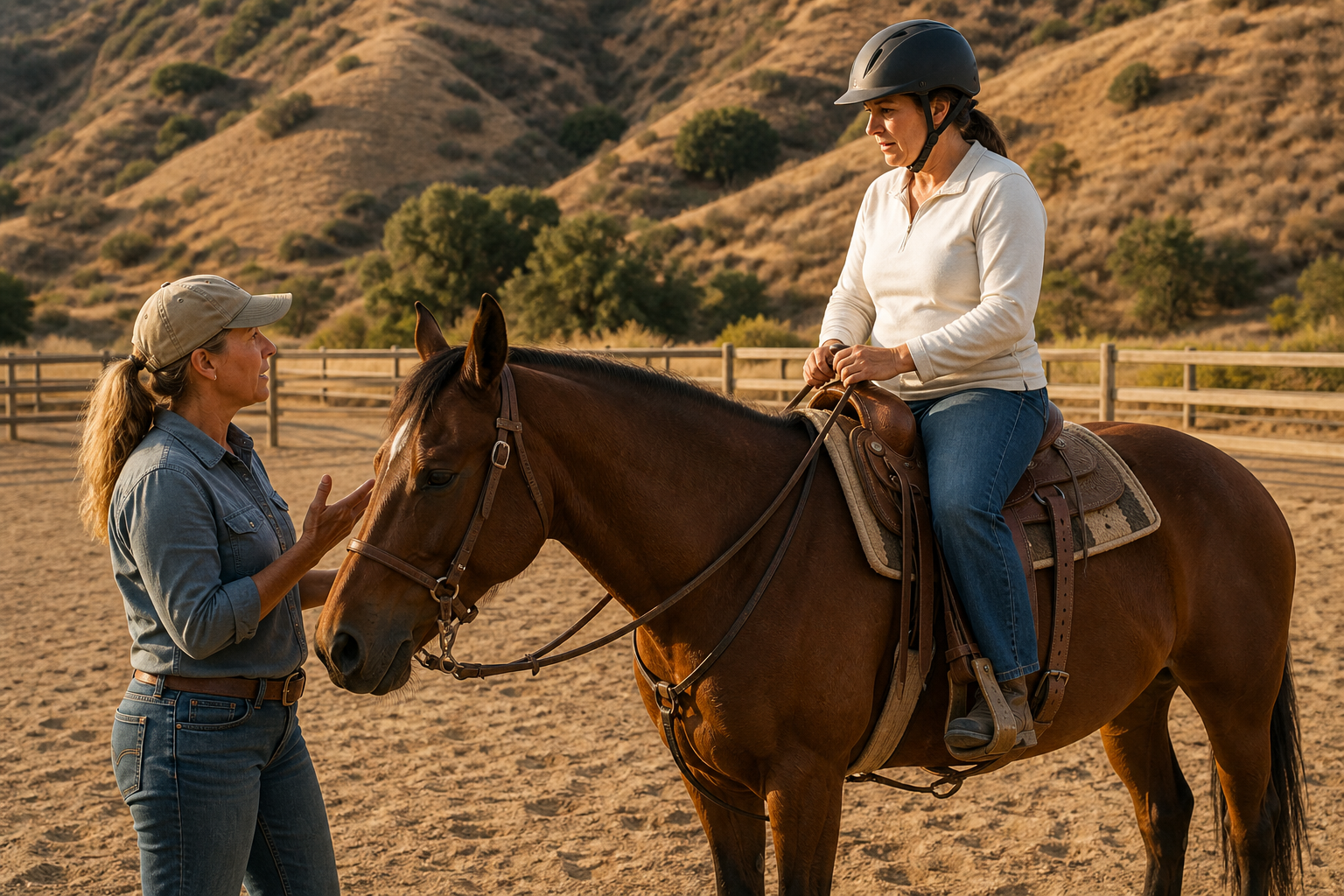
If you are researching horseback riding lessons for the first time, you are probably balancing excitement with uncertainty. Many beginners imagine that everyone else at the barn already knows what to do, what to wear, how to behave around horses, and how much progress they should expect from the first session. In reality, good beginner programs are built for exactly this stage. They assume you are new, they explain the rules clearly, and they introduce skills step by step so that confidence grows alongside safety.
Here are some of the questions most frequently asked by beginners:: how much do lessons usually cost, whether they are safe, what adults should expect, when children are ready, how long each session lasts, and what milestones are realistic over time.
A well-run lesson program also reduces stress by making the first day predictable. You typically arrive early, sign forms, meet the instructor and horse, review barn rules, check your helmet and footwear, mount with help, practice the basics, cool down, and then discuss what comes next. That structure matters because horseback riding is one of those activities where preparation improves both comfort and confidence from the first minute.
Before diving into the most searched beginner questions, it helps to start with the practical details that make lesson day smoother.
What Should You Know Before Your First Horseback Riding Lesson?
Quick answer: Before your first horseback riding lesson, make sure your helmet policy, footwear, clothing, arrival time, forms, payment details, and medical or allergy disclosures are all sorted out before you arrive.
For most beginners, the most useful preparation has nothing to do with memorizing horse terminology. It has to do with reducing avoidable friction. If you know what to wear, when to arrive, what paperwork is required, and how the lesson will be structured, you can focus on listening and learning rather than scrambling.
The table below works well as a pre-lesson reference because it turns the most common beginner concerns into a practical action plan.
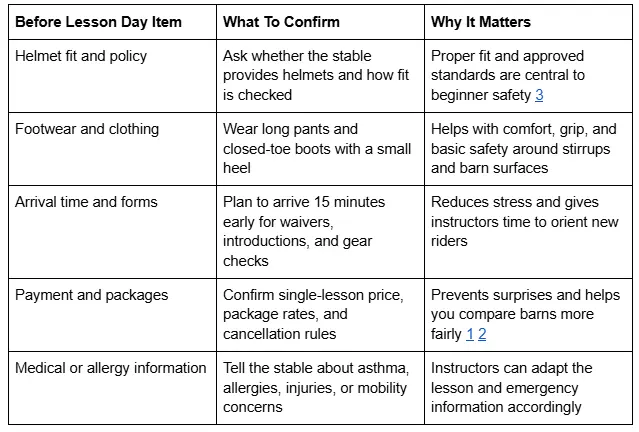
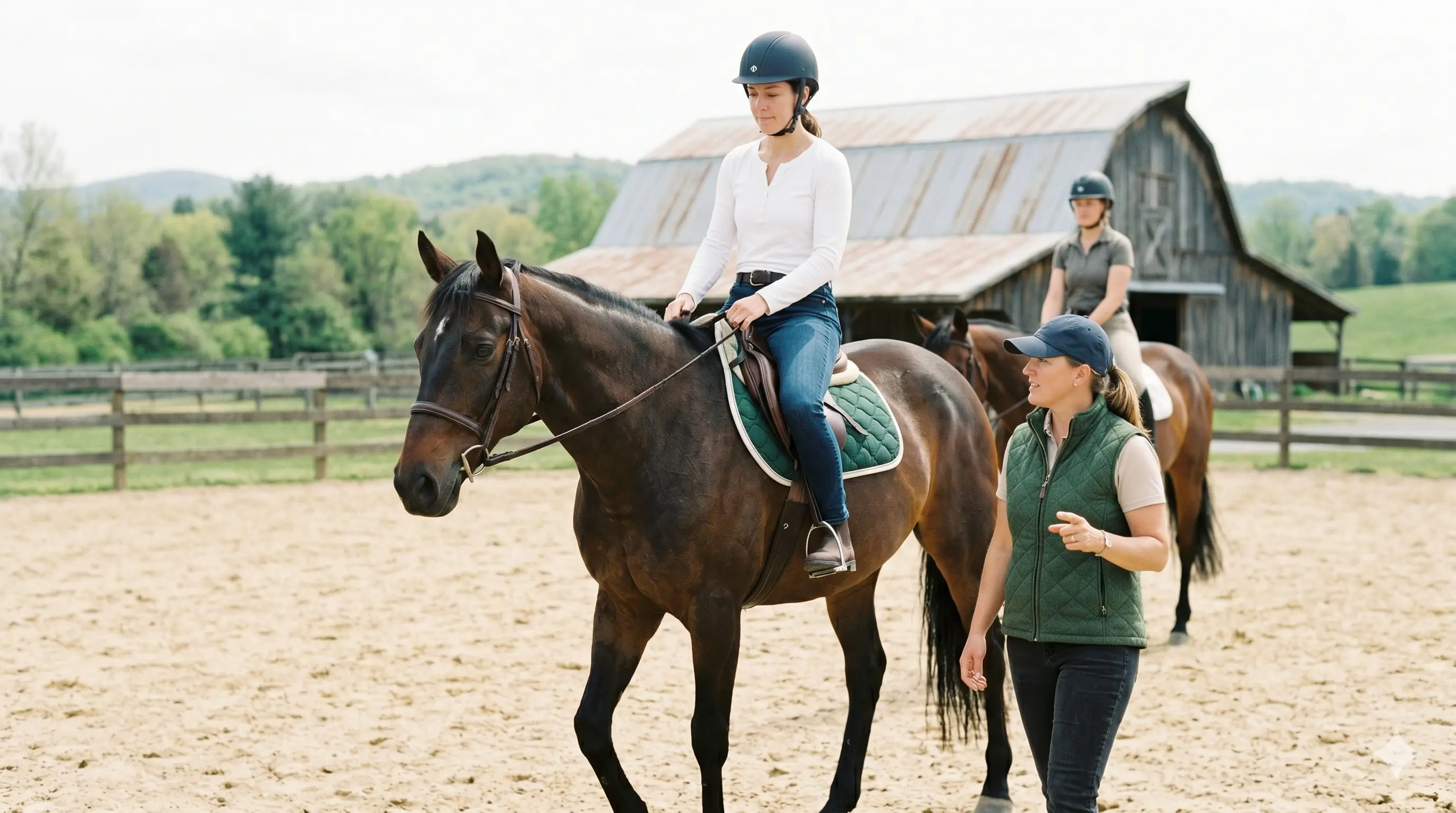
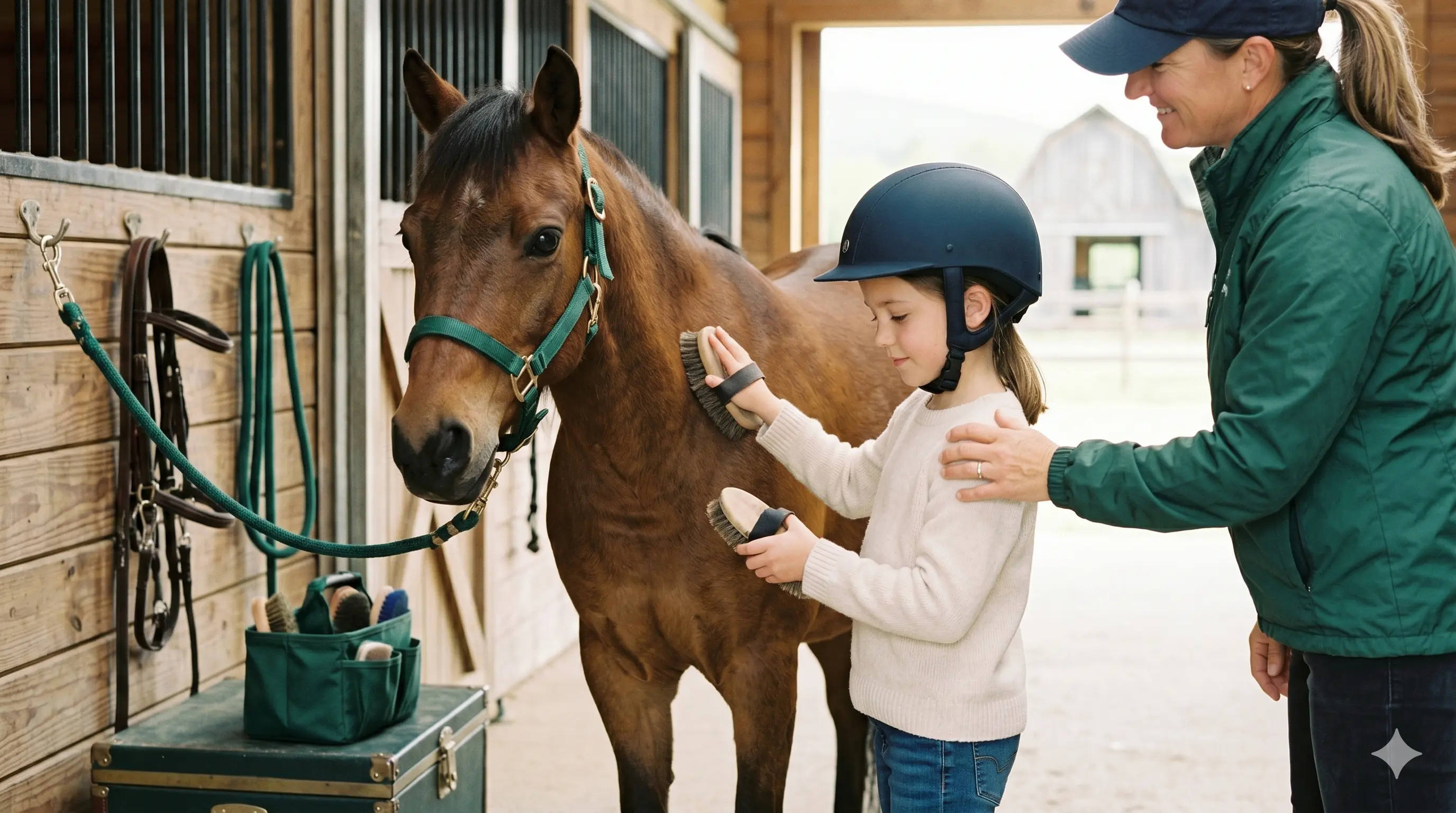
Beginners and parents should also remember that horseback riding lessons often include more than mounted time. Many programs use the first sessions to introduce grooming, tacking, leading, and basic horse handling. That can feel surprising if you assumed every minute would be spent riding, but it is actually part of the value. The early lessons are meant to teach riders how to be safe and calm around horses, not just how to sit in the saddle.
In other words, a strong first lesson experience begins before you ever swing a leg over the horse.
How Much Do Horseback Riding Lessons Cost?
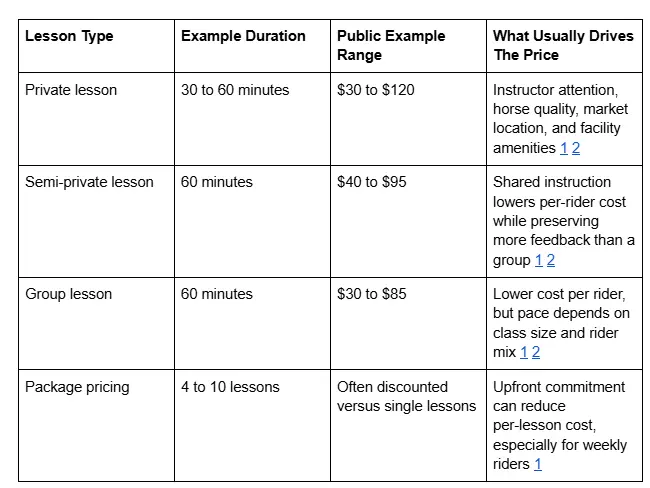
Quick answer: Most horseback riding lessons fall into a broad price range that depends on location, private versus group instruction, lesson length, instructor credentials, horse access, and facility overhead; public examples show beginner lessons ranging from about $30 to $120 per session.1 2
When people ask how much do horseback riding lessons cost, they are usually trying to answer two different questions at once. The first is the posted price of a lesson. The second is whether the total value makes sense once you account for instructor expertise, horse care, tack, arena access, insurance, and the amount of one-on-one attention you receive. Both questions matter.
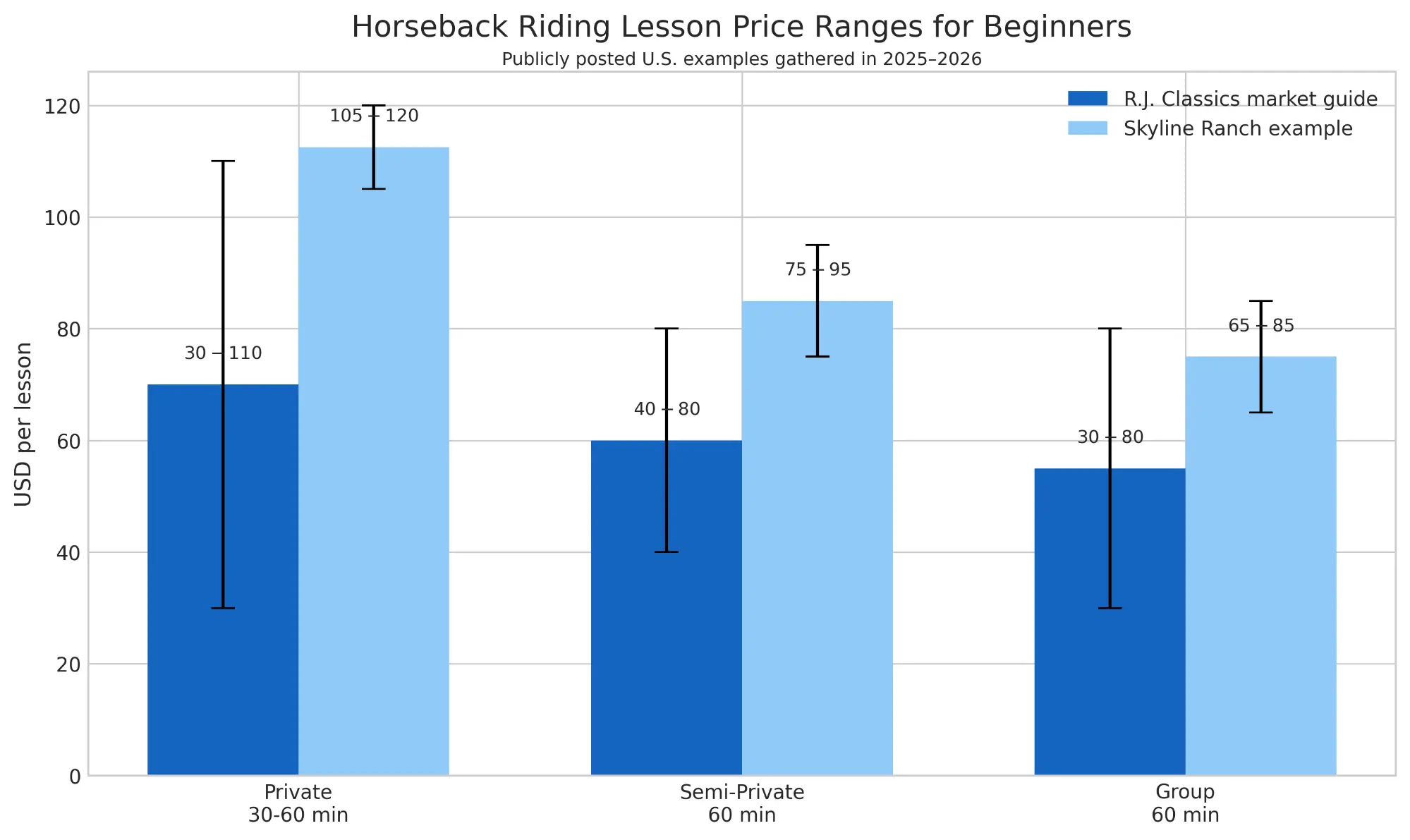
One useful way to think about cost is to separate market range from local price point. A broad public guide from R.J. Classics reports the following beginner-oriented ranges: private 30-minute lessons at $30 to $80, private 60-minute lessons at $50 to $110, semi-private 60-minute lessons at $40 to $80, and group 60-minute lessons at $30 to $80.1 A separate public stable example, Skyline Ranch, lists 45-minute private lessons at $105 to $120, 1-hour semi-private lessons at $75 to $95, and 1-hour group lessons at $65 to $85.2 Those figures do not mean every market looks the same, but they do show why beginners often see a wide spread while shopping.
The biggest cost drivers are easier to understand when you picture the operation behind the lesson. Riding instruction is not just teacher time. It includes horse training and upkeep, feed, farrier visits, veterinary care, tack inspection, arena maintenance, staffing, liability coverage, and the extra labor needed to keep a beginner program safe and consistent. That is why a low posted price is not automatically the best deal, and a high posted price is not automatically inflated. You need to compare what is included.
For beginners trying to manage budget, the most practical strategies are straightforward. Start with a single lesson or small starter package before committing to a larger block. Ask whether weekday or off-peak times cost less. Compare group and semi-private formats once basic steering and stopping are in place. And if the barn includes loaner helmets or basic beginner gear, factor that into the value rather than looking only at the lesson price itself.
What To Wear For Horseback Riding Lessons?
Quick answer: For what to wear for horseback riding lessons, choose long pants, closed-toe boots with a small heel, an approved riding helmet, fitted seasonal layers, and optional gloves; avoid sandals, shorts, flowing scarves, and dangling jewelry.
The best beginner outfit for what to wear for horseback riding lessons is simple, safe, and comfortable. You do not need a full show-ring wardrobe. You do need clothing that helps you move, prevents chafing, and avoids obvious hazards around stirrups, tack, and animals.
A fitted pair of long pants is usually the easiest place to start. Jeans can work if they are flexible and not bulky through the inner seam, while riding tights or leggings designed for equestrian use may feel more comfortable for longer sessions. The goal is to avoid thick seams that rub and loose fabric that bunches.
Footwear matters even more. Beginner riders should wear closed-toe boots with a small, defined heel rather than sneakers. The heel helps reduce the chance of the foot sliding too far through the stirrup, and the sturdier sole is usually more appropriate for walking in a barn aisle, paddock, or arena entrance area.
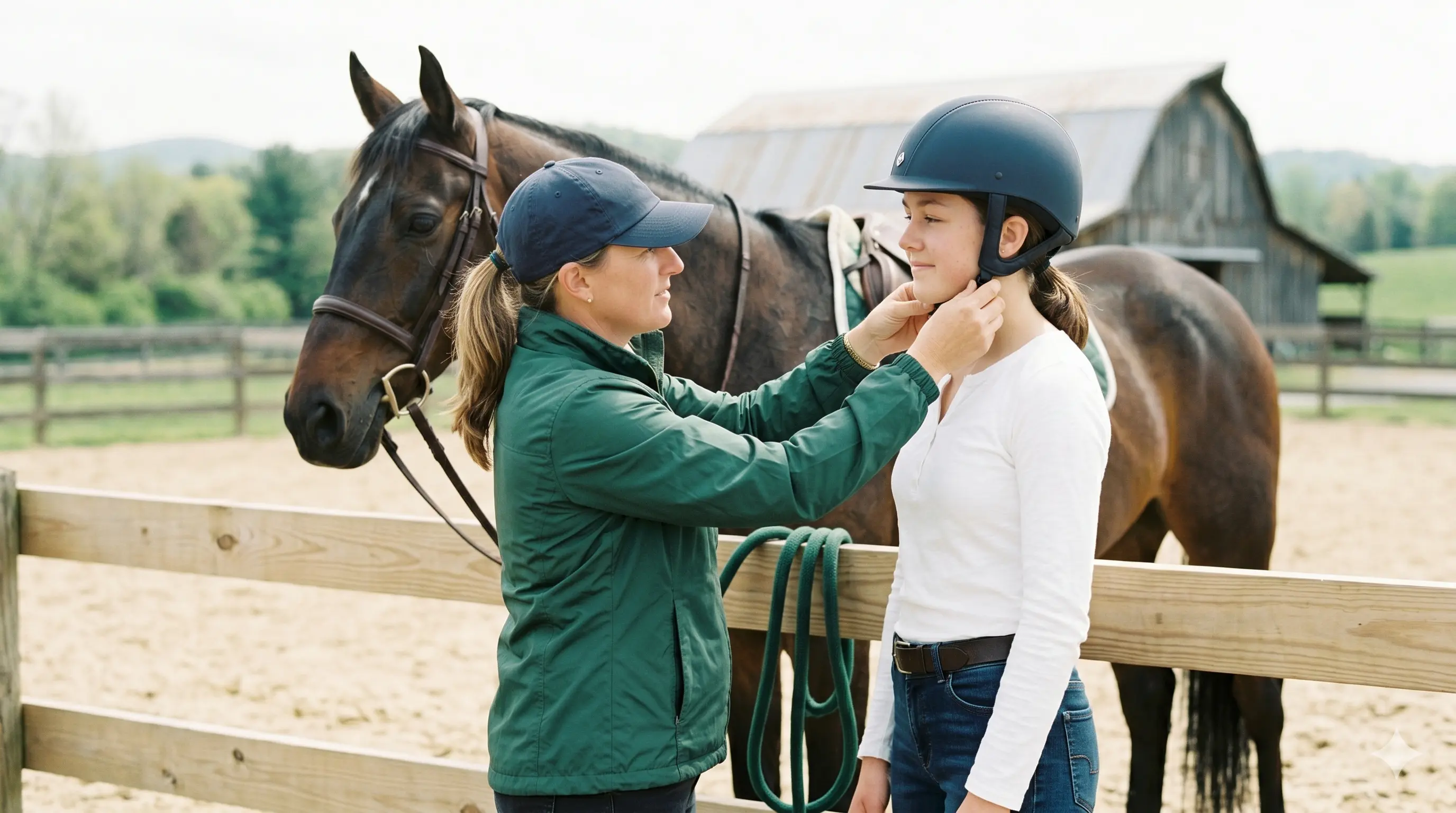
Helmet guidance should be treated as non-negotiable. The University of Connecticut equine safety guidance explains that ASTM F1163 is the equestrian helmet standard and that SEI independently tests helmets for compliance. The same guidance notes that bicycle helmets are not designed for the different impact patterns and fall height associated with horseback riding.3 If the stable provides loaner helmets, ask how fit is checked and how shared helmets are cleaned between uses.
“The easiest thing to look for is the ASTM/SEI seal inside the helmet.” — University of Connecticut Department of Animal Science 3
That advice is especially helpful for beginners because helmet shopping can be confusing. A proper fit should feel secure all the way around the head without obstructing vision. UConn advises that when you wiggle the helmet, your eyebrows should move with it, and when the harness is fastened and you open your mouth wide, you should feel pressure on your throat rather than on the tip of your chin.3
Seasonal comfort is the other piece many first-timers overlook. In cooler weather, fitted layers are better than bulky outerwear. In hot weather, breathable long pants, sunscreen, and insect protection can make the lesson far more comfortable. Optional gloves are useful for riders who want a little more grip on the reins or want to prevent blisters.
The rule of thumb is simple: dress in a way that helps you move safely and comfortably, not in a way that looks the most “equestrian.”
Are Horseback Riding Lessons Expensive?
Quick answer: Are horseback riding lessons expensive? They can feel expensive compared with some entry-level sports, but the pricing reflects horse care, facilities, safety systems, instructor time, and the cost of maintaining suitable lesson horses.1 2
The question are horseback riding lessons expensive is really a question about how people define value. If you compare riding lessons with a drop-in fitness class or a youth recreation program that does not rely on live animals, horseback riding will often cost more. If you compare them with other coached activities that require specialized equipment, trained staff, maintained venues, and individualized instruction, the price begins to make more sense.
What often makes horseback riding look expensive is that the visible price is attached to the lesson, while many of the real costs sit behind the scenes. Horses need daily care whether anyone rides them or not. Lesson barns need safe fencing, usable footing, properly maintained tack, staff supervision, and horses whose temperament and training make them suitable for beginners. When you pay for a beginner lesson, you are not just renting an hour. You are stepping into a system designed to make a complex activity more manageable.
That said, barns vary widely in how they package value. Some include grooming instruction, horse assignment, and gear guidance. Others assume riders will purchase their own equipment sooner. Some operate at a premium level with show-oriented training and higher-end facilities, while others focus on steady local beginner instruction with more moderate pricing. The smartest question is not “Is this expensive?” but “What is included, and does it match my goals?”
For families and adult beginners on a budget, group progression is often the key to affordability. A rider may begin in private instruction for safety and confidence, then move into semi-private or group sessions once they can steer, stop, and maintain focus. That change alone can reduce the per-lesson cost without interrupting progress. Starter bundles, referral credits, and seasonal promotions can also make the first few months more manageable.
Can Adults Take Horseback Riding Lessons?
Quick answer: Yes, adults can take horseback riding lessons at virtually any age, and many barns actively offer adult beginner tracks, evening schedules, and gentle lesson horses to make that process approachable.
The question can adults take horseback riding lessons matters because many adults assume they missed the right window to start. In reality, adult beginners are common. Some are returning after years away from riding. Some are trying it for the first time because a child became interested. Others are looking for a new physical and mental challenge that feels different from a gym routine.
Adult beginners do bring a different mindset into the arena. Children often accept the learning curve without much self-consciousness. Adults tend to think more about control, risk, balance, prior injuries, and whether they will “look foolish.” A good instructor understands this immediately. Adult lessons are often structured to build trust first: how to approach the horse, how to mount safely, what rein contact feels like, how to breathe through tension, and how to understand the horse’s movement without panicking.
There is also a practical fitness side to adult riding. Horseback riding uses core stability, balance, hip mobility, leg control, and postural awareness. Texas A&M’s summary of exercise research notes that riding for 45 minutes at a walk, trot, and canter can burn up to 200 calories, while more intense disciplines can reach nearly seven calories per minute over the riding period.5 That does not mean every beginner lesson is a workout in the same way. It does mean riding is physically active enough to reward consistency.
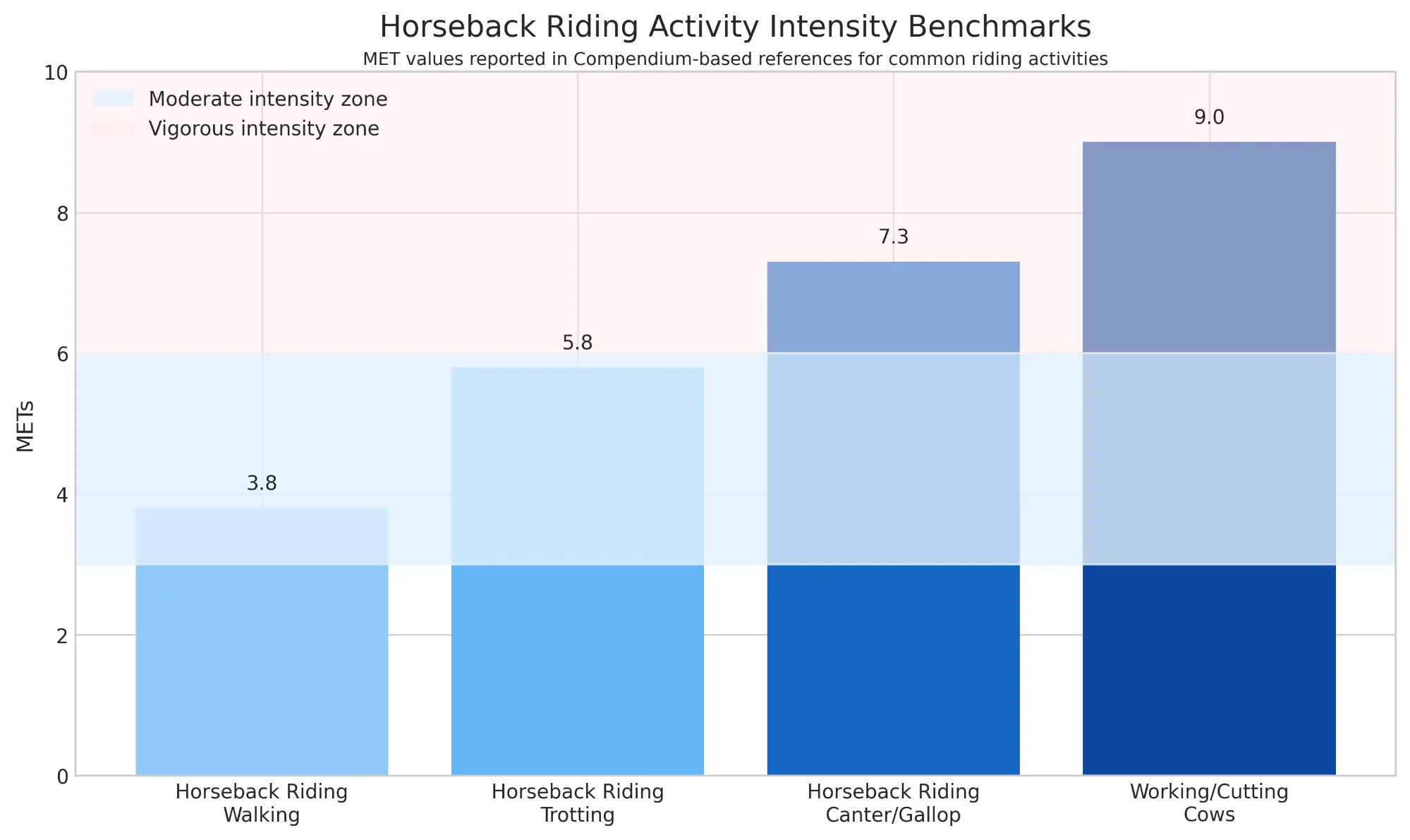
The broader physical activity literature also helps explain why adults often find riding unexpectedly demanding. Compendium-based references list horseback riding at roughly 3.8 METs for walking, 5.8 METs for trotting, 7.3 METs for canter or gallop, and 9.0 METs for working or cutting cows.6 For beginner adults, the most important takeaway is not the exact MET number. It is the reminder that even basic riding requires coordination, posture, and energy expenditure.
Adults progress best when they start with realistic goals. The first milestones are usually mounting comfortably, finding balance at the walk, steering accurately, stopping calmly, and learning how to recover when things do not feel perfect. Confidence grows from repetition, not from rushing.
How Old To Start Horseback Riding Lessons?
Quick answer: For how old to start horseback riding lessons, many barns introduce formal lessons around ages 6 to 8, while younger children may begin with short lead-line or pony experiences depending on focus, emotional readiness, and instructor assessment.
When parents ask how old to start horseback riding lessons, they are often really asking about safety and readiness, not age alone. That distinction matters. A child’s chronological age gives a useful starting point, but it does not tell you whether the child can listen, stay attentive, tolerate a helmet, follow directions around a large animal, and remain calm in a new environment.
That is why many lesson programs use readiness markers rather than promising one universal starting age. Children who can focus for a short block of time, follow simple multi-step instructions, and stay regulated around new experiences often transition more smoothly into formal instruction. Children who are enthusiastic but not yet ready for that structure may do better with pony introductions, lead-line sessions, or short grooming-based visits first.
This more flexible approach is good for both learning and safety. A younger child who is not ready for a formal lesson is not “behind.” They simply need a program format that matches their stage. In many cases, the best first step is not a weekly mounted lesson but a shorter, supported experience that allows the child to build familiarity with the horse, the barn environment, and the routine.
Parents should also ask how the stable groups children. Age is less useful than matching by size, focus, confidence, and prior experience. A well-designed beginner program will tell you not just whether your child is old enough to start, but what kind of start is most appropriate.
What Age Can Kids Start Horseback Riding Lessons?
Quick answer: Kids can start horseback riding lessons when they show readiness, which is often around ages 6 to 8 for structured classes, while younger children may start with shorter, highly supervised lead-line experiences.
The question what age can kids start horseback riding lessons sounds similar to the previous one, but it usually comes from a slightly different parent concern. Instead of wondering when formal instruction becomes possible, parents are often deciding whether their child is ready right now.
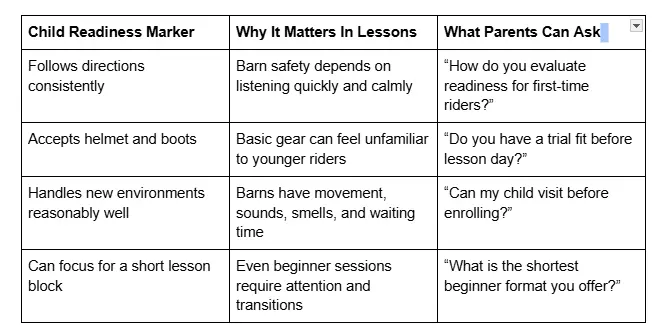
A practical way to evaluate that is to look at four things together: attention span, comfort with equipment, ability to follow safety directions, and emotional response around animals. If a child cannot keep a helmet on comfortably, becomes distressed by new sensory environments, or struggles to pause and listen before acting, a shorter intro experience may be a better first step than a standard lesson block.
The best children’s programs also scale the goals appropriately. Young riders do not need to master complex technical skills right away. Early success may simply mean sitting balanced at the walk, learning how to hold the reins, stopping when instructed, and beginning to understand that horses respond to calm, consistent cues.
For parents, the safest and most productive attitude is to treat the instructor’s assessment as more important than a birthday threshold. Good barns want children to succeed, and they usually know when a child is ready for mounted instruction versus when a gentler entry point will lead to a better long-term outcome.
Are Horseback Riding Lessons Safe?
Quick answer: Horseback riding lessons are safest when they are led by qualified instructors, use suitable beginner horses, require approved helmets, check tack regularly, and teach skills progressively instead of rushing riders forward.
The question are horseback riding lessons safe deserves an honest answer rather than a vague reassurance. Horses are large animals, and no equestrian activity is risk free. What lesson programs can do, however, is manage risk well. That is the difference between random riding and professional instruction.
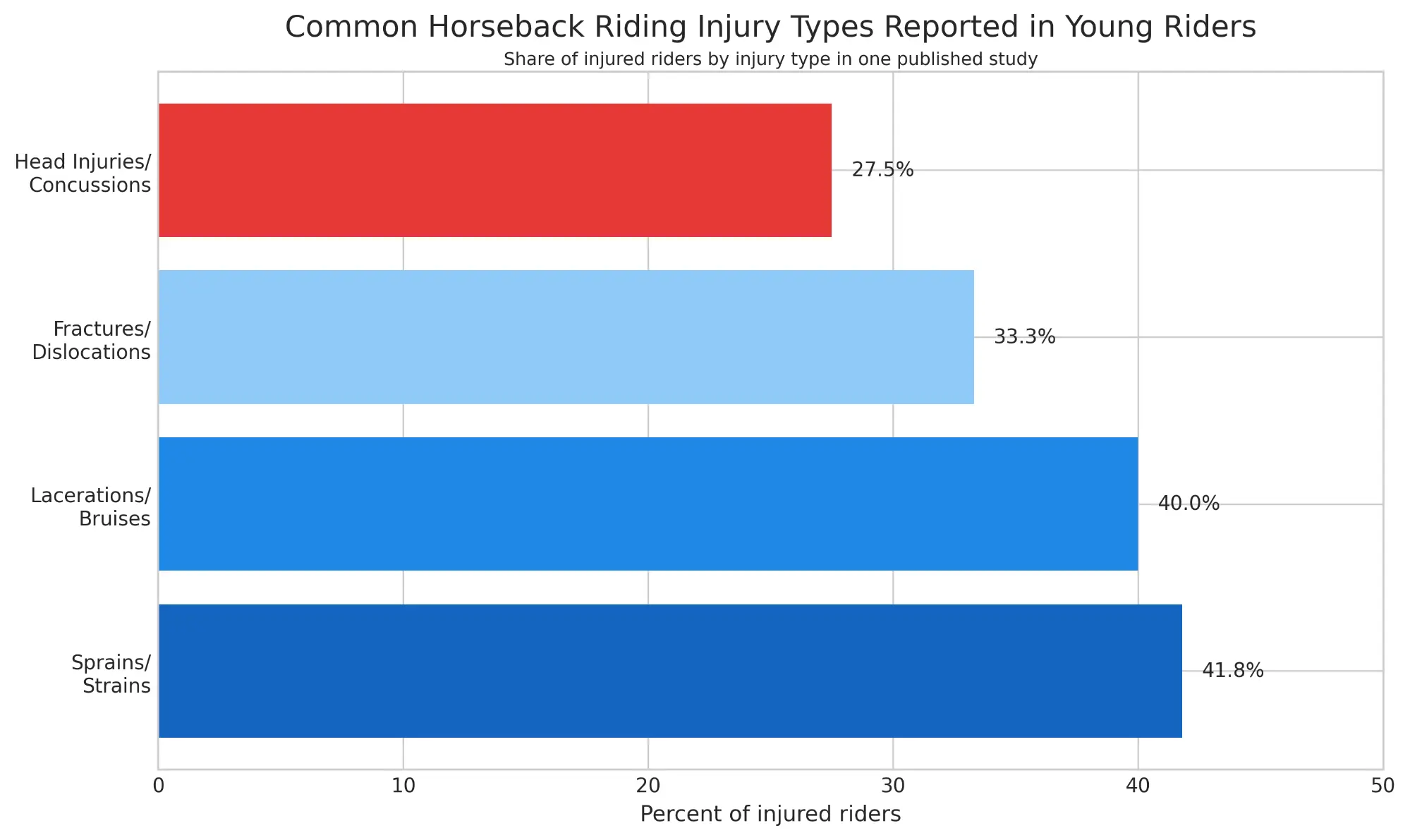
Published research helps explain why safety systems matter. In a study of riders under 25, the overall injury rate was reported as 0.6 per 1000 riding hours. Among injured riders, 41.8 percent experienced sprains or strains, 40.0 percent had lacerations or bruises, 33.3 percent had fractures or dislocations, and 27.5 percent sustained concussions or other head injuries.4 Those numbers are serious enough to justify every precaution a reputable barn puts in place.
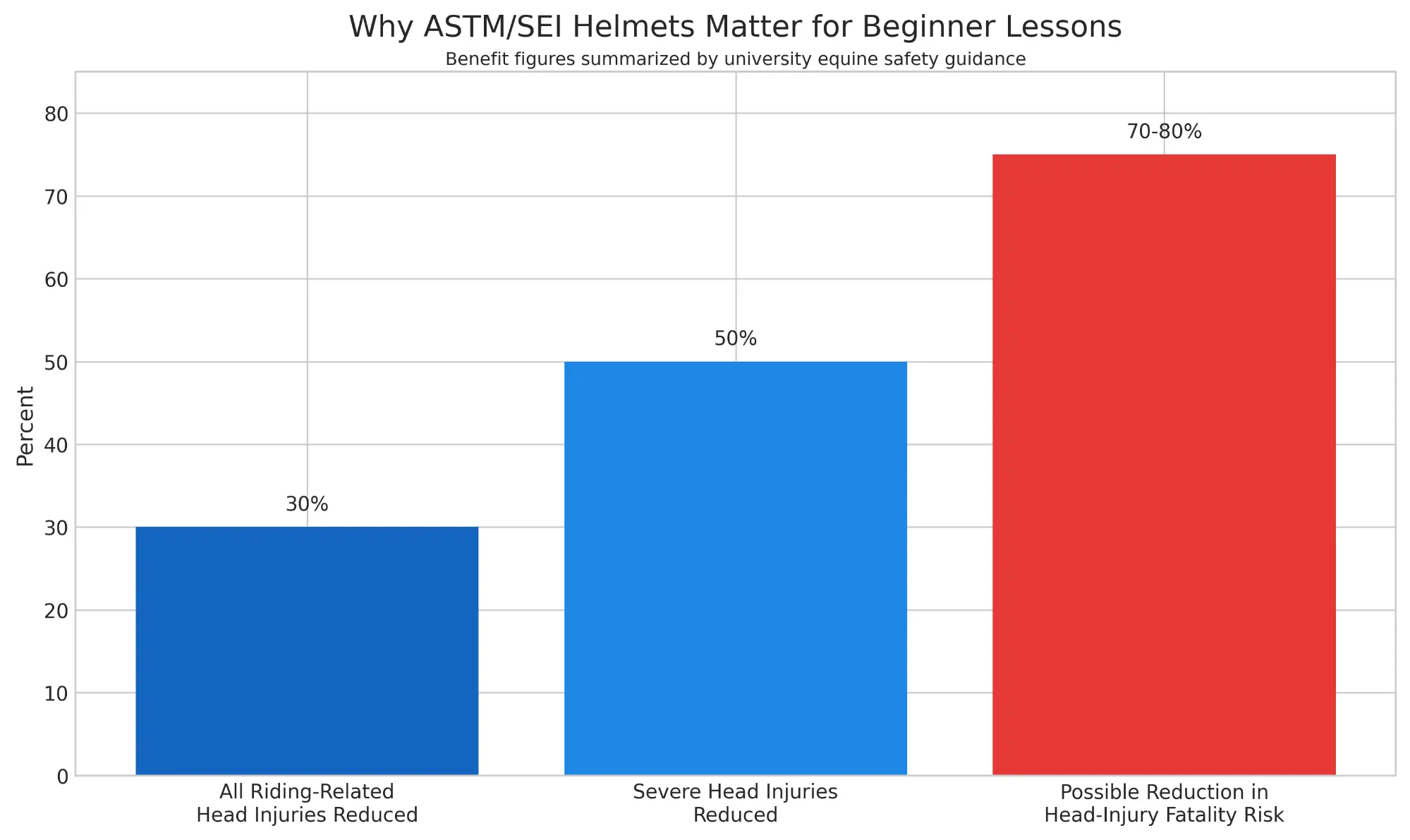
Helmet guidance is especially important for beginners because head injury prevention is one of the clearest areas where good equipment matters. The University of Connecticut states that ASTM/SEI-approved helmets have reduced all riding-related head injuries by 30 percent and severe head injuries by 50 percent, while also noting that helmets can reduce the possibility of horse-related fatal head injuries by roughly 70 to 80 percent.3 Beginners do not need to memorize those percentages, but they should understand the practical implication: helmet standards are not cosmetic details.
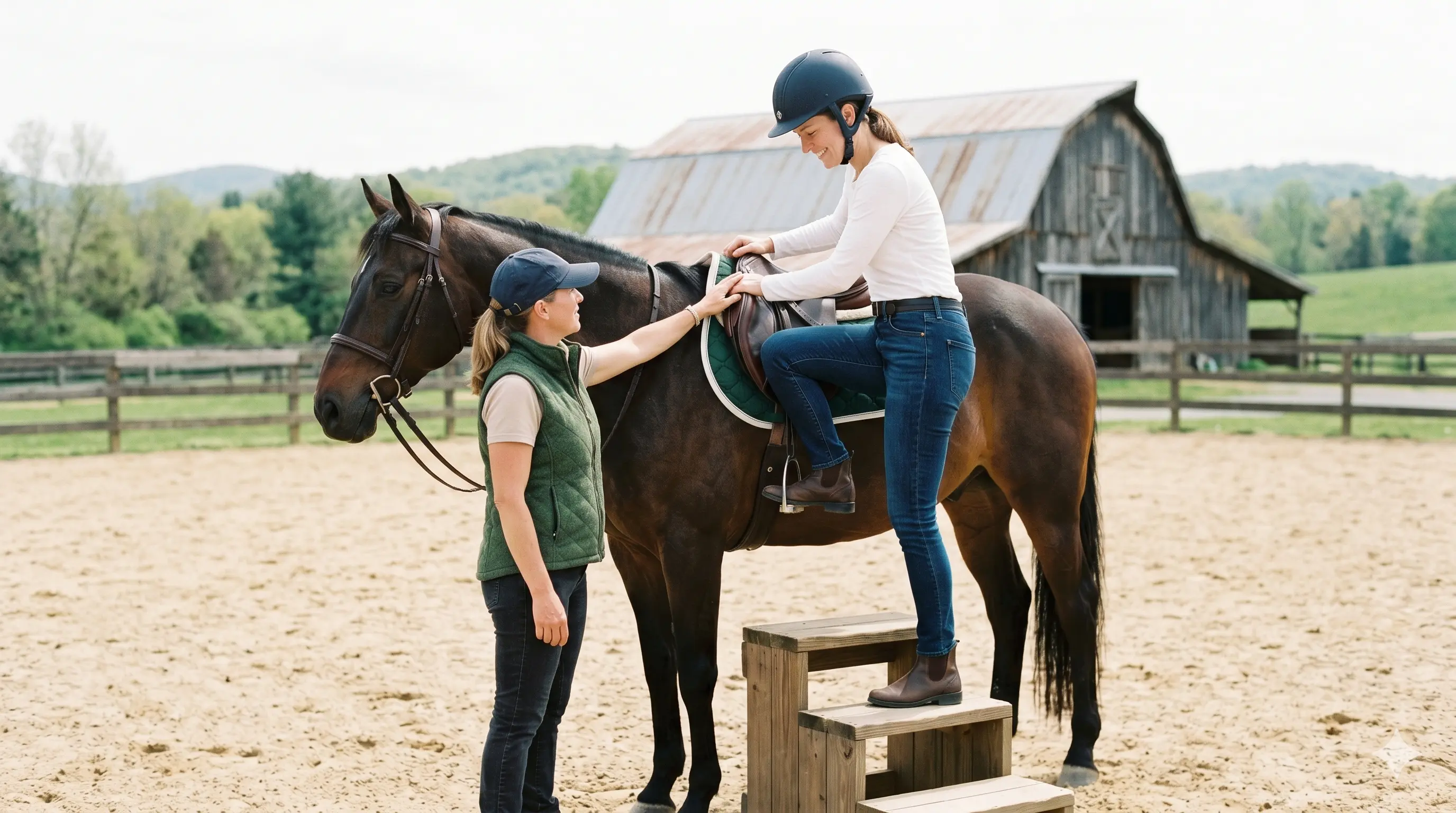
Other safety markers are just as important as the helmet itself. A reputable beginner program should use calm, suitable lesson horses; mounting blocks when appropriate; clearly maintained tack; a briefing on how to stop, steer, and behave around horses on the ground; and a teaching pace that matches the rider rather than the calendar. If a stable seems dismissive about equipment, horse selection, or beginner anxiety, that is a sign to keep looking.
Safety also improves when riders know what to expect. Much of beginner fear comes from uncertainty. When the instructor explains the routine clearly and gives one task at a time, riders are more likely to stay relaxed, balanced, and responsive. In that sense, confidence is part of safety, but only when it is built on structure rather than false reassurance.
How Long Are Horseback Riding Lessons?
Quick answer: Most horseback riding lessons run 30 to 60 minutes, but the total experience may also include arrival, grooming, tacking, mounting, cool-down, and post-ride discussion.1 2
The question how long are horseback riding lessons matters because beginners often picture a full uninterrupted hour in the saddle. In practice, the posted lesson length and the actual mounted segment are not always the same thing. Some private lessons are shorter and more focused. Some beginner lessons include horse care and safety instruction before riding. Some children’s programs intentionally keep mounted time shorter to match attention span and physical fatigue.
Public examples show that both 30-minute and 60-minute formats are common. R.J. Classics reports private beginner lessons in both 30-minute and 60-minute formats, while Skyline Ranch notes that its beginner riders may spend only about half an hour mounted, with the rest of the lesson devoted to grooming and tacking up.1 2 That is not a drawback. For a new rider, those non-mounted minutes are part of the learning process.
A strong beginner lesson usually follows a sequence. You arrive, review safety, meet the horse, check gear, mount with assistance, practice a focused set of skills, cool down, dismount, and then ask questions. The structure is one reason 45 minutes can feel productive and why a nominally longer lesson does not always translate into faster progress.
What matters most is not chasing the longest slot. It is matching duration to the rider. Younger children may learn more in a short, positive session than in a longer one that pushes past attention and comfort. Adult beginners may benefit from a longer block if it includes a calm warm-up and time to process feedback. Group lessons may feel fuller simply because transitions take longer with multiple riders.
How Many Horseback Riding Lessons Do I Need?
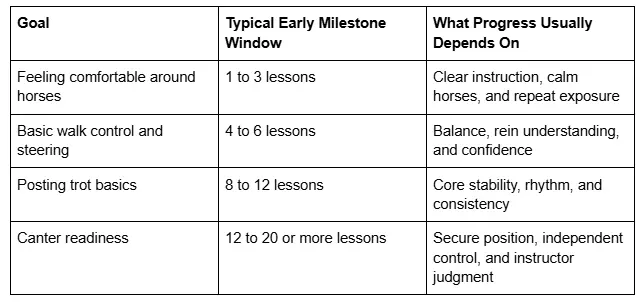
Quick answer: The number of horseback riding lessons you need depends on your goal and frequency, but many beginners start to feel competent with basic steering and stopping within 4 to 6 lessons, develop posting trot skills around 8 to 12 lessons, and approach canter readiness later with consistent practice.
The most honest way to answer how many horseback riding lessons do I need is to ask what you mean by “need.” Need to feel less nervous? Need to steer and stop independently? Need to trot confidently? Need to be trail-ready? Need to canter? Those are different milestones, and they happen on different timelines.
Frequency changes the experience more than many beginners expect. A rider who takes one lesson every week usually progresses steadily but may need more calendar time to feel automatic at each stage. A rider who rides twice a week often consolidates new skills faster because the body and mind have less time to forget the previous session.
Goals also change the answer. Someone who wants a fun recreational introduction may be satisfied after a short starter package. Someone who wants to ride independently or pursue English or Western disciplines with confidence will need ongoing instruction. The encouraging part is that the first lessons often bring noticeable progress very quickly, because beginners start by learning skills that immediately make the experience feel more manageable.
Progress in horseback riding is rarely linear. One week, steering may click. The next week, posting the trot may feel awkward. Then suddenly the pieces start fitting together. That is normal. Riders improve through repetition, feel, and timing, not through memorization alone.
What Should You Expect On Lesson Day?
Quick answer: On lesson day, expect to arrive early, complete forms, meet your instructor and horse, review safety rules, mount with help, practice a short progression of core skills, cool down, and finish with next-step guidance.
The first lesson often feels easier once you know its rhythm. Most beginner riders are not expected to show up already understanding tack, grooming, or horse behavior. The lesson is designed to introduce those elements in manageable pieces.
A typical first-day flow looks something like this. You arrive around 15 minutes early, especially if there are waivers or a gear check. You meet the instructor and horse, learn basic barn rules, and confirm where to stand and how to move around the horse safely. You review mounting procedures, usually with physical assistance or a mounting block. Once mounted, the lesson starts with posture, balance, rein handling, steering, and stopping. The instructor may walk beside you or keep the horse on a lunge line at first, depending on the rider and program.
From there, the lesson focuses on control and confidence rather than variety. That is important. A well-run beginner lesson does not try to impress you with speed. It tries to make the basics feel understandable. You cool down, practice dismounting, and then talk about what went well, what to practice next time, and whether private or group instruction makes sense going forward.
If you are a parent watching, expect the stable to set observation rules that support safety and concentration. If you are the rider, expect the first lesson to feel mentally full even if it is physically gentle. New riders are processing balance, language, animal movement, and emotion all at once. That is exactly why a calm, structured program matters.
FAQ: Your First Horseback Riding Lesson
What Should I Know Before My First Horseback Riding Lesson?
Before your first horseback riding lesson, confirm the helmet policy, boots, clothing, arrival time, waiver process, and any health disclosures. You do not need riding experience to start, but you do want to show up with the right gear and a clear understanding of how the stable handles beginners.
Do I Need My Own Helmet For Horseback Riding Lessons?
Not always. Many beginner programs provide loaner helmets, but you should ask whether they are ASTM/SEI-approved and how they check fit and sanitation. If you plan to ride regularly, buying your own approved helmet can improve consistency and comfort.3
What Shoes Are Best For Beginner Horseback Riders?
Closed-toe boots with a small heel are the safest beginner choice. They are better than sneakers because they provide a more appropriate shape and structure for stirrup use and better protection in the barn.
How Do I Prepare Physically For Horseback Riding Lessons?
You do not need to be an athlete to begin, but basic balance, core awareness, and hip mobility help. Walking, light mobility work, and arriving rested and hydrated are usually enough preparation for a first lesson.
Is Horseback Riding Good Exercise For Adults?
Yes, horseback riding can be meaningful exercise for adults because it uses posture, balance, coordination, and muscular control. Research summaries also suggest that riding can contribute to calorie expenditure and moderate to vigorous activity depending on gait and discipline.5 6
What Happens If It Rains On Lesson Day?
That depends on the stable and the facility. Indoor arenas may allow lessons to continue, while outdoor programs may reschedule for weather, footing, or lightning. Always check the cancellation and weather policy before you book.
Can I Ride If I Have Allergies Or Asthma?
Possibly, but you should tell the stable in advance so they can explain the environment and note any relevant concerns on your forms. Barns can involve dust, hay, and outdoor allergens, so advance disclosure helps instructors plan appropriately.
How Do I Overcome Fear Of Horses Before Lessons?
Choose a beginner-focused stable, ask what the first lesson includes, and let the instructor know you are nervous. Fear usually decreases when the environment is structured, the horse is suitable, and the first tasks are small and predictable.
What Is The Difference Between English And Western Riding For Beginners?
Both can work for beginners. The better choice usually depends on the stable, available instructors, lesson horses, and your long-term goals. For first lessons, the quality of instruction and horse match matters more than style.
Should I Take Private Or Group Horseback Riding Lessons?
Private lessons are often better for the first few sessions because they allow more direct support, especially for children and nervous riders. Group lessons become a strong value option once you can steer, stop, and follow directions independently.1 2
How Do I Choose The Right Stable Or Instructor?
Look for safety-first communication, suitable beginner horses, clear pricing, consistent policies, approved helmet guidance, and instructors who explain things calmly. If a barn is vague about beginner structure or seems dismissive of safety questions, keep comparing options.
Do Beginners Need Special Pants For Horseback Riding?
Not necessarily. Many beginners start in flexible jeans or leggings with long pants required for comfort and skin protection. Dedicated riding tights can be a later upgrade, not a day-one requirement.
How Early Should I Arrive For My Horseback Riding Lesson?
Fifteen minutes early is a smart standard for first-time riders because it leaves room for paperwork, helmet fitting, introductions, and a calm start. If the stable requests earlier arrival, follow that guidance.
Can I Tip My Riding Instructor?
Policies vary by barn and region. Tipping is not universal in lesson programs, so it is best to ask the front office or observe the stable’s norms rather than assume.
What Is A Good Age For Pony Lessons?
Very young children may do well in short pony or lead-line experiences before they are ready for formal riding instruction. The best age depends less on the calendar and more on focus, regulation, and ability to follow directions.
How Long Does It Take To Canter Comfortably?
For many beginners, canter readiness comes after a foundation of balance, steering, stopping, and basic trot work. That can take 12 to 20 or more lessons, and some riders take longer depending on frequency and confidence.
What’s Included In The Lesson Price?
That varies widely. Some programs include the horse, tack, basic beginner instruction, and limited gear support, while others also include grooming or horse-care time. Ask whether the price covers mounted time only or the full instructional block.1 2
Are There Weight Limits For Horseback Riding Lessons?
Many barns do have rider weight policies based on horse welfare, saddle fit, and available lesson horses. The right approach is to ask directly and without embarrassment; responsible barns set those guidelines to protect both horse and rider.
Can I Bring A Friend Or Parent To Watch?
Usually yes, but most barns set observation rules about where guests can stand and how quiet they should remain during instruction. It is best to ask in advance so the lesson environment stays calm and safe.