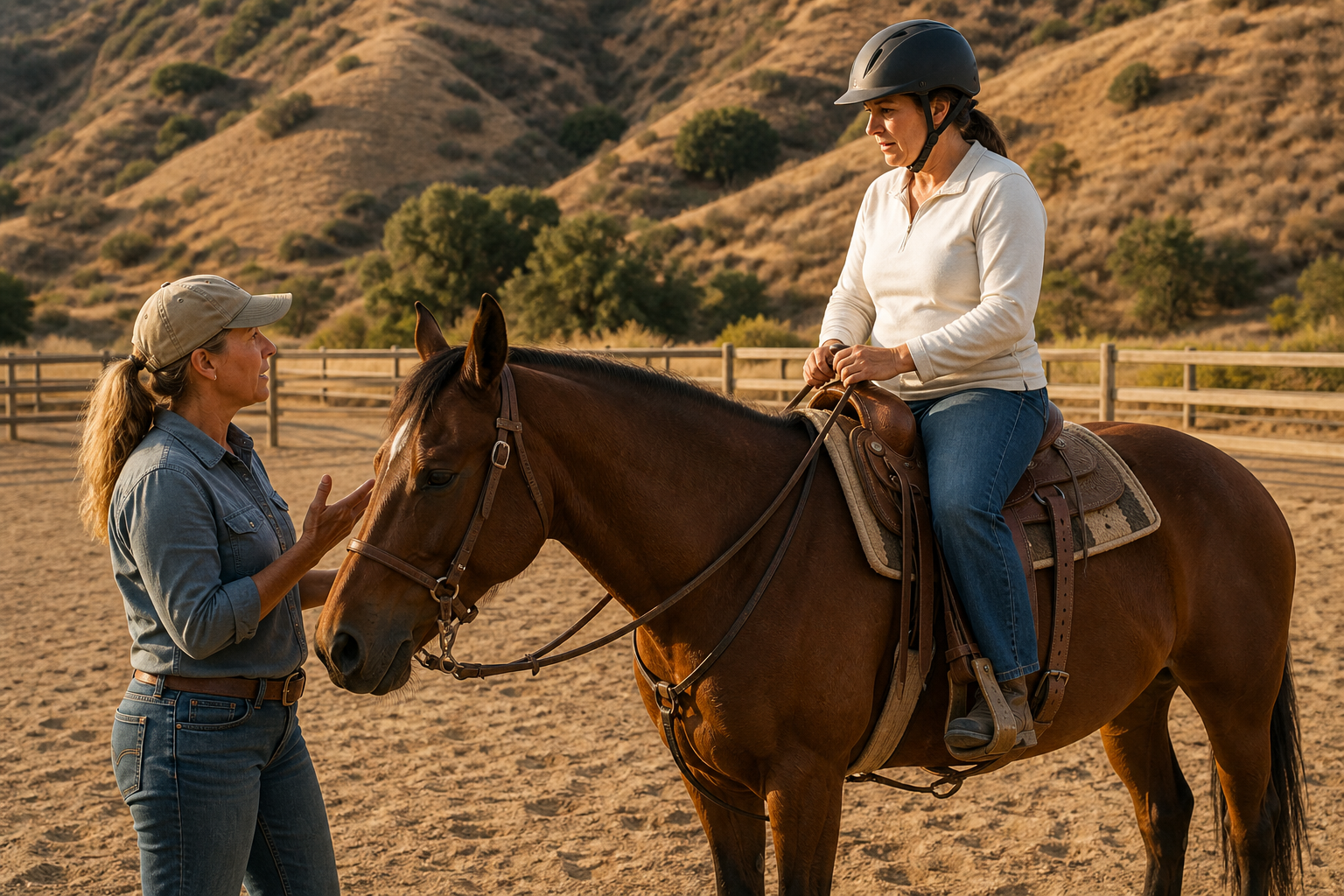
This guide is designed to set clear expectations and provide practical, safety-first guidance for anyone planning a coastal ride. Whether you are preparing for your first time in the saddle or you are an experienced equestrian looking to navigate the surf, understanding how to plan, what to wear, what gear to bring, and how to read the beach environment is essential. By approaching the ride with respect for the horse, the terrain, and the coastal ecosystem, you ensure that the experience is as rewarding and memorable as the landscape itself.
Is Horseback Riding on the Beach Right for You?
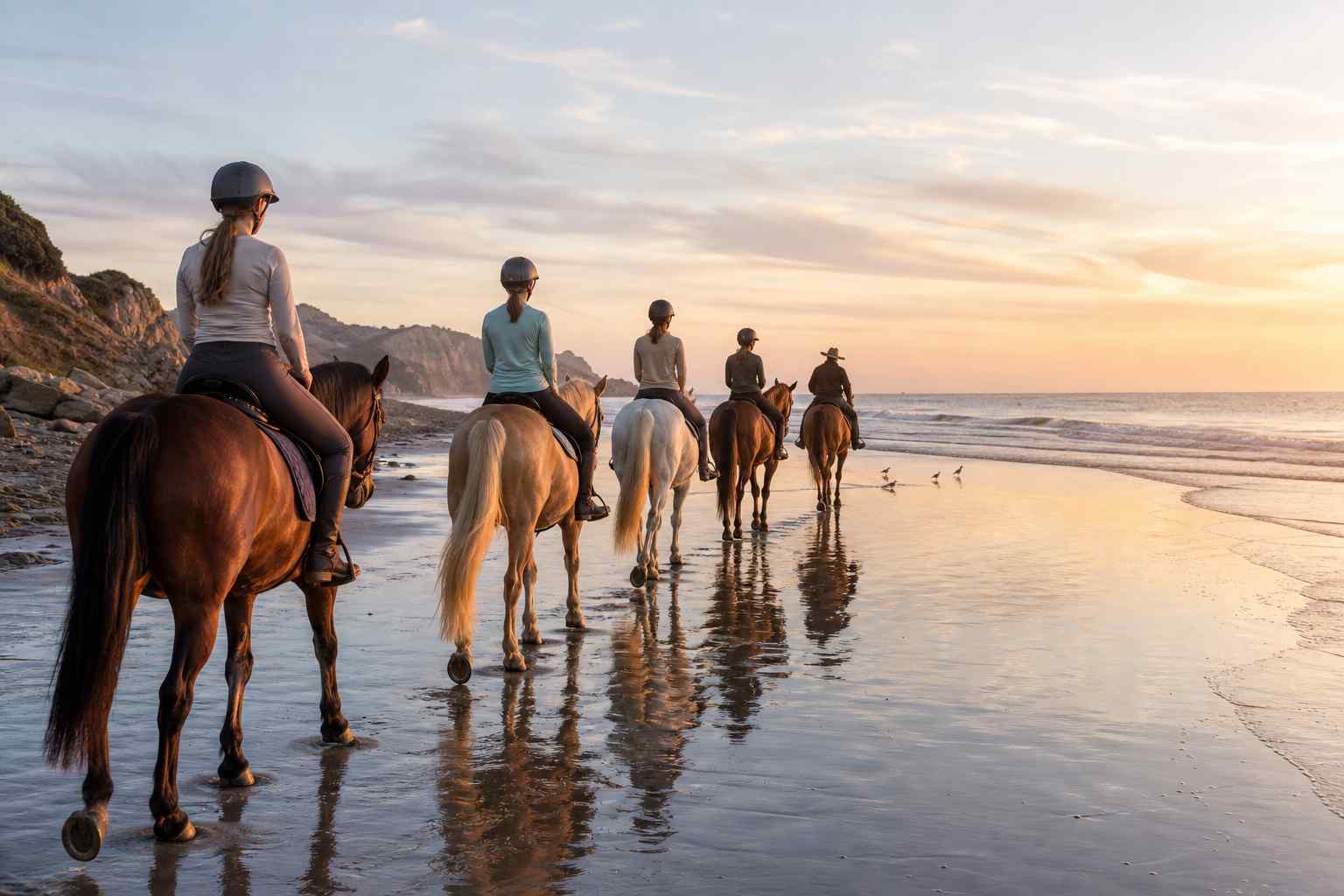
Before you book a coastal ride, it is worth clarifying who this experience suits and how to set realistic expectations for the pace and terrain. A beach ride is not a high-speed gallop through the surf as often depicted in movies. It is typically a structured, deliberate journey that prioritizes the welfare of the horse and the safety of every rider in the group.
Rider readiness is the foundation of a successful outing. While prior equestrian experience is beneficial, it is not strictly necessary for a guided beach walk. What is essential is a baseline level of comfort around large animals, the ability to listen to and follow a guide's instructions, and a basic level of physical fitness. Riding requires core engagement, balance, and the ability to mount and dismount safely. Beginners can absolutely enjoy a guided beach ride, provided they are paired with a steady horse and the pace is kept to a controlled walk. For those who want to build confidence before heading to the coast, taking horseback riding lessons for adults provides a solid foundation in basic cues, balance, and horse communication.
Health and safety considerations must also be factored into your decision. The motion of a horse, combined with the uneven footing of sand, can exacerbate existing back, neck, or joint issues. Pregnant individuals are generally advised against riding due to the inherent risks of falls or sudden movements. The beach environment also introduces elements like intense sun exposure, heat, and the visual illusion of moving water, which can affect those sensitive to heat exhaustion. Honest self-assessment regarding your physical capabilities and comfort level is the first step in planning a safe ride.
Experience levels dictate the appropriate pace and structure of the ride. For beginners, a walk-focused ride allows you to acclimate to the horse's movement and the sensory inputs of the beach without feeling overwhelmed. Intermediate and advanced riders, who have developed an independent seat and secure balance, may have opportunities for short trots or canters, but only when footing and conditions permit. Regardless of your skill level, the primary focus should always be on maintaining a calm, cooperative partnership with your horse. If you are considering a beach ride as a special occasion, couples horseback riding in Los Angeles offers a deeply memorable shared experience along the Southern California coast.
What to Wear for Horseback Riding on the Beach
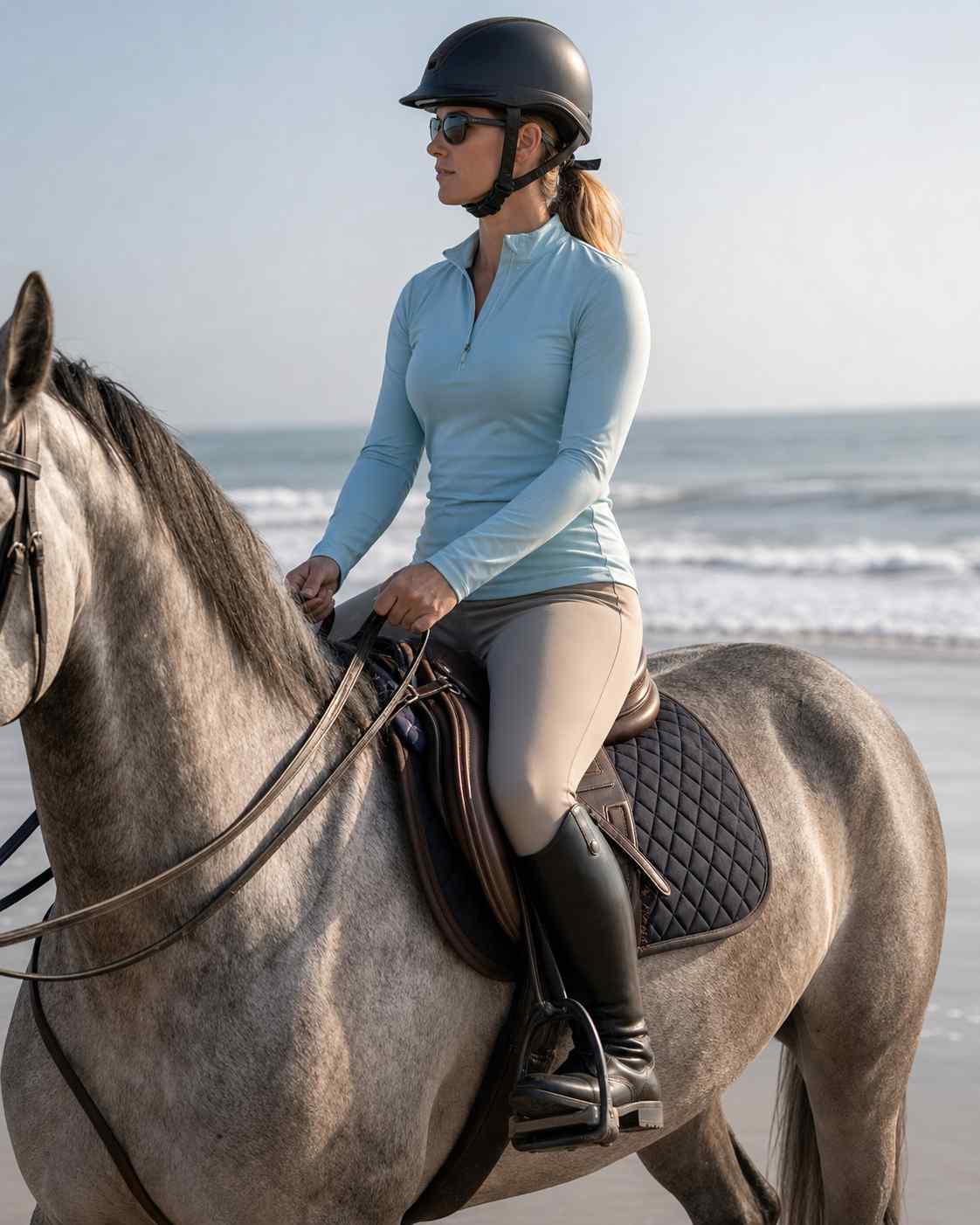
Dressing appropriately for a beach ride is about striking a balance between comfort, protection, and safety. The coastal environment can be deceptively harsh, with strong sun, abrasive sand, and unpredictable winds. Your clothing choices directly impact your ability to focus on the ride and remain comfortable in the saddle for the duration of the outing.
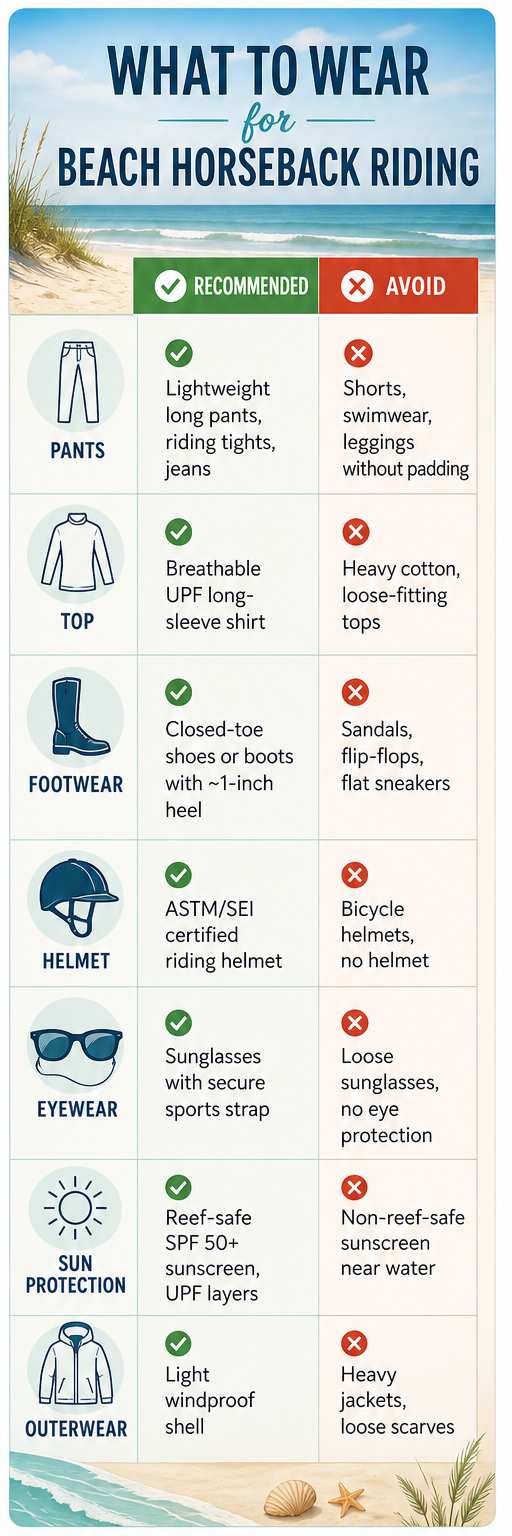
The core of your riding attire should focus on protecting your skin and preventing chafing. Lightweight, long pants are non-negotiable. Jeans, riding tights, or durable synthetic trousers protect your legs from the friction of the saddle and stirrup leathers. Avoid shorts and swimwear entirely; bare skin against leather or synthetic saddle materials will quickly lead to painful rubs that can ruin the experience. On top, a breathable, long-sleeve shirt provides essential protection from the sun and wind. Look for fabrics with a UPF rating that wick moisture away from the skin, keeping you cool even as the sun intensifies.
Footwear is a critical safety component. You must wear closed-toe shoes or riding boots with a small, defined heel of approximately one inch. The heel prevents your foot from sliding forward through the stirrup, which is a major safety hazard in the event of a fall or sudden movement. Sandals, flip-flops, and loose-fitting water shoes are entirely inappropriate for riding and will likely be prohibited by the operator before you even mount.
Helmets and accessories complete your protective gear. A properly fitted, ASTM/SEI certified riding helmet is strongly recommended and often required by reputable outfitters. The helmet should sit level on your head, covering your forehead, and the chin strap should be snug. To manage the glare of the sun off the water, wear sunglasses secured with a sports strap. If you have long hair, tie it back securely to prevent it from whipping into your face or tangling in the coastal wind.
Weather and sun protection require proactive management. Apply reef-safe sunscreen generously before the ride, paying special attention to your face, neck, and the backs of your hands. A light, windproof, and water-resistant shell is a smart addition, as coastal breezes can be chilling, especially during morning or evening rides. Avoid heavy cotton garments; cotton absorbs sweat and sea spray, staying damp and potentially causing chills if the temperature drops or the wind picks up. For a comprehensive overview of what to expect and how to prepare for any guided ride, review our guide on trail riding tips for beginners.
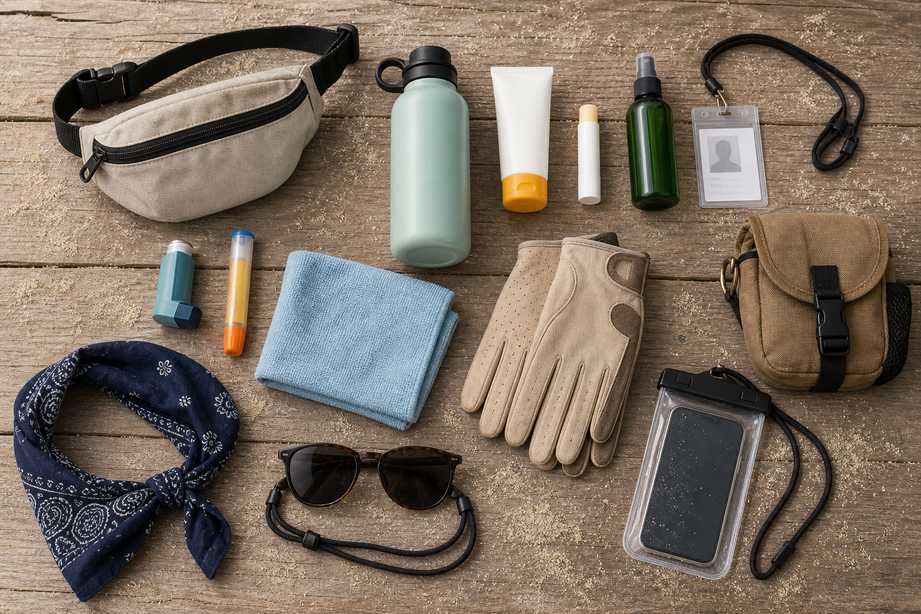
What to Bring: A Smart Beach Ride Packing List
Packing for a beach ride requires a minimalist approach. You need essential items for safety and comfort, but you must avoid carrying bulky or loose gear that could interfere with your balance or spook the horse. A concise, safety-first packing list ensures you have what you need without unnecessary encumbrances.
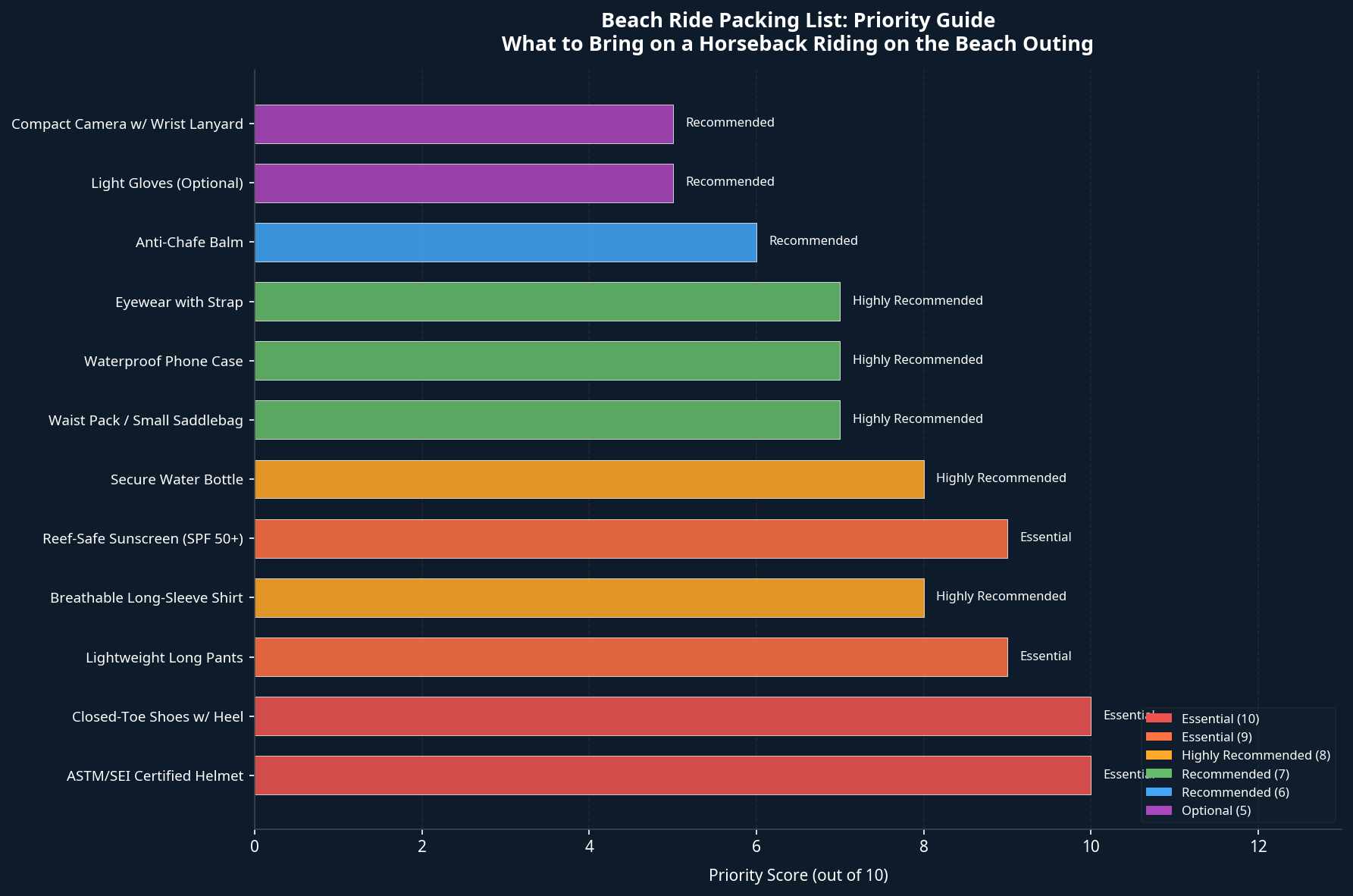
Essentials include hydration and sun protection. Bring water in a secure, non-crushable bottle. A small tube of reef-safe sunscreen and SPF lip balm are necessary for reapplication during the ride. Insect repellent can be helpful, particularly if your ride transitions through coastal brush or marshy areas before reaching the sand. Carry a basic form of identification and any critical personal medications, such as an inhaler or EpiPen.
The carry method is just as important as the items themselves. A compact waist pack or a small saddlebag provided by the outfitter is the best way to carry your gear. If you plan to bring your phone for photos, invest in a waterproof phone case with a secure lanyard. A small microfiber towel can be useful for wiping sea spray off your face or your camera lens. Ensure your sunglasses have a secure strap to prevent them from being lost to the wind or the waves.
Optional items can enhance your comfort depending on the conditions. Light riding gloves provide better grip on the reins and protect your hands from blisters and sun exposure. A bandana can be worn around the neck to protect against sunburn or pulled up over the face if the wind kicks up sand. If you are prone to chafing, applying an anti-chafe balm before the ride is a wise preventative measure. A compact camera is acceptable, provided it is secured with a wrist lanyard.
Knowing what to leave behind is crucial for safety. Do not bring dangling bags, unsecured scarves, umbrellas, or large backpacks. Loose items that flap in the wind can easily startle a horse. Furthermore, avoid bringing anything that could become litter if dropped; protecting the coastal environment is a shared responsibility for every rider on the beach.
Timing Your Beach Horseback Ride: Tides, Weather, and Conditions
The success of a beach ride is heavily dependent on timing. Coastal conditions are dynamic, and understanding how the time of day, the tides, and the weather interact will help you plan a ride that is comfortable for you and safe for the horse.
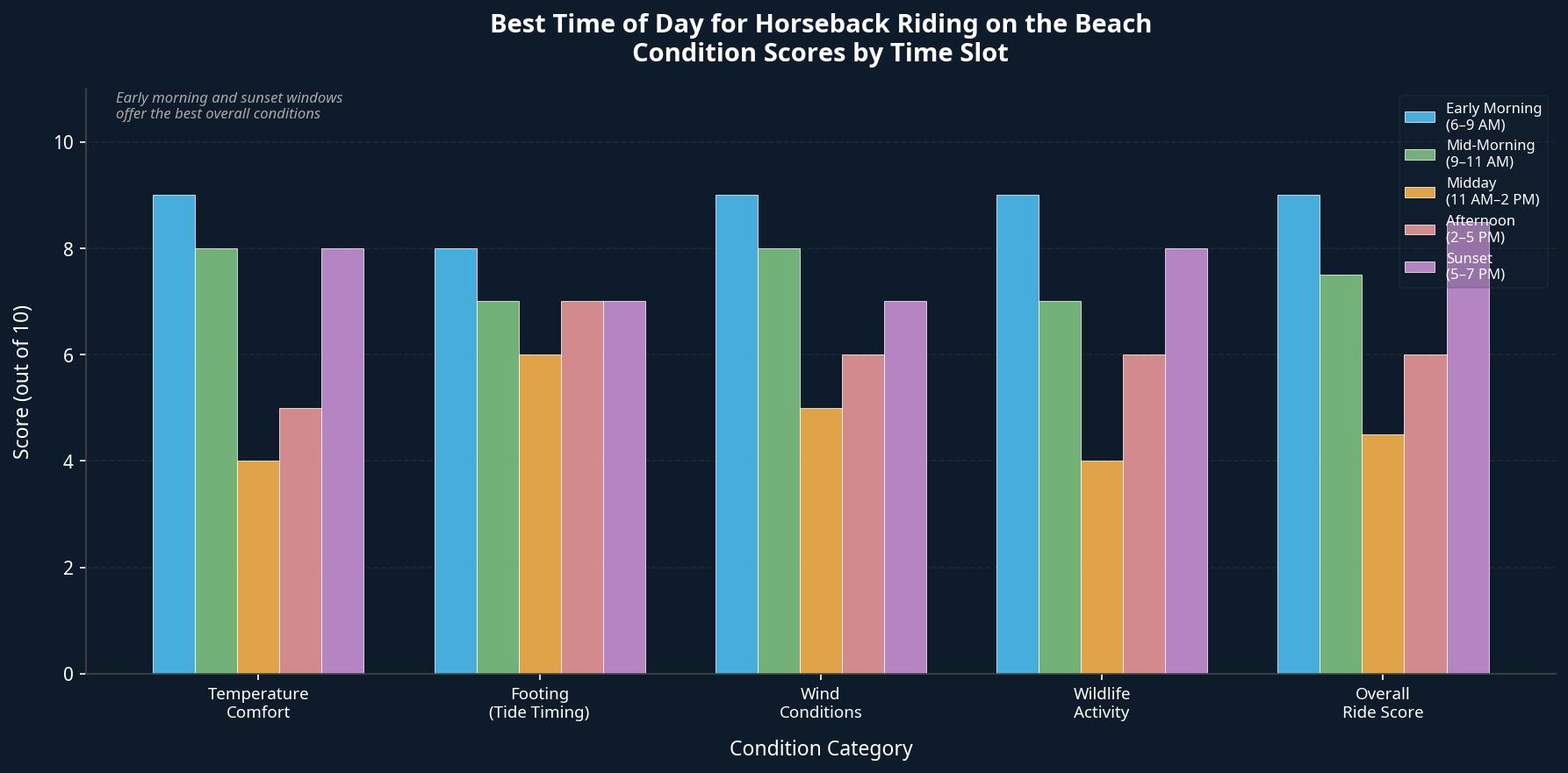
The best times of day for a beach ride are typically early morning and late afternoon or sunset. Early morning rides offer cooler temperatures, calmer winds, and often a quieter beach with fewer visitors. The light is soft, and the horses are generally fresh and relaxed. Sunset rides provide spectacular lighting and a serene atmosphere, making them a popular choice for special occasions. Midday rides should generally be avoided during the summer months due to intense heat, harsh glare, and crowded beaches. If you are planning a special evening outing, our guide on planning a sunset horse ride offers detailed insights on timing, gifting, and what to expect.
Tides and footing are the most critical factors in beach riding safety. The ideal time to ride is within a few hours of low tide. As the tide recedes, it leaves behind a wide expanse of firm, wet sand in the intertidal zone. This surface provides excellent traction and support for the horse's hooves, minimizing the cardiovascular and musculoskeletal strain associated with riding in deep sand. Riding in deep, dry sand near the dunes should be strictly limited to a slow walk for short transitional periods, as it requires immense effort from the horse and significantly increases the risk of tendon injuries.
Weather factors must be monitored closely. Coastal weather can change rapidly, and the heat index is a critical variable; high humidity combined with high temperatures can quickly lead to heat exhaustion for both horse and rider. Wind is another significant factor, as strong coastal winds can make riding uncomfortable and can sometimes make horses nervous or reactive. In the event of thunderstorms, particularly those with lightning, the beach is highly dangerous and all rides must be rescheduled. Wildlife patterns and local regulations may also affect your timing, as many beaches have seasonal restrictions to protect nesting birds or sea turtles. Respecting these closures is both a legal obligation and a matter of environmental stewardship.
Safety on Sand and Technique Basics for Coastal Riding
Riding on sand requires specific techniques and an understanding of how the terrain affects the horse's movement. By mastering a few beginner-friendly skills, you can significantly reduce risk and increase your comfort throughout the ride.
Pre-ride checks are your first line of defense. Before mounting, ensure your helmet is fitted correctly and the chin strap is secure. Ask your guide to check the cinch or girth to confirm the saddle is tight, as saddles can shift more easily on uneven terrain. Check your stirrup length; when your legs hang naturally, the bottom of the stirrup should align with your ankle bone. Ensure you understand the basic cues for walking, steering, and stopping before the ride begins. If you are planning a trip to the Los Angeles area, reviewing our guide to horseback riding in Los Angeles will help you understand the terrain and what to expect from a guided ride in Southern California.
Footing and pace are directly linked to safety on the beach. Walking is the standard and safest pace for coastal rides. It allows the horse to navigate the shifting sand carefully and gives the rider time to adjust their balance as the terrain changes. Short trots may be appropriate on firm, wet sand for intermediate riders, but galloping on wet or uneven sand carries significant risks, including slipping, stumbling, or striking hidden debris. Always defer to your guide's judgment regarding pace and gait.
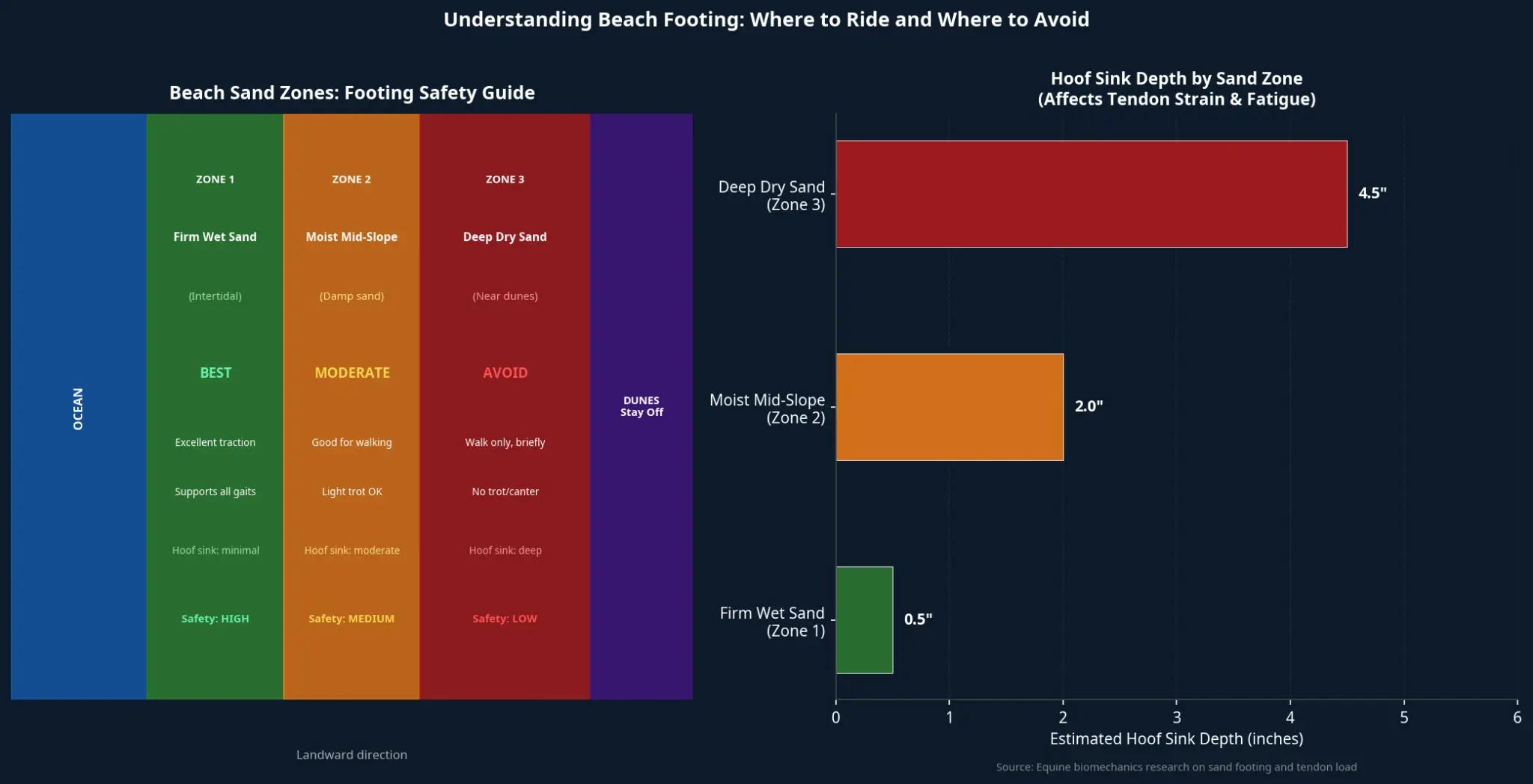
Spacing and your line of travel require constant attention throughout the ride. Maintain at least one horse-length of distance between your horse and the horse in front of you to prevent crowding and potential kicking. Ride the firm line of wet sand near the water's edge, but avoid surf that reaches higher than the horse's knees. Deep water or sudden drop-offs can unbalance the horse and create a dangerous situation for both animal and rider.
Staying balanced is key to a comfortable and safe ride. Maintain a relaxed seat, keeping your weight centered over the horse. Keep your heels down and your eyes looking forward along the beach, rather than staring down at the horse's neck. If you need to stop, sit deep in the saddle and apply steady, even pressure to both reins, releasing the moment the horse halts. If you ever feel unsteady or nervous, communicate with your guide immediately. A typical beach ride follows a structured pattern: a safety briefing and mounting session, a controlled entry onto the beach, a steady walk along the shoreline, a mid-ride pause for photos or resting the horses, and a safe, organized dismount back at the starting point.
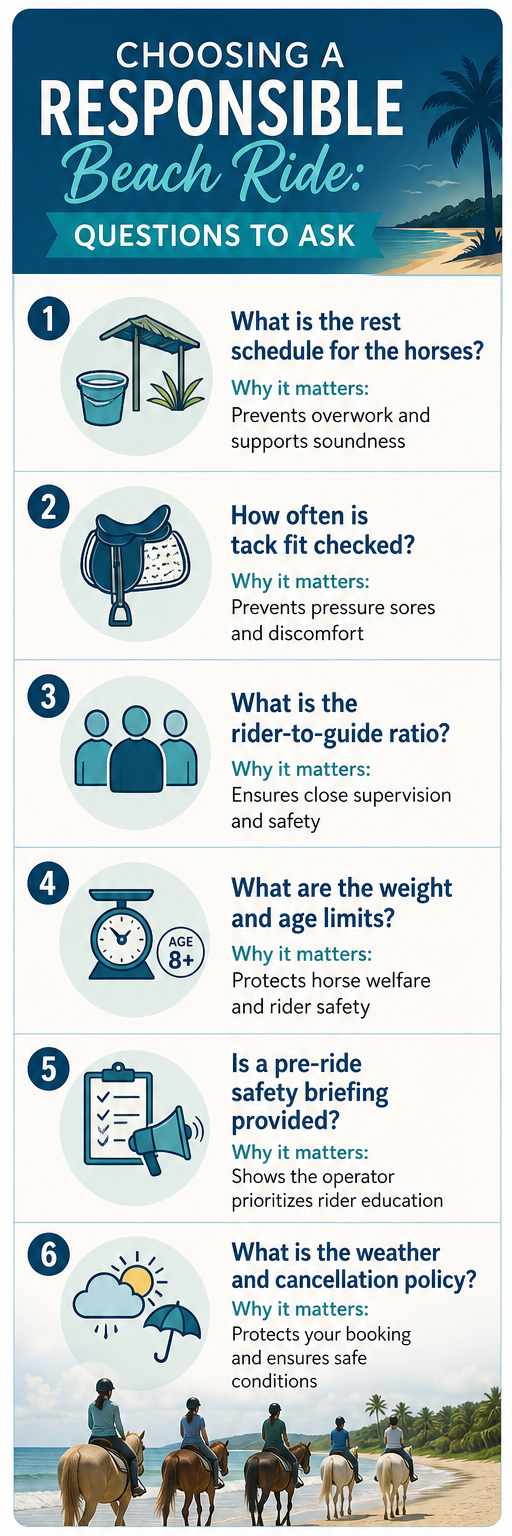
Horse Welfare and Choosing a Responsible Ride
A truly rewarding equestrian experience is one that prioritizes the health and well-being of the horse. When selecting an operator for a beach ride, it is essential to look for signs of responsible, horse-forward practices. The quality of the horses' care is a direct reflection of the operator's values.
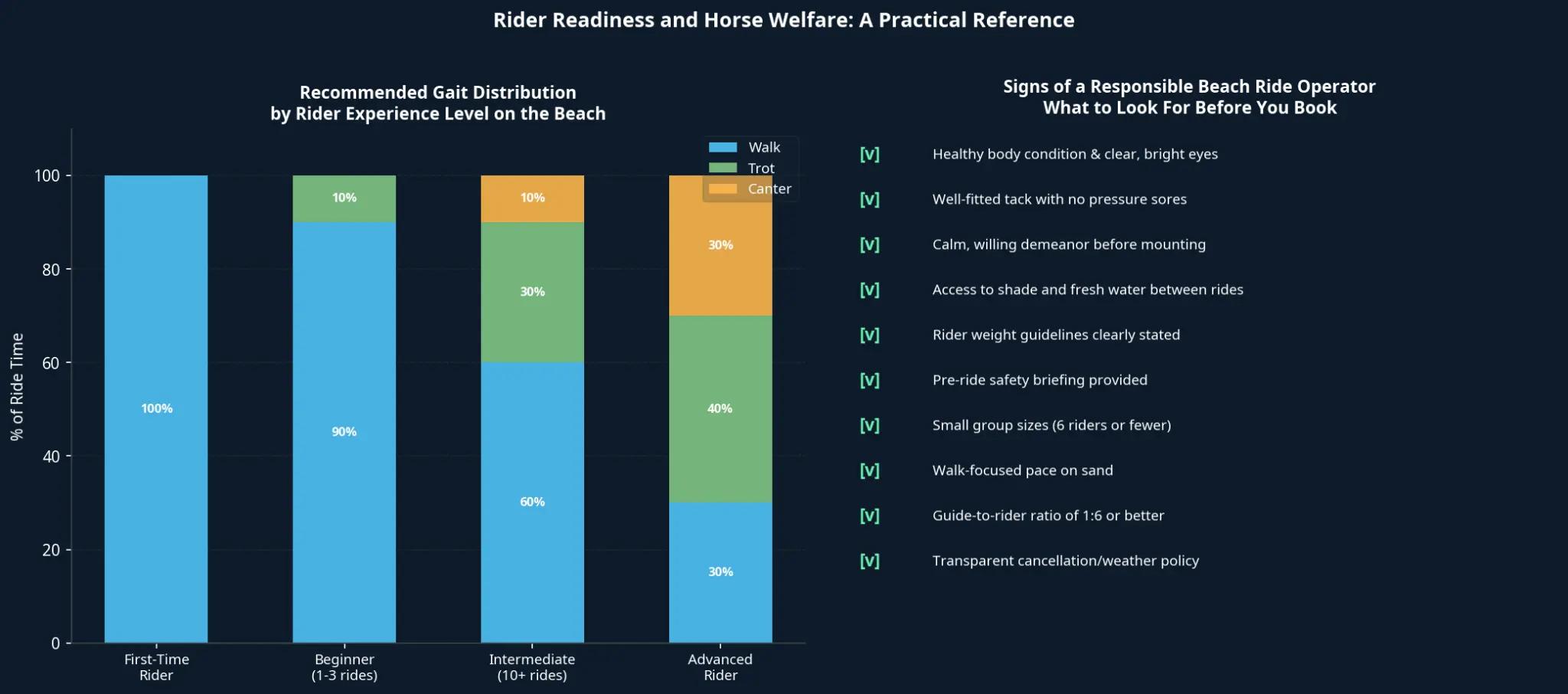
Signs of good care are usually apparent before you even mount. Horses should have a healthy body condition, with ribs that can be felt but not easily seen. Their eyes should be clear and bright, and their demeanor should be calm and willing. Tack should be clean and well-fitted, with no signs of rubbing or pressure sores. Between rides, horses must have access to shade and clean, fresh water. These are baseline standards that every reputable operator should meet without exception.
Group size and pace are strong indicators of an operator's priorities. Smaller groups, typically six riders or fewer, allow the guide to monitor everyone closely and manage the pace effectively. A walk-focused ride on sand demonstrates a genuine understanding of the physical toll that deep footing takes on a horse's tendons and ligaments. Operators who prioritize the horse's long-term soundness will always structure beach rides around a conservative pace, regardless of what riders request.
Rider fit is a crucial aspect of welfare that is sometimes overlooked. Responsible operators enforce weight guidelines to ensure horses are not carrying more than they can comfortably support, typically no more than 15 to 20 percent of the horse's body weight including the saddle. Riders must also possess a balanced seat; an unbalanced rider places undue stress on the horse's back regardless of their weight. For more detailed insights on what to look for and what questions to ask before booking, consult our reservation checklist for horseback trail rides.
Water access and wading should be managed carefully and under direct guide supervision. Wading is generally safe and enjoyable in calm, shallow water, and horses often find it refreshing. However, horses should not be forced into strong surf, deep water, or areas with sudden drop-offs or strong undertows. The guide should always lead the way and dictate where and when wading is appropriate, based on their real-time assessment of the conditions.
Photography and Memories Safely
Documenting your beach ride is a natural desire, and the coastal setting provides breathtaking backdrops. However, photography must never compromise your safety, the safety of the group, or the welfare of the horse. Managing your devices and timing your shots correctly ensures you capture the memories without creating hazards.
The best moments to shoot are during planned stops. When the group is halted and the horses are standing quietly, you can safely take your hands off the reins to use your camera or phone. Taking photos while the horse is moving, especially if you are a beginner, distracts you from your balance and your horse's behavior. If you want action shots, ask your guide if they can photograph you from the ground, or have a non-riding friend take photos from a safe distance on the beach.
Device management is critical in the coastal environment. Drop your phone in the sand and it may be lost; drop it while mounted and the sudden movement could startle your horse. Always use a wrist lanyard for your phone or compact camera. Chest mounts for action cameras are an excellent hands-free option that keeps your hands available for the reins. Ensure your pockets have zippers if you are storing devices. Drones are generally discouraged or strictly prohibited near horses, as the noise and erratic movement can easily trigger a panic response in even the calmest animal.
Etiquette regarding photography extends to the environment and wildlife. Avoid using sudden flashes, particularly in low-light conditions or near wildlife. Turn off loud artificial shutter sounds on your phone. Always adhere to local regulations regarding drone use, as many coastal areas restrict them to protect nesting birds and other sensitive species. Respecting these rules is part of being a responsible visitor to the coast.
Environmental Etiquette on Coastal Trails
The privilege of riding on the beach comes with the responsibility of environmental stewardship. Coastal ecosystems are fragile, and low-impact practices are essential to ensure these areas remain open and accessible for future riders and visitors.
Staying on firm sand is the most important rule of coastal riding. Avoid riding into fragile dune systems, which are vital for coastal defense and provide critical habitat for numerous plant and animal species. Keep a sharp eye out for marked turtle nests or bird sanctuaries, and give them a wide berth. Always obey posted access rules and signage; if an area is marked as closed, do not enter it regardless of how inviting it may look.
Leave No Trace basics apply strictly to the beach. Pack out all trash, including small items like wrappers or broken gear. Ensure that items in your pockets or saddlebags are secure and will not blow away in the wind. Avoid using soaps, chemical fly sprays, or non-reef-safe sunscreens if you plan to wade into the water, as these can introduce harmful substances into the marine environment and damage coral reefs and other sensitive ecosystems.
Wildlife respect is paramount throughout the ride. Never attempt to feed or approach wild animals. If you encounter roosting birds, shorebirds, or marine mammals like seals resting on the beach, pass them with a wide berth and at a slow walk to avoid causing them stress or forcing them to flee. Observe all wildlife from a respectful distance, allowing them to continue their natural behaviors undisturbed. Your guide will direct you around any sensitive areas, but staying alert and aware of your surroundings is a shared responsibility.
Putting It All Together
A successful horseback riding on the beach experience is the culmination of thoughtful preparation, calm technique, and a deep respect for both the horse and the coastal environment. By dressing appropriately, packing smartly, and understanding the nuances of sand footing and tide timing, you set the stage for a safe and comfortable ride. Recognizing the horse as a living partner rather than a vehicle, and choosing an operator who prioritizes equine welfare, ensures that the activity remains ethical and sustainable for years to come.
As you plan your coastal excursion, keep the tides and the sun in mind, and approach the ride with a willingness to listen to your guide and your horse. Take the time to review safety and environmental guidelines before you mount up. At Second Chance Ranch, our beach horseback riding experiences at Rincon Beach are designed to deliver exactly this kind of ride: structured, safe, and deeply connected to the natural beauty of the Southern California coast. You can explore all available ride locations, including Rincon Beach, Vasquez Rocks, and the Mountains of Santa Clarita, and check current availability and upcoming rides on our booking calendar. We also offer seasonal specials and holiday ride packages that make a beach ride an exceptional gift for the people who matter most.
When approached with care and respect, a beach ride offers an unparalleled opportunity to connect with nature and experience the coastline from a truly unique perspective. The ocean, the horse, and the open sand are all waiting.
Frequently Asked Questions About Horseback Riding on the Beach
What should I wear for horseback riding on the beach?Wear lightweight, long pants to prevent chafing, a breathable long-sleeve shirt for sun protection, and closed-toe shoes or riding boots with a small heel. An ASTM/SEI certified riding helmet is strongly recommended. Avoid shorts, swimwear, and sandals, as these provide no protection in the saddle.
What should I bring on a beach horseback ride?Bring a secure water bottle, reef-safe sunscreen (SPF 50+), lip balm, and any necessary personal medications. Carry these items in a compact waist pack or small saddlebag. Leave behind dangling bags, umbrellas, or loose items that could spook the horses or become litter on the beach.
When is the best time for horseback riding on the beach?The best times are early morning or late afternoon near sunset, as these windows offer cooler temperatures, softer light, and calmer conditions. It is also crucial to ride near low tide, when the receding water leaves a wide expanse of firm, wet sand that provides safe, supportive footing for the horse.
Can beginners go horseback riding on the beach?Yes, beginners can absolutely enjoy beach riding provided they book a guided, walk-focused ride with a reputable outfitter. A responsible operator will provide a thorough pre-ride safety briefing, match you with a calm and experienced horse, and keep the pace manageable for your skill level throughout the outing.
Is it safe for horses to go into the ocean?Wading is generally safe in calm, shallow water under the direct supervision of an experienced guide. However, horses should not be taken into strong surf, deep water, areas with sudden drop-offs, or locations with strong undertows, as these conditions can cause panic or injury to the horse.
Are helmets required for horseback riding on the beach?While policies vary by operator, ASTM/SEI certified riding helmets are strongly recommended for all riders and are often strictly required, particularly for children and beginners. Wearing a properly fitted helmet is the single most effective safety measure you can take before mounting.
What are typical age and weight guidelines for beach rides?Most operators have a minimum age requirement, often around 8 to 9 years old, and weight limits that typically range from 200 to 250 pounds. These guidelines exist to ensure the horse is not carrying more than 15 to 20 percent of its body weight, which protects the animal's back, joints, and long-term soundness.
What happens if it rains or there is a storm on the day of my ride?Reputable outfitters have clear weather policies. Rides are typically rescheduled or canceled in the event of heavy rain, high winds, or any sign of thunderstorms. Lightning poses a severe and immediate risk on an open beach, and no responsible operator will proceed with a ride under those conditions.
What footwear is best for horseback riding on the beach?The best footwear is a closed-toe shoe or a riding boot with a small, defined heel of approximately one inch. This heel prevents your foot from sliding completely through the stirrup, which is a critical safety feature. Open-toe shoes, sandals, and flat sneakers are not safe for riding and should not be worn.
Can I bring a camera or drone to photograph my beach ride?You can bring a compact camera or smartphone if it is secured with a wrist lanyard or chest mount. Photos should only be taken when the horse is standing still. Drones are generally prohibited around horses due to their noise and erratic movements, which can cause horses to spook unexpectedly. Always check local regulations before flying a drone near a beach.
This article is brought to you by the team at horsebackridingtrails.com (Second Chance Ranch), offering guided horseback riding experiences across Southern California's most iconic landscapes, including Rincon Beach, Vasquez Rocks, and the Mountains of Santa Clarita. Meet the horses and book your ride today.