What Is the Essential Horseback Riding Etiquette Checklist for Booking Your Next Trail Ride?
This comprehensive guide outlines the vital horseback riding etiquette and safety standards required before reserving a trail ride.

Equestrian trail riding is one of the most liberating ways to connect with nature, offering a unique vantage point of scenic landscapes while partnering with a majestic animal. However, a successful and harmonious ride does not begin at the trailhead; it starts the moment you make your reservation. Proper horseback riding etiquette is rooted in preparation, clear communication, and respect, both for the animals and the professionals who care for them. By addressing critical safety, logistical, and physical considerations before booking, you can prevent misunderstandings, ensure the safety of your group, and help preserve the trails for future generations.
At horsebackridingtrails, we represent Second Chance Ranch, a premier outfitter dedicated to providing safe, memorable, and customized trail rides. Operating across three iconic Southern California locations, the rugged Mountains of Santa Clarita, the spectacular rock formations of Vasquez Rocks, and the pristine coastline of Rincon Beach near Los Angeles, we specialize in matching riders of all skill levels with the perfect equine companion. Whether you are a parent booking a child's first pony experience, a travel planner organizing a group retreat, or a lapsed rider seeking a refresher, this comprehensive reservation checklist will guide you through the essential questions to ask and the etiquette standards to uphold before you saddle up.
Why Does Horseback Riding Etiquette Start at the Time of Reservation?
Many people associate "etiquette" solely with trail behavior, such as keeping a safe distance between horses or yielding to other trail users. In reality, equestrian etiquette is a continuous spectrum of courtesy that begins with your initial inquiry. Horses are highly sensitive, intuitive prey animals with distinct personalities, physical capacities, and training levels. Outfitters must carefully balance herd dynamics, guide availability, and trail conditions to create a safe environment.
When a client provides accurate, honest information during the booking process, it allows the stable management team to make informed pairing decisions. Misrepresenting a rider's weight, physical fitness, or experience level to secure a booking is not only a breach of etiquette; it is a severe safety hazard that puts both the rider and the horse at risk of injury. Conversely, asking proactive questions during the reservation phase demonstrates respect for the outfitter’s expertise and a commitment to a safe, collaborative adventure.
The Pre-Booking Reservation Checklist: Essential Questions to Ask Before You Book
To streamline your planning and ensure a seamless experience, we have compiled the ultimate pre-booking checklist. This list is organized by key operational categories, providing the exact questions you should ask and explaining why each inquiry is vital to your safety and comfort.
1. How Do Age Limits and Rider Fit Affect Your Booking Options?
Age limits in the equestrian industry are not arbitrary; they are strictly governed by insurance regulations, physical development, and cognitive readiness. Riding a horse requires a baseline of core strength, balance, and the ability to follow multi-step verbal instructions under pressure.
- What are the minimum and maximum ages per ride type and duration? Stables typically enforce a minimum age of six or seven for guided trail rides to ensure children have the physical maturity to sit independently in the saddle and hold their reins properly.
- Are pony or lead-line options available for younger riders? For children under the minimum age, outfitters often offer lead-line rides in a controlled arena environment, where a guide physically leads the horse or pony on foot.
- Do minors need a parent or legal guardian present to ride or sign liability waivers? Most jurisdictions require a parent or court-appointed legal guardian to sign liability waivers for riders under 18. Some outfitters also require an adult to accompany minors on the trail.
At Second Chance Ranch, we strictly adhere to safety-first age policies. While our standard trail rides at Santa Clarita, Vasquez Rocks, and Rincon Beach are designed for older children and adults, we offer specialized, gentle introductions for younger family members, ensuring that everyone has a safe, positive experience.
2. How Do Stables Assess Rider Experience and Match Horses?
The key to a harmonious trail ride is the perfect partnership between horse and rider. Stables categorize rider experience to select a mount whose temperament, stride, and responsiveness match the rider's capabilities.
- How do you assess rider experience and match horses? A reputable outfitter will ask detailed questions about your riding history, frequency of riding, and comfort level at different gaits, rather than relying on a simple "beginner" or "advanced" self-label.
- What pace and terrain should we expect on the trail? Some trails are strictly limited to a walking pace due to steep, rocky terrain, while others allow for trotting or cantering for qualified riders.
- Is a pre-ride lesson or arena warm-up included for new or nervous riders? A brief mounting block orientation and arena warm-up are incredibly beneficial for beginners to practice basic steering, stopping, and mounting cues before heading into open country.
To illustrate how we customize our rides at Second Chance Ranch, the table below outlines our experience matching framework across our three signature locations:

Our wranglers are experts at adapting the ride pace to match the group's collective skill level. For beginners, we keep the pace to a relaxing walk, allowing you to take in the breathtaking views. For intermediate riders, we can introduce a gentle trot, and for advanced riders on our coastal routes, we can offer opportunities to canter along the shoreline, depending on trail conditions and rider safety assessments.
3. What Are the Timing, Arrival, and Logistical Expectations?
Punctuality is a cornerstone of equestrian etiquette. Stables operate on tight schedules, and a single late arrival can delay subsequent rides, shorten trail times for other guests, or compromise horse rest intervals.
- What is the total time on-site versus the actual time spent in the saddle? Your booking should clearly distinguish between the overall experience duration (which includes check-in, safety briefings, helmet fitting, and mounting) and the guaranteed time spent riding on the trail.
- How early should we arrive, and what happens if we are late? Most stables require guests to arrive 30 to 45 minutes prior to their scheduled departure. Late arrivals often forfeit their booking without a refund, as horses cannot be left saddled and waiting in the heat.
- What is the latest check-in time for afternoon, sunset, or seasonal rides? Sunset rides are highly popular but have strict departure windows to ensure the group returns safely before complete darkness.
4. What Are the Safety, Weight, and Health Policies of the Outfitter?
Equestrian activities carry inherent risks. Responsible outfitters establish clear physical and medical guidelines to protect both the human participants and the equine athletes.
- Is there a rider weight limit, and how is it verified? Most stables enforce a strict weight limit, typically ranging from 220 to 250 pounds, depending on the size and breed of their horses. This limit is based on the veterinary standard that a horse should not carry more than 20% of its total body weight (including the saddle and gear).
- Are there specific health, pregnancy, or medical restrictions? Due to the jarring motion of riding and the risk of a fall, pregnant women and individuals with severe back, neck, or joint injuries are generally restricted from riding.
- What is the guide-to-rider ratio on your trail rides? A lower ratio ensures more personalized attention and faster response times in an emergency. A standard ratio is one guide (wrangler) for every five to six riders.
5. How Do Weather and Trail Conditions Affect Cancellations?
Outdoor recreation is subject to the whims of nature. Understanding an outfitter's weather policy prevents frustration and ensures you are not caught unprepared in hazardous conditions.
- How do you decide on ride cancellations or reschedules due to weather? Rides are typically cancelled during heavy rain, extreme winds, lightning, excessive heat (above 100°F), or poor air quality (such as wildfire smoke in California).
- What happens in light rain, moderate heat, or overcast conditions? Many stables will ride in light rain or cooler winter weather, provided guests are dressed appropriately and trail footing remains secure.
- What is the refund, credit, or rescheduling policy for weather-related cancellations? Reputable stables will offer a full refund or a flexible rescheduling credit if they must cancel a ride due to unsafe trail or weather conditions. Review our refund and cancellation policy for complete details.
6. What Group Sizes and Private Ride Options Are Available?
The social dynamic of a trail ride significantly impacts your comfort and safety. Nervous or first-time riders often benefit from smaller, more controlled group settings.
- What is the typical group size, and how is rider spacing managed? Large public groups can sometimes feel chaotic. Ask if the stable limits group sizes to maintain a peaceful, organized ride.
- Are private rides available for families, couples, or nervous riders? Private rides allow the guide to focus entirely on your party, tailoring the pace, route, and instruction to your specific needs and comfort level.
At Second Chance Ranch, we prioritize intimate, high-quality experiences. We keep our group sizes small and offer highly customized private rides at our Santa Clarita, Vasquez Rocks, and Rincon Beach locations, making them perfect for romantic dates, family milestones, or riders who prefer a quieter, highly supportive environment.
7. What On-Site Facilities, Amenities, and Storage Are Provided?
Knowing what to expect at the ranch headquarters helps you prepare your personal belongings and arrive stress-free.
- Are restrooms and drinking water available at the check-in area? Many trailheads are in rustic, natural settings where facilities may be limited to portable restrooms. Always hydrate before arriving.
- Are photos allowed on the trail, and do you offer guide-taken photos? Taking photos while holding reins can be dangerous. Many stables prohibit phones on the trail unless they are secured, but guides will gladly take group photos at designated, safe stopping points.
- Is there secure storage for car keys, wallets, and personal items? Loose items can easily fall out of pockets on the trail and be lost forever. Stables usually recommend leaving valuables in your locked vehicle trunk and checking your keys at the front desk.
8. How Are Payments, Tips, and Paperwork Handled?
Understanding the financial and administrative details of your booking prevents awkwardness and delays on the day of your ride.
- What forms of payment are accepted for bookings and on-site purchases? Most modern outfitters require online pre-payment to secure your reservation, but may accept cash or cards for on-site retail or add-ons.
- Is a gratuity for the guides customary, and how is it handled? Yes, wrangler guiding is a service industry. Tipping your guide is customary (typically 15% to 20% of the ride cost) and deeply appreciated, as these professionals work long hours in all weather conditions to keep you safe and care for the horses.
- Are waivers digital, and do we need to bring physical identification? Completing digital waivers online prior to arrival is a major time-saver that ensures your ride departs on schedule.
9. How Do Outfitters Accommodate Accessibility and Unique Needs?
The joy of horseback riding should be accessible to as many people as possible, but specialized equipment and training are required to ensure safety.
- Do you accommodate riders with physical, cognitive, or sensory disabilities? Some commercial trail stables can accommodate mild unique needs, while others may refer clients to specialized therapeutic riding centers with certified instructors and adaptive mounting equipment.
- Do mounting blocks, ramps, or stepping platforms exist at the mounting area? Using a mounting block is standard etiquette for all riders, as it reduces strain on the horse's back and makes mounting significantly easier and safer for the rider.
10. What Emergency Protocols and Liability Insurance Are in Place?
Safety-forward outfitters are transparent about their emergency preparedness and risk management strategies.
- What is your emergency protocol if a rider falls or a horse gets injured on the trail? Guides should carry communication devices (two-way radios or satellite messengers), first-aid kits, and have clear evacuation plans for every section of the trail system.
- Do you carry commercial liability insurance, and are your guides certified? Operating a commercial equestrian stable requires robust liability coverage. Guides should be trained in wilderness first aid, CPR, and equine emergency management.
Understanding Equestrian Helmet Safety Standards
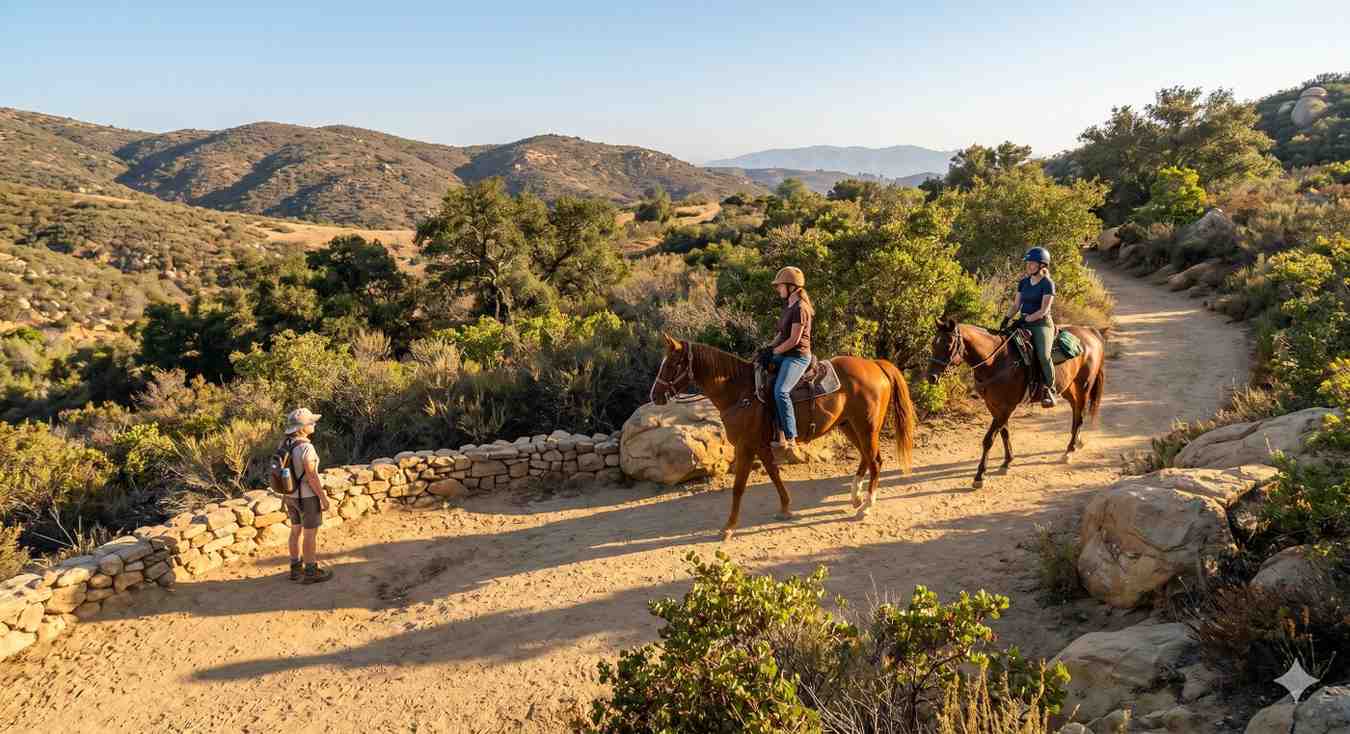
When reviewing the gear and clothing section of your reservation checklist, the most critical safety item is your helmet. In equestrian sports, head protection is paramount. According to national database studies, equestrian sports are a leading cause of sports-related traumatic brain injury in adults, and the majority of serious injuries occur during recreational trail riding.
Why You Must Choose ASTM/SEI Certified Helmets
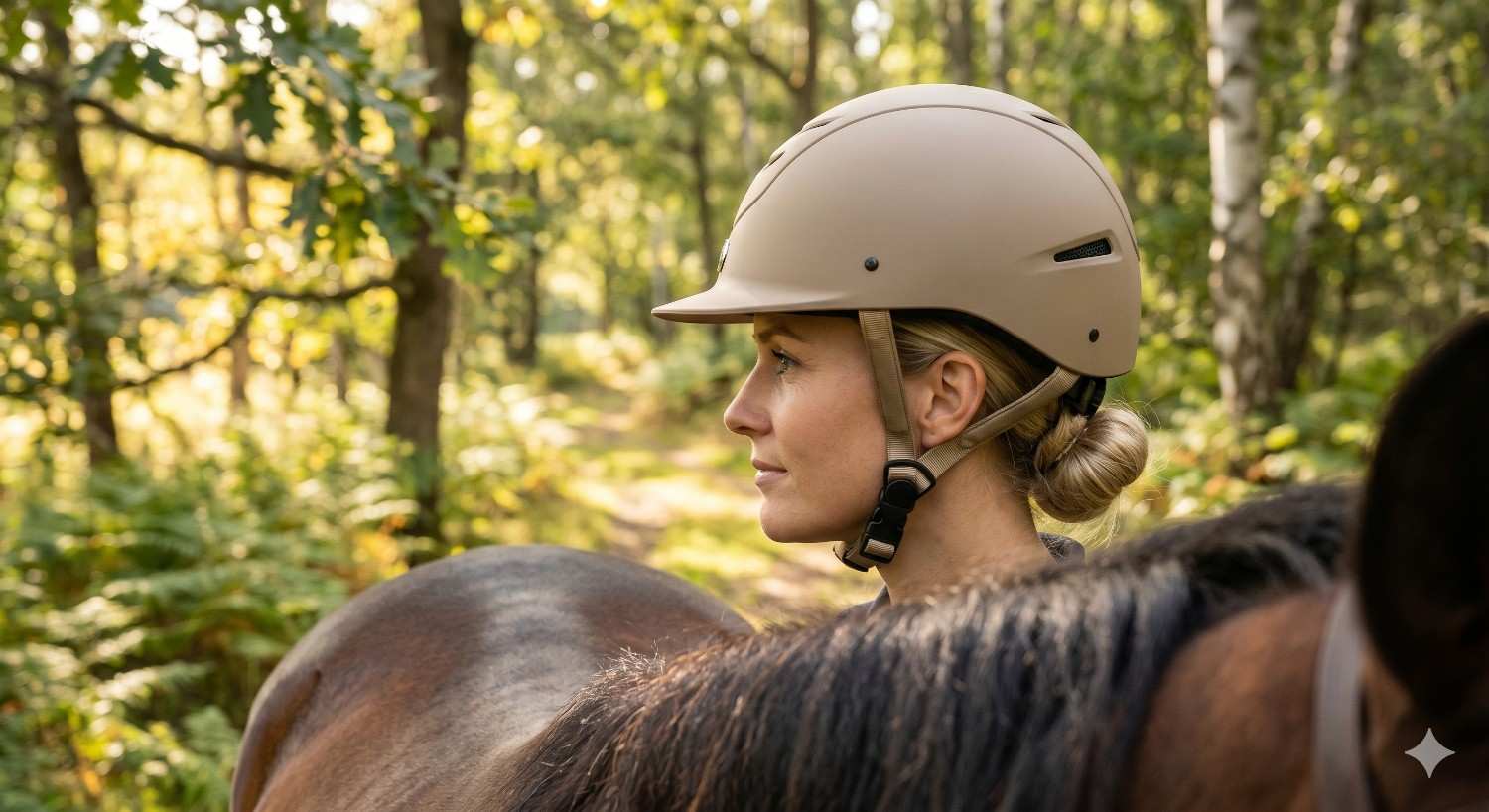
Never ride in a bicycle, skateboard, or motorcycle helmet. Equestrian helmets are specifically designed, tested, and certified to withstand the unique impacts associated with horseback riding, such as a fall from a height of five to six feet onto hard, uneven terrain, or a strike from a horse's hoof.
The standard certification to look for in the United States is ASTM F1163 (Standard Specification for Protective Headgear Used in Horse Sports and Horseback Riding), certified by the Safety Equipment Institute. The current acceptable standards are ASTM F1163-15 or the updated ASTM F1163-23. These helmets undergo rigorous testing for impact absorption, retention system strength, and penetration resistance.
The chart below illustrates the dramatic reduction in peak impact forces (measured in g-force) transmitted to a rider's head during a simulated fall when wearing certified helmets compared to non-certified headgear or no helmet at all:

As shown in the data, a certified ASTM or Snell equestrian helmet keeps the impact force well below the 300g severe traumatic brain injury (TBI) threshold, absorbing the shock that would otherwise be transferred directly to your skull and brain.
At Second Chance Ranch, we prioritize your safety above all else. We provide complimentary, professionally fitted, ASTM/SEI-certified helmets for all riders on our trail rides, regardless of age or experience level. If you prefer to bring your own helmet, our wranglers will inspect it prior to mounting to ensure it meets current ASTM F1163-15 or F1163-23 standards and is free of cracks or previous impact damage.
Mastering Multi-Use Trail Right-of-Way Rules and Horse Trail Rules
When you embark on a guided trail ride, you are entering a shared natural space. Many trail systems in Southern California, including those surrounding Santa Clarita, Vasquez Rocks, and Rincon Beach, are multi-use trails shared with hikers, trail runners, and mountain bikers. Understanding who yields to whom is a fundamental aspect of horse trail rules and trail etiquette.
The Trail Yielding Hierarchy
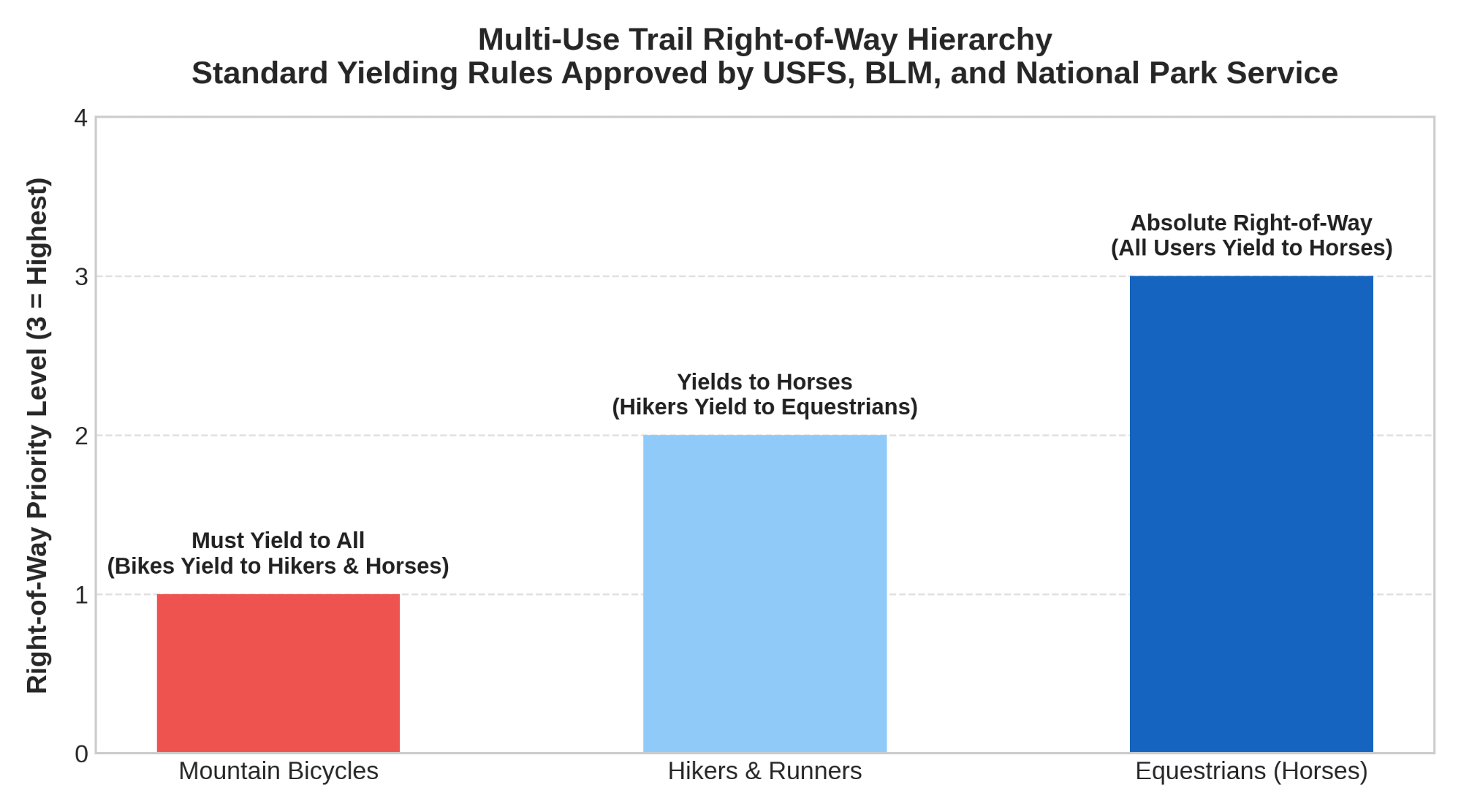
The standard right-of-way rules, approved by the U.S. Forest Service, the Bureau of Land Management (BLM), and the National Park Service (NPS), establish a clear hierarchy designed to prevent accidents on narrow or steep trails. Because horses are the largest, heaviest, and most unpredictable trail users (due to their natural prey instincts), they are granted the highest priority.
The visual chart below outlines this standard trail-sharing hierarchy:
To ensure safety and courtesy during these encounters, all trail users should follow these specific guidelines:
- Bikers Yield to Hikers and Horses: Mountain bikers move the fastest and can startle horses. Bikers must slow down, announce their presence, and yield the trail by pulling over to the downhill side of the trail.
- Hikers Yield to Horses: Hikers should step off the trail to the downhill side, stand quietly, and greet the equestrian in a calm, friendly voice. Speaking helps the horse recognize that the hiker is a human, not a hidden predator.
- Step to the Downhill Side: When yielding to a horse, always step to the downhill side of the trail. A spooked horse's natural instinct is to bolt uphill, away from perceived danger. Standing downhill prevents you from being in the horse's escape path.
Spacing, Passing, and Formation Etiquette on the Trail
Maintaining proper spacing and formation is critical to preventing herd conflict and rider injury.
- The One-Horse-Length Rule: Always maintain a minimum distance of one full horse length (approximately 8 to 10 feet) between your horse and the horse in front of you. If you can see the hind hooves of the horse ahead of you through your horse's ears, you are too close. "Tailgating" can cause the lead horse to feel threatened and kick out, which can result in severe injury to your horse or your own legs.
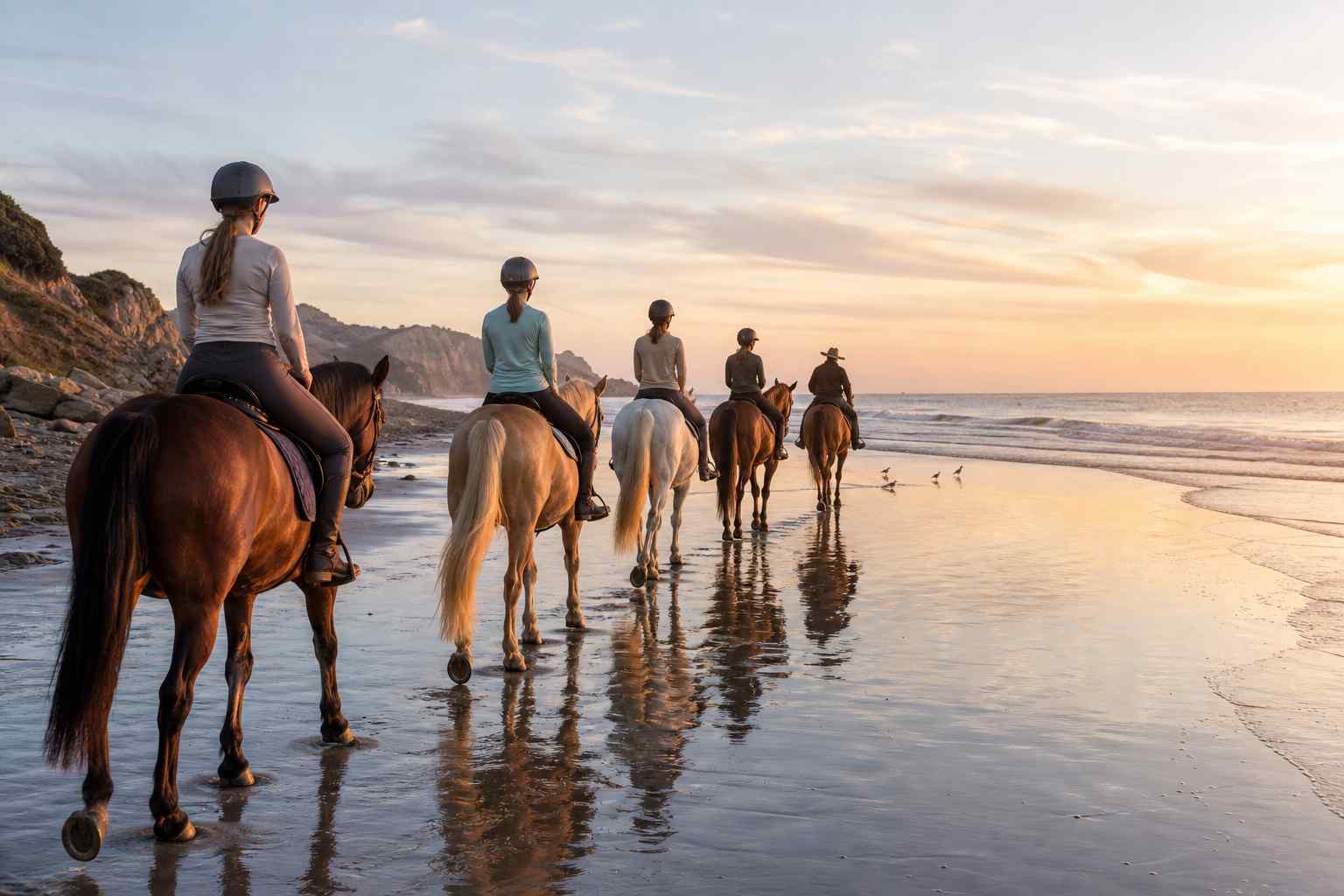
- Single-File Formation: On guided trail rides, riders must remain in a strict single-file formation. Do not attempt to ride side-by-side unless the trail is exceptionally wide and your guide has explicitly permitted it.
- Communicating and Passing: Never pass another horse from behind without first communicating with your guide and the other rider. If passing is approved, do so at a walking pace, giving the other horse as much lateral space as possible.
Trail Riding Etiquette for Beginners: How to Prepare for Your First Ride
If you are a first-time rider, stepping into the saddle can feel both exciting and intimidating. Following basic trail riding etiquette for beginners will boost your confidence, ensure your safety, and show respect for your guide and your horse. Check out our beginner's guide to horseback riding for additional tips and preparation strategies.
1. Active Listening and the Pre-Ride Briefing
Before you mount, your guide will conduct a comprehensive safety briefing. Pay close attention, even if you have ridden before. This briefing covers the specific verbal cues, hand signals, and rein techniques used by that outfitter. Learn more about what to expect on your first trail ride.
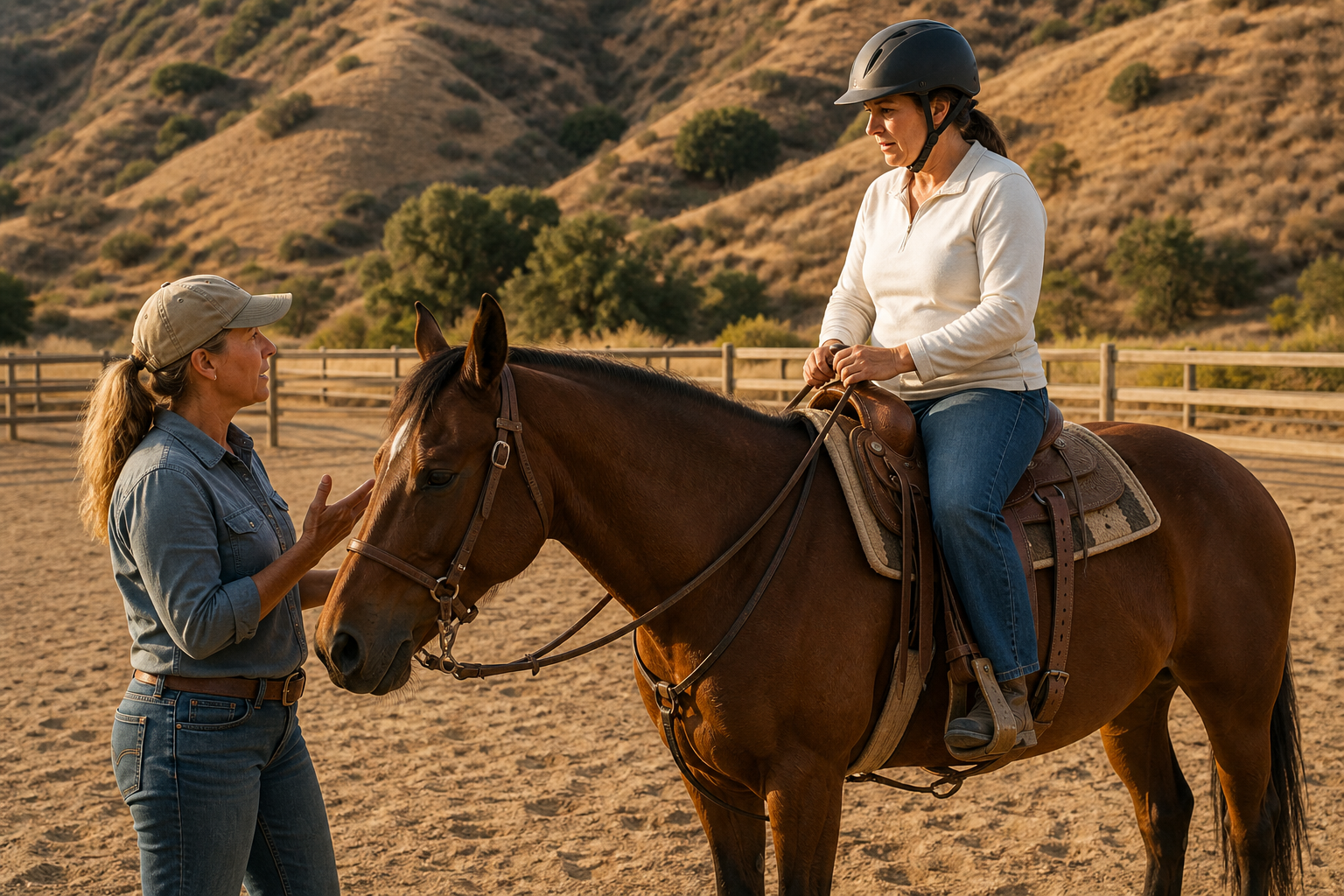
- Keep Your Hands Quiet and Steady: Beginners often hold the reins too tightly or jerk them when they lose balance. This causes pain in the horse's sensitive mouth. Keep a gentle, elastic contact with the reins, and use your core and legs to balance, not the reins.
- Mount and Dismount Only on Command: Never attempt to mount or dismount your horse until your guide is physically present to assist you and has given the explicit command. Horses must be held steady during this transition to prevent them from moving off prematurely.
2. When and How to Speak Up on the Trail
A key element of beginner etiquette is transparent communication. Your guide cannot read your mind, and addressing minor discomforts early prevents major issues later.
- Speak Up About Your Comfort Level: If your saddle feels loose, your stirrups feel uneven, or you are feeling anxious, alert your guide immediately. Do not wait until you are miles out on the trail.
- Signal If You Need to Slow Down or Stop: If you need to adjust your gear, take a sip of water, or settle your nerves, call out to your guide: "Requesting a brief stop." The guide will halt the entire group in a safe, flat section of the trail. Never attempt to stop your horse abruptly without warning the riders behind you.
Guided Trail Ride Etiquette: Partnering with Your Guide and Herd
When you participate in a guided ride, you are entering a partnership with your wrangler. Wranglers are highly trained professionals who spend their lives studying horse behavior, trail safety, and local ecology. Respecting their authority and caring for your assigned horse are the hallmarks of guided trail ride etiquette. Discover more about why not every rider is a good match for every horse.
1. Respecting Your Wrangler's Authority
Your guide's primary responsibility is the safety of the entire group, including the horses. They have absolute authority over the pace, route, and safety decisions on the trail.
- Follow the Established Pace: If your guide is keeping the group at a walk, do not kick your horse to make it trot or canter. Attempting to change the pace independently can excite the other horses in the herd, leading to a dangerous loss of control.
- Adhere to Formation Decisions: Do not attempt to change your position in the line. Guides arrange the horses in a specific order based on herd dynamics, matching dominant or submissive horses to prevent fighting or biting.
- Limit Phone and Camera Use: While we want you to capture memories, constantly looking at your phone screen distracts you from steering and reading your horse's body language. Keep your phone secured in a pocket or pouch, and wait for the guide to call a designated photo stop.
2. Respect and Care for Your Horse
Your horse is your partner, not a vehicle. Showing appreciation for their hard work is a fundamental equestrian value. Meet our horses and learn about their unique personalities and training.
- Do Not Feed Treats Without Permission: Feeding treats (such as apples, carrots, or commercial horse snacks) without explicit permission from the wrangler is a major breach of barn etiquette. It can cause horses to become nippy, pushy, or fight with other horses in the herd. Some horses also have strict dietary restrictions or medical conditions (such as equine metabolic syndrome).
- Avoid Petting Unassigned Horses: While horses are beautiful, do not walk up and pet or crowd horses that are not assigned to you, especially from behind or near their mouths. Respect their personal space just as you would a stranger's.
Leave No Trace Principles for Equestrians
As equestrians, we have a profound responsibility to protect the natural environments we ride through. Horses, due to their weight and waste, have a higher environmental impact than hikers. Adhering to Leave No Trace principles ensures our public lands remain pristine and helps secure future trail access for the equestrian community.
1. Staying on Durable Surfaces and Marked Trails
Erosion is a major threat to fragile trail ecosystems.
- Never Cut Switchbacks: Cutting corners on steep trails destroys vegetation and creates channels that water will wash out, leading to massive trail erosion and landslides.
- Ride Single File on Narrow Trails: Avoid riding on the shoulders or creating parallel tracks, which widens the trail and destroys surrounding plant life.
- Navigate Mud and Puddles Safely: If you encounter a muddy patch or a puddle on a designated trail, ride directly through it rather than skirting around the edges. Riding around puddles widens the trail and damages delicate trail-side vegetation.
2. Managing Manure and Protecting Water Sources
Manure management is the most critical factor in maintaining positive relations with other trail users and protecting water quality.
- The 200-Foot Rule: Keep horses, highlines, and temporary corrals at least 200 feet away from lakes, streams, and natural springs to prevent water contamination from runoff.
- Clear Manure from High-Traffic Areas: If your horse unloads manure at the trailhead, parking lot, or a designated resting area, use a shovel or your boot to kick it off the trail and disperse it, or pack it back to your trailer for proper disposal.
- Use Weed-Seed-Free Feed: If you are traveling with your own horses, feed them certified weed-seed-free hay or pellets for at least 48 hours prior to entering public lands. This prevents the introduction of invasive, non-native plant species through horse manure.

What to Wear and Bring: A Practical Packing List
Arriving in the correct attire is a matter of safety and comfort. Stables reserve the right to refuse service to clients who arrive in inappropriate or hazardous clothing.
Required Riding Attire
- ASTM/SEI-Certified Helmet: Must be worn and properly buckled at all times while mounted.
- Long Pants: Sturdy denim jeans or riding breeches protect your legs from saddle chafing, rubbing stirrup leathers, and scraping brush or branches along the trail.
- Closed-Toe Boots with a Defined Heel: Your footwear must have a smooth sole and a defined heel (at least 1 to 1.5 inches) to prevent your foot from sliding completely through the stirrup iron. Smooth-soled cowboy boots or hiking boots with a low profile are ideal. Sandals, flip-flops, tennis shoes, and heavy-tread hiking boots are strictly prohibited.
- Layered, Weather-Appropriate Tops: Trail weather can change quickly. Wear a breathable base layer and bring a windbreaker or jacket that can be easily tied around your waist or secured in a saddlebag.
Recommended Personal Items
- Riding Gloves: Lightweight leather or synthetic gloves prevent blisters from holding reins and protect your hands from cold wind or sun exposure.
- Sun Protection: Apply broad-spectrum sunscreen and wear UV-blocking sunglasses. If wearing a wide-brimmed sun hat, ensure it has a secure chin strap so it does not blow off and spook the horses.
- Hydration and Lip Balm: Bring a water bottle to consume before and after your ride. Wind and sun can dry out your lips quickly, so keep lip balm in a zippered pocket.
- Secure Phone Pouch: Ensure your phone is kept in a zippered pocket or a cross-body pouch. Loose phones in back pockets frequently fall out and are crushed or lost.
Arrival Etiquette and On-Site Flow: What to Expect on Ride Day
To ensure a relaxed and organized start to your adventure, follow this standard on-site flow when arriving at the ranch. For complete details, see what to expect on ride day:
[Arrive 30-45 Mins Early] ──> [Check-In & ID Verification] ──> [Submit Signed Digital Waivers]
│
[Mounting & Stirrup Adjust] <── [Helmet Fitting & Safety Brief] <───────┘
│
[Enjoy Your Guided Trail Ride!]
- Arrive 30 to 45 Minutes Early: This buffer allows time for parking, using the restrooms, and completing check-in without rushing.
- Check-In and ID Verification: Present your booking confirmation and physical identification to the front desk staff.
- Submit Signed Digital Waivers: Ensure all members of your party have signed their waivers.
- Helmet Fitting and Safety Briefing: Our staff will assist you in selecting and adjusting a certified helmet, followed by a wrangler-led safety talk.
- Mounting and Stirrup Adjustment: Wranglers will assist you onto your horse using a mounting block and adjust your stirrup leathers to the correct length.
- Enjoy Your Ride: Head out onto the spectacular trails of Santa Clarita, Vasquez Rocks, or Rincon Beach!
Ready to Book Your Trail Ride?
Now that you understand the essential etiquette and preparation required for a safe, respectful trail ride, it's time to plan your adventure. Visit horsebackridingtrails.com to explore our available trail rides across the Mountains of Santa Clarita, Vasquez Rocks, and Rincon Beach. Check our upcoming rides calendar, read about our special offers, or contact us with any questions. We look forward to welcoming you to Second Chance Ranch!
Frequently Asked Questions (FAQ)
What is proper horseback riding etiquette on shared trails?
Proper etiquette on shared trails requires yielding the right-of-way to horses, staying on marked trails, and maintaining a safe, one-horse-length distance between mounts. Hikers and bikers should step to the downhill side of the trail and speak in a calm, friendly voice as the horse passes to avoid startling the animal. For more information, explore our horseback riding trails in Los Angeles.
What questions should I ask before booking a horseback trail ride?
Before booking, always ask about the minimum and maximum age requirements, rider weight limits, experience matching protocols, helmet requirements, arrival times, and the outfitter's weather cancellation and refund policies. Ready to book? Schedule your trail ride today.
Are there age limits for guided trail rides?
Yes, most commercial trail stables enforce a minimum age of six or seven for guided trail rides due to safety and insurance regulations. For younger children, stables often offer lead-line pony rides in a controlled arena environment.
What should beginners know about trail riding etiquette?
Beginners should listen closely to the safety briefing, mount and dismount only when instructed, keep their hands quiet on the reins, and communicate openly with their guide if they feel anxious or need to stop. Check our horseback riding lessons for beginners for comprehensive guidance.
What do I wear for a guided trail ride?
You must wear long pants (such as jeans), closed-toe boots with a smooth sole and a defined heel (1 to 1.5 inches), and an ASTM/SEI-certified riding helmet. Loose clothing, sandals, and heavy-tread hiking boots are strictly prohibited. See what to expect for a complete packing list.
Do I need to bring my own helmet for a trail ride?
No, reputable outfitters like Second Chance Ranch provide complimentary, professionally fitted, ASTM/SEI-certified helmets for all guests. If you choose to bring your own, it must meet current ASTM F1163-15 or F1163-23 standards.
How early should I arrive for a horseback ride reservation?
You should arrive 30 to 45 minutes prior to your scheduled departure time. This ensures you have ample time to park, check in, sign waivers, fit your helmet, and mount without delaying the ride.
What are typical rider weight limits, and why do they exist?
Typical weight limits range from 220 to 250 pounds. These limits exist to protect the horses from muscle strain, joint damage, and saddle sores, adhering to the veterinary standard that a horse should not carry more than 20% of its body weight.
How are riders matched to horses on guided rides?
Riders are matched based on their height, weight, physical fitness, and riding experience. Outfitters use this information to pair you with a horse whose size, temperament, and training level match your physical profile and skill.
What are standard horse trail rules for right-of-way?
Equestrians have the absolute right-of-way on multi-use trails. Mountain bikers must yield to both hikers and horses, and hikers must yield to horses. When yielding, other users should step to the downhill side of the trail.
Can beginners canter on a guided trail ride?
No, beginners should never canter on a commercial guided trail ride. Cantering requires advanced balance, core strength, and independent rein control. For safety, beginner rides are strictly limited to a walking pace.
How do weather and trail conditions affect ride cancellations?
Rides are cancelled in heavy rain, extreme winds, lightning, excessive heat, or poor air quality to protect the safety of the riders and horses. Reputable stables will offer a full refund or a rescheduling credit in these cases.
What is the correct spacing between horses on the trail?
The correct spacing is a minimum of one full horse length (approximately 8 to 10 feet) between mounts. This prevents horses from feeling crowded and kicking out at the horse behind them.
Is tipping customary for trail ride guides?
Yes, tipping is customary and highly appreciated in the guiding industry. A standard tip is 15% to 20% of the total ride cost, reflecting the guide's effort in keeping you safe and caring for the horses.
Can kids ride double with an adult on a trail ride?
No, riding double (two people on one horse) is strictly prohibited on commercial trail rides due to severe safety risks and insurance regulations. Every rider must ride independently on their assigned horse.
Are photos allowed during a guided ride?
Yes, but only at designated, safe stopping points under your guide's direction. Taking photos while riding can distract you and cause you to lose control of your reins, posing a safety hazard.
What should I do if my horse gets anxious on the trail?
If your horse acts anxious, keep your heels down, sit deep in the saddle, maintain a gentle hold on the reins, and alert your guide immediately by calling out: "Horse is anxious, please give space!" Do not scream or pull back violently on the reins.
What safety briefing should a guide provide before the ride?
A professional safety briefing should cover how to hold and adjust the reins, how to cue the horse to walk, stop, and steer, how to maintain proper spacing, and what emergency signals to use on the trail.
What is Leave No Trace for equestrians?
Leave No Trace for equestrians involves staying on marked trails, riding directly through mud rather than widening the trail, keeping horses 200 feet away from water sources, managing manure at trailheads, and using weed-seed-free feed.
What are the most common mistakes first-time trail riders make?
The most common mistakes are booking a ride that is too long or advanced, wearing inappropriate footwear (like sandals), tailgating other horses, stopping abruptly without warning, and feeding treats without permission. Learn from our beginner trail riding guide to avoid these pitfalls.